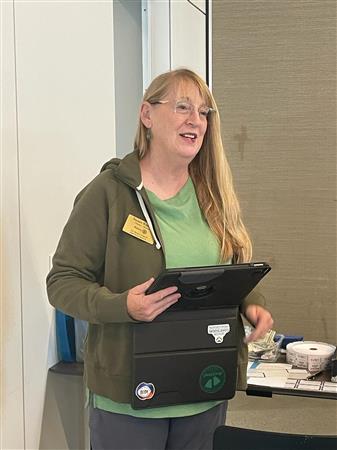
Inspiration: Our inspiration came from Nancy. Frederick Douglass—“Once you learn to read, you will forever be free.” It made a profound difference in his life.
Guests—John brought Larkin and the Holcomb family, Alia, Kenji, grandma. Nancy’s cousin Barb surprised her with a visit and Stacy brought Doug.
Announcements
Nancy, Barb was able to raise $10,000 from Silicon Valley Foundation. Liz said Clark is back in the hospital. Lobsterfest update—175 tickets have been sold, we need to sell 200. Ask for a few more helpers, she will notify everyone of their assignments.
Speakers: Rachel Sage Cabrillo Unified's Program Manager on Literacy and Kenji Holcomb on his year as an Rotary exchange student in Italy
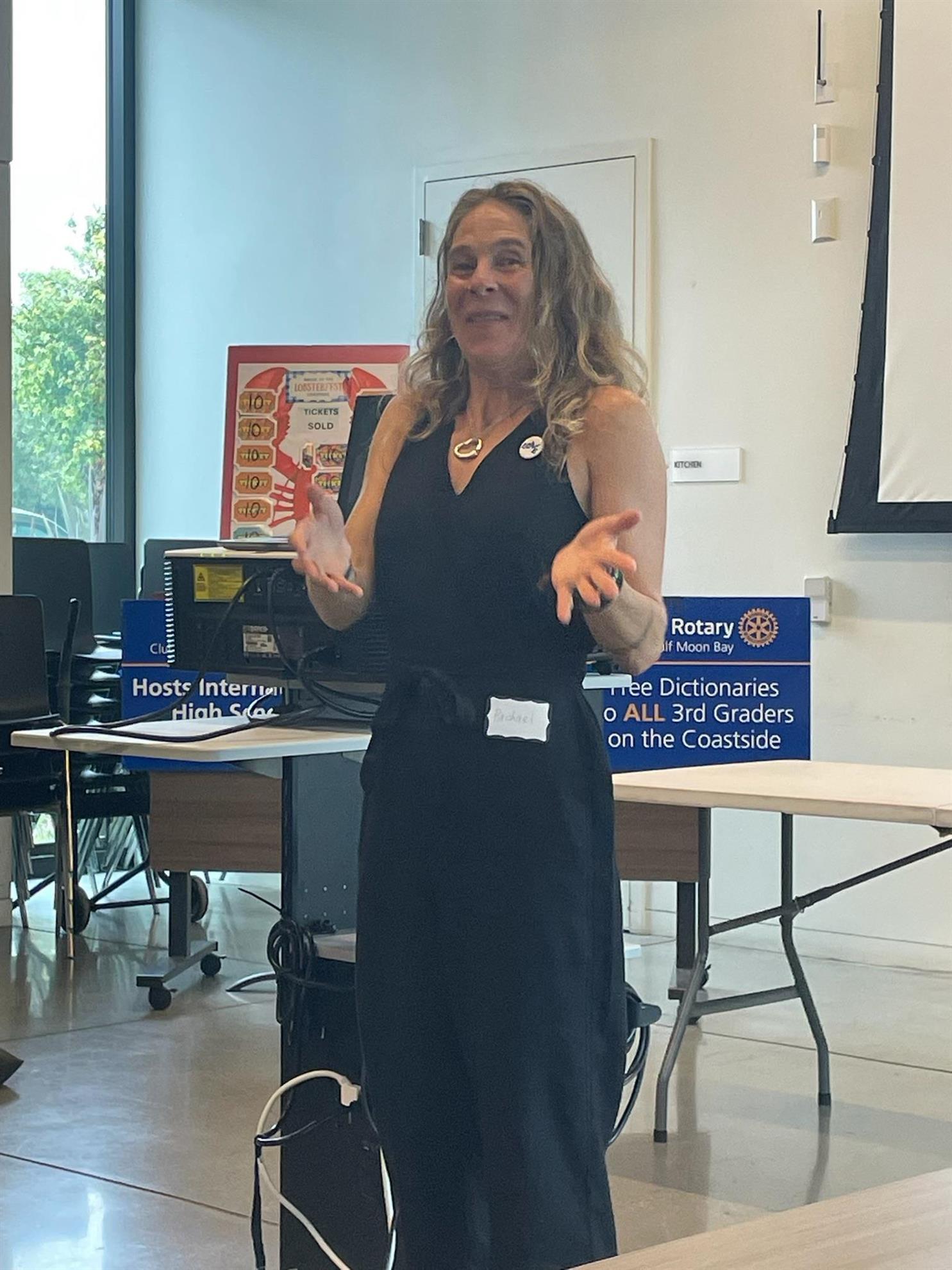 Rachel Sage, Cabrillo Unified’s Program Manager on Literacy shared what the District is currently doing as well as what their future plans are.
Rachel was hired by Liz. She is the proud aunt to a niece and nephew. Adventure and sports give her energy. Education is her third career and she attended college later in life. She taught in Costa Rica for a year and loves teaching and living in Montara. Watching kids evolve their reading skills is a favorite thing for her. Rachel to have fun, it is at the heart of everything’s she does and shapes her work.
Engagement is important in reading and that is what they are focusing on. That includes using materials that student like and then teaching them the craft of reading. There was a big shift in literacy education at the elementary level. Regulations and guidelines are changing to support that new style of teaching.
She described the evolution of literacy, see the timeline slide. The goal is to have everyone reading by the third grade. Some chilling statistics—70% of the incarcerated cannot read. Reading by the third grade is pivotal to changing lives. 95% of students can learn to read, it’s how we teach them that makes a difference. We need to shift to phonics instruction and the science of reading (how we actually learn). Through science, using MRIs and FMRIs, children’s brains can be observed. It is possible to determine how they read, hence, now we know how to teach reading.
They launched a program called Foundations, then COVID hit and it did interfere with the project. During that time they made videos to continue to teach teachers about Foundations and constructed a website to keep the literacy program going. In 2022-2023 they were able to start screening students so they could personalize a plan for each child. In 2023-2024, the Big Lift became interested in third grade literacy so they launched a new strategic plan. A universal screener called Dibbels was part of the implementation of the program. It’s been around for 25 plus years and was developed by teaching college in Oregon. Now students are screened, kinder through fifth grade three times a year, so they can see where they are at and monitor their progress. “You can’t improve what you don't measure."
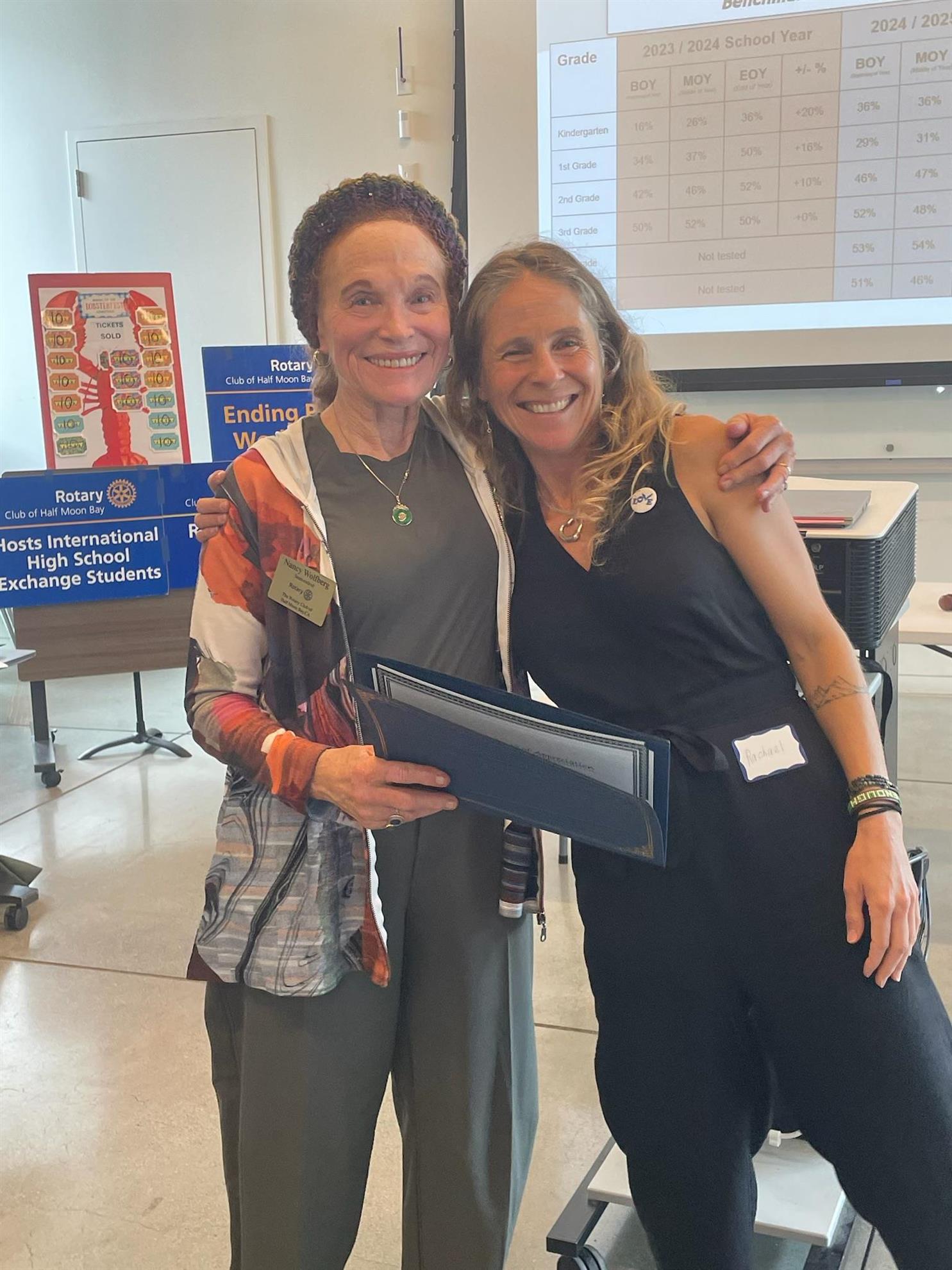 After screening, they sit down with teachers to review the results and give them ideas for working with their individual students. In 2024-2025 they created the Cabrillo literacy initiative. It includes teachers from all around the district. They make up an action plan for the year, they set goals, meet monthly. Communication and giving teachers a voice and sharing is important. The goal for 2025-2026 was to solidify their tier one instruction (in the classroom) provide in class supports for students who need it and continue with assessments. In 2026-2027 we’re providing more in class supports, coaching, new teacher development, mentoring and developing systems to make sure the plan is sustainable.
What it looks like in the classroom —word building from the smallest to the biggest to build long words. It is very systematic. Lesson delivery is important, it is very scripted. Good behavior management has been successful. Tools like coaching, model lessons and decodable books help build a foundation. They often break into smaller groups and use other tools for reading intervention. Continuous monitoring is a key component.
Engagement—she loves reading logs and asks parents to talk with students about reading every day. Every Monday the class reviews the logs. Parents are encouraged to participate in several events to encourage reading and celebrate reading. Things like family literacy nights and other supports. They also work on engaging the community with CEF, the library, Coastside Families Club and Rotary.
 Results—they are assessing different kids every year. Looking at kindergarten through third grade, there was a 50% improvement. They are seeing a lot of growth with some ups and downs. The system measures whole district.
Next steps and sustainability—they redesigned report cards, there is new teacher training and mentorship. Working on sustainable systems that include training, coaching, literacy specialists, accountability and support.
Gratitude - support from partners including: The Big Lift, CEF, the Half Moon Bay Library, El Granada, Farallone View, Hatch and Kings Mountain PTOs, CUSD Teachers, Families, Site Administrators, and District Office Staff and the Cabrillo Literacy Initiative Members.
Questions:
Do you expect they all will be proficient readers by high school? Hope to get there, the goal is to get to grade level by middle school. In elementary school you learn to read, in the upper grades you read to learn.
What is the percentage of change within the cohort from kindergarten to fifth grade, of the individual children? We don’t have much turnover.
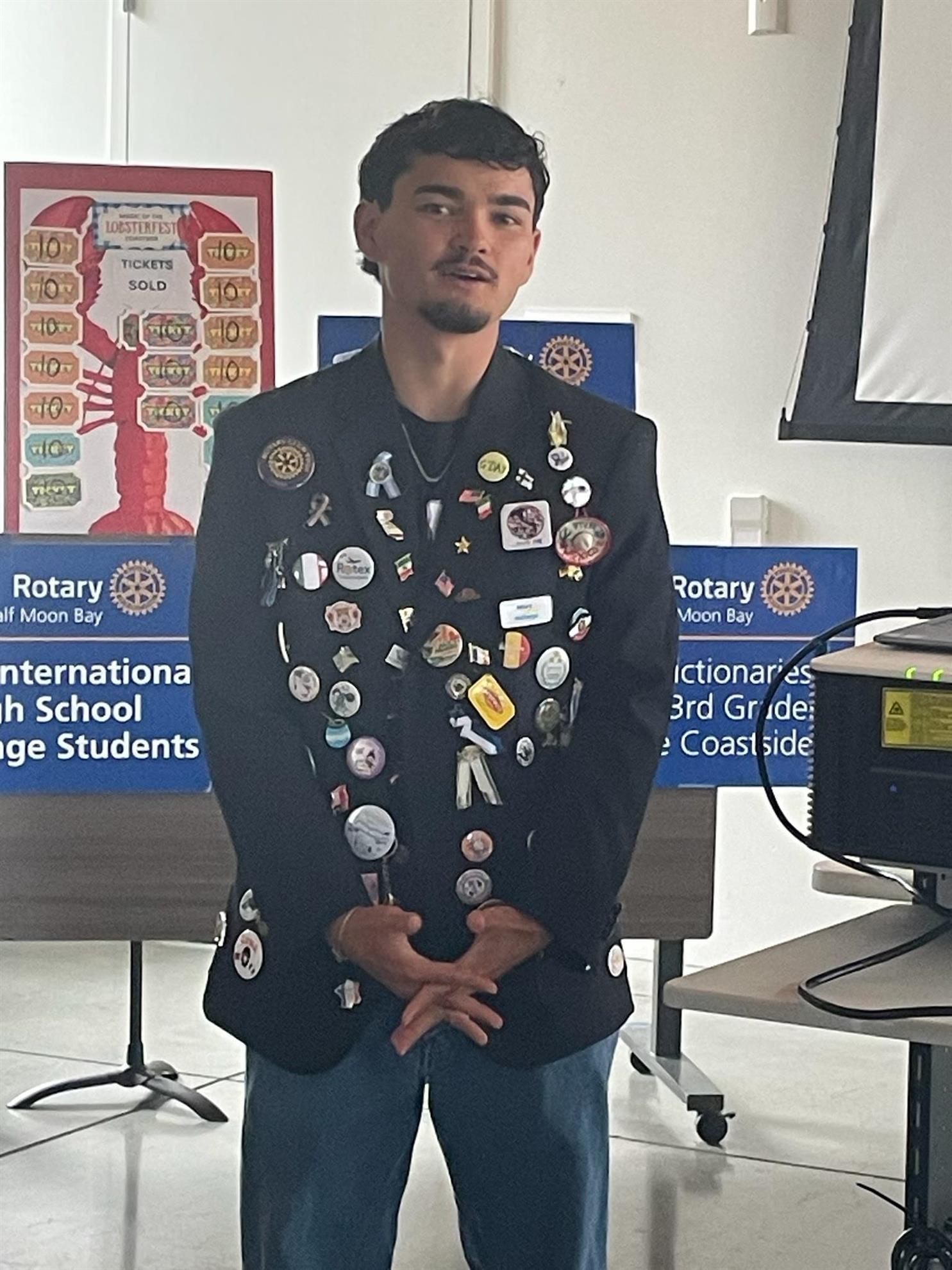 Kenji Holcomb, the Rotary Exchange student we sent to Italy, summarized his experience and showed us some key highlights through pictures. The buttons represent the people he met during his 10 months in Italy. He was assigned to the Todi region and lived in Asproli. He stayed with one family the whole time. Their son was in Japan on an exchange. Asproli is a small town of around 50 people. Unlike here, the students stay in the classroom and the teachers move from room to room.
He met with a lot of other exchange students in Italy and on Sardinia. They also visited Sienna. The food was amazing, they eat pigeons—he can’t can’t look at a pigeon the same now. He made many international friends and a group of Italian friends, he went on the Rotary Italy Tour and got to participate in a fun run in Rome. He took another Euro tour with other exchange students. His favorite cities were Prague and Amsterdam. He met his goals—he expanded his comfort zone and made friends from all over the world.
Kenji expressed a big thank you to Rotary.
What is next? He will start Oregon State in the fall.
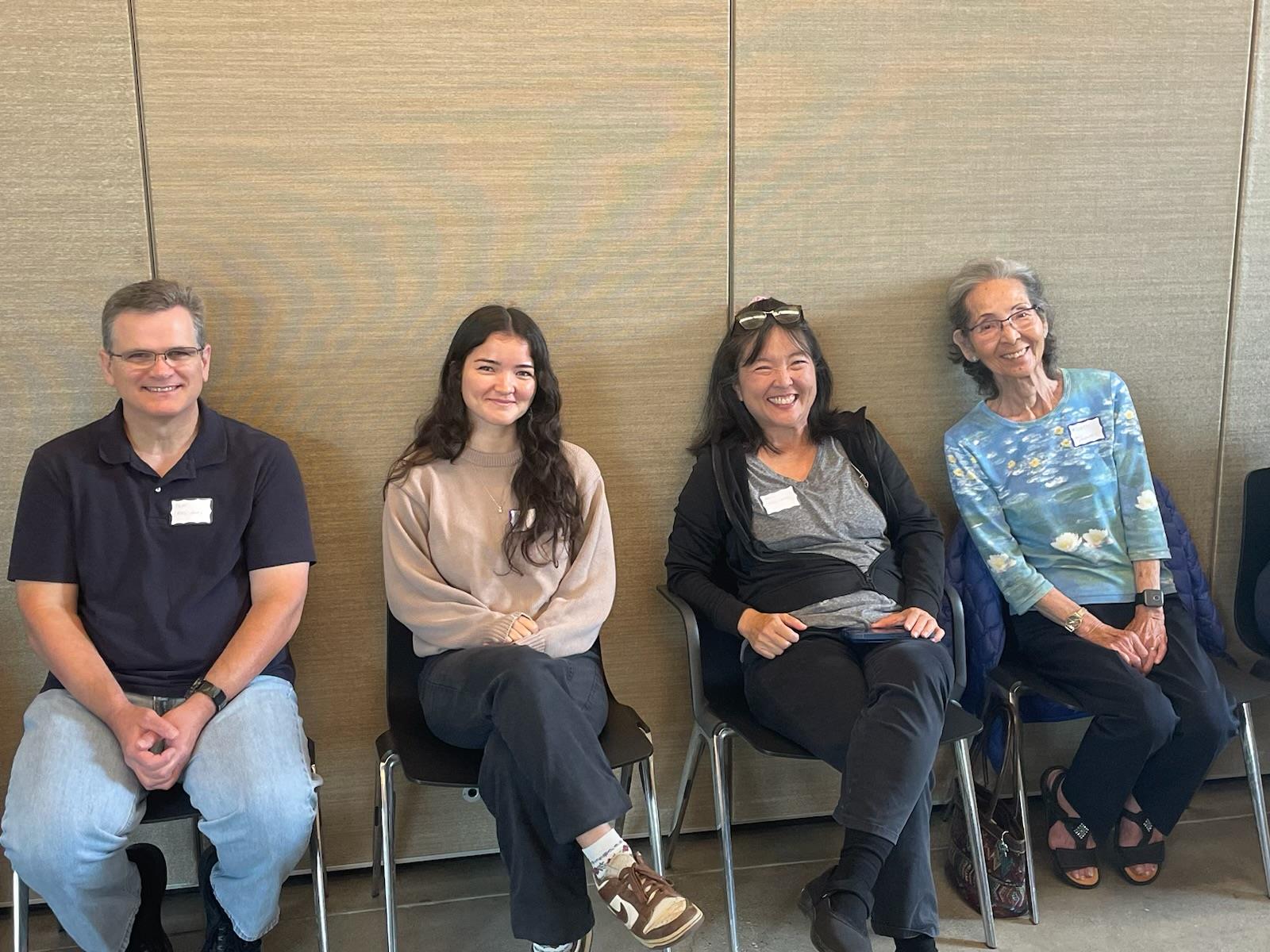 Kenji's family came to support him.