________________________________________________________________________________________________
The FOGHORN
ROTARY CLUB OF HALF MOON BAY
DECEMBER 7 , 2017
BRIAN WO - HUMAN TRAFFICKING IN THE BAY AREA
.JPG)
Article by Stacy Trevenon
Photos by EJ Dieterle
The speaker for today's very sobering program was Brian Wo, Co-Founder and Director of Partnerships for the Bay Area Anti-Trafficking Coalition. He has had over sixteen years of vocational ministry experience, including twelve years as the Associate Pastor of Grace Community Covenant Church. A native of Phoenix, Arizona, Brian studied Mechanical Engineering at the University of California, Berkeley, and worked in the aerospace industry before answering the call to vocational ministry. Brian holds a B.S. from UC Berkeley, and an M.A. from Fuller Theological Seminary.
He began by telling the club a little more about himself. He has lived in the Bay Area since 1994 and has two teen children. To the delight of the Rotarians present, he lifted up his cellphone to take a selfie of himself with the club members seated at the lunch tables in the background. His talk was enhanced by slides on the large screen in the front of the room. He spoke of his strong belief that human beings are worthy of and deserving of dignity, and that all are meant to have freedom. He said that something like over 20 million people are caught up in the very underground world of human trafficking, a world in which human dignity is stripped, and something that residents of the Bay Area should stand up to.
.JPG)
Brian asked those present to list what the phrase "human trafficking" suggests to them. Responses included indentured servitude, modern-day slavery, child abuse, sweatshops, fishermen forced into supplying their catch to those who hold power over them, and the $150 billion per year international business.
There are three elements to trafficking, he said: control; means of control like force, fraud or coercion; and purpose, such as exploitation, sexual favors or forced labor. Physical force used in abducting young or helpless people into slavery is obvious, he said, though it isn't always a matter of something like being grabbed off the street. Force can take subtler forms, such as control through sleep deprivation, fraud, violence or threats to victims' families or loved ones. He said that young, vulnerable kids can be and often are snatched off the streets, and that they are outside of or away from support or family.
He described manipulative "Romeo frauds," or predators who lay out for victims tempting but false promises of love or protection from their captors, or beautiful lives and good things they might have through their captors. If a victim of sexual exploitation is a minor, he said, that person is automatically classified as a sex-trafficking victim.
There are three elements to trafficking, he said: control; means of control like force, fraud or coercion; and purpose, such as exploitation, sexual favors or forced labor. Physical force used in abducting young or helpless people into slavery is obvious, he said, though it isn't always a matter of something like being grabbed off the street. Force can take subtler forms, such as control through sleep deprivation, fraud, violence or threats to victims' families or loved ones. He said that young, vulnerable kids can be and often are snatched off the streets, and that they are outside of or away from support or family.
He described manipulative "Romeo frauds," or predators who lay out for victims tempting but false promises of love or protection from their captors, or beautiful lives and good things they might have through their captors. If a victim of sexual exploitation is a minor, he said, that person is automatically classified as a sex-trafficking victim.
Besides sexual trafficking, he outlined other examples of trafficking, such a nannies from other countries who do not have recourse or support other than through their captors. Captors take advantage of victims' vulnerability, and victims often wind up abused or otherwise mistreated. He gave as an example a case of a fearful, emotionally isolated woman who had no recourse or support.
Some traffickers come from the same country as their victims, and speak the same language, which can be seen by victims as reassuring. He described traffickers' recruiting devices such as promises of business opportunities, financial assistance or payment of fees, which leads to debt bondage. He described how the dream of coming to a better life in the United States can be a promise offered by traffickers to poor or otherwise disadvantaged potential victims.
He described Bay Area "tracks" or areas frequented by sex traffickers, and said that 72 percent of minors who are sex-trafficking victims in California are from the U.S. He pointed out that a lot of young people caught up in trafficking are homeless youth or runaways lured by promises of housing or food. Victims are not only girls but boys too, and he gave one sad example of a young person sold by a parent in exchange for rent.
Places where trafficking can occur in today's world can include massage parlors, not all of which in the Bay Area are legitimate. Some are fronts for prostitution, often using young Asian victims.
Brian then moved on to, what can be done about it, what responses and recourses exist? Trafficking is a complex issue, he said, but there is help.
Responses are in three categories: prevention, intervention and aftercare, all of which he detailed. Aftercare includes restoration of dignity, available services including legal, housing, therapy and education. Intervention is more than police breaking down doors; it can also take the form of reaching out to those who are not ready to leave their abusers because they have formed bonds with them. He said that there are Bay Area drop-in centers that offer services or care packages for victims. Prevention is sometimes a matter of "going upstream," he said, by helping potential victims not get caught up in trafficking in the first place.
He described what can make a person vulnerable: they might be a runaway, emotionally or physically isolated, or troubled by drug use, difficult family situations, naivete, or gang involvement. Many things are currently happening to address the issue, he said; for example, consumers are asked to consider their buying decisions, since we don't want slavery in the supply chain of the things we buy. Brian also cited the Trafficking Victims Protection Act passed in 2000.
He emphasized the importance of awareness and introduced the idea of a "Trafficking Watch," something like Neighborhood Watch, through which everyone would know what trafficking is, what the red flags are and how to report it. He also listed the National Human Trafficking Hotline number, (888) 373.7888. And he noted that action has also been underway to make trafficking penalties stiffer.
He described the "10-10-10" rule as to what can you do in 10 minutes, 10 days and 10 months? While each person's 10-10-10 will be unique, for example, it takes 10 minutes to call (888) 373.7888, 10 days to start conversations about altering buying habits to avoid slave labor, and 10 months to hold fund-raisers assist anti-trafficking efforts or to volunteer to help.
"Awareness is a big piece" of the anti-trafficking effort, Brian pointed out. "Traffickers currently operate with impunity, and awareness will increase the risk so that they will think twice before committing their crimes."
DECEMBER 7, 2017 Meeting Recap
Article by Ginger Minoletti
Photos by EJ Dieterle
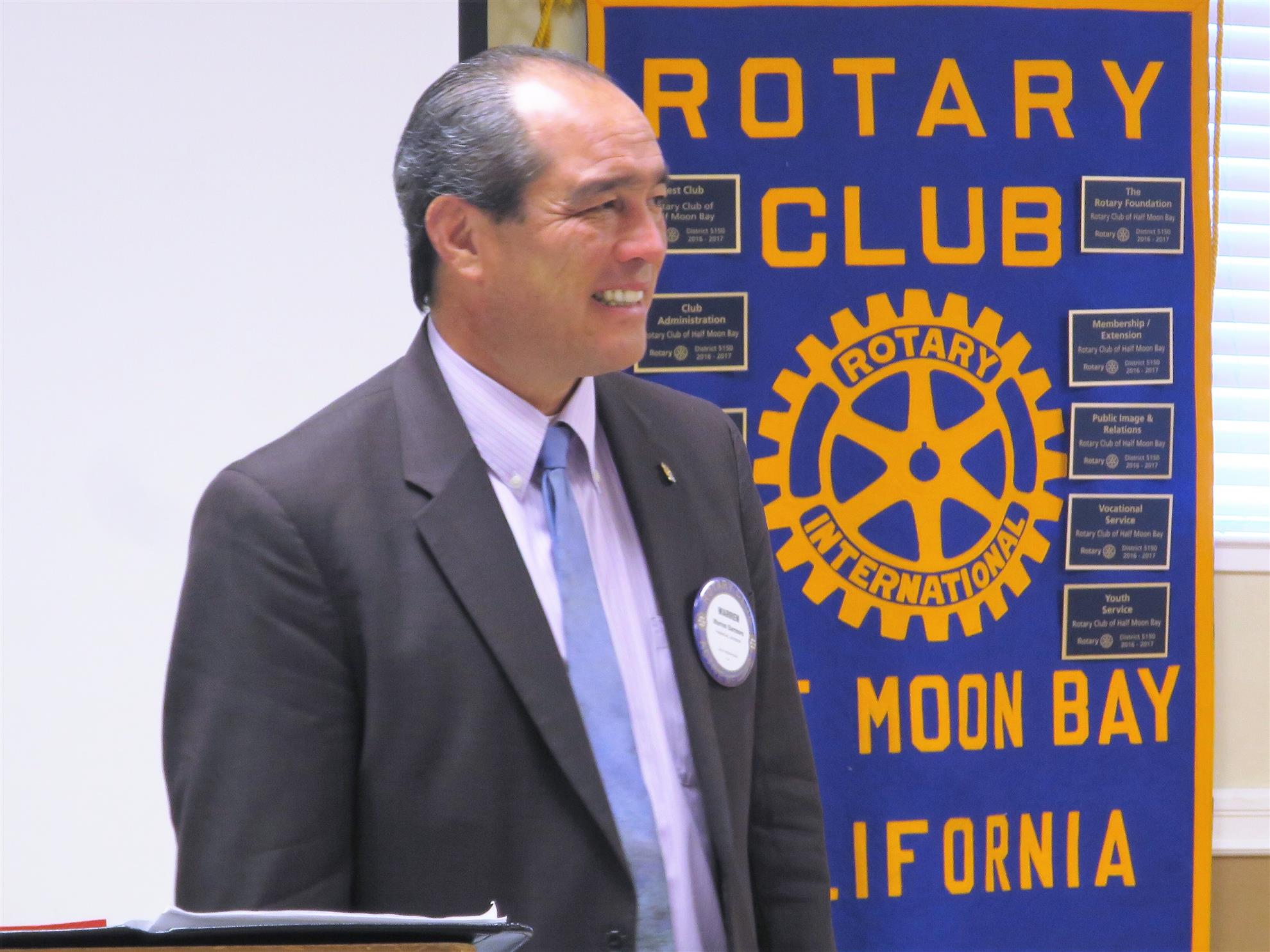
Warren Barmore opened this meeting as President by stating we are the best club.
Treresa Adam led the club in the Pledge of Allegiance.
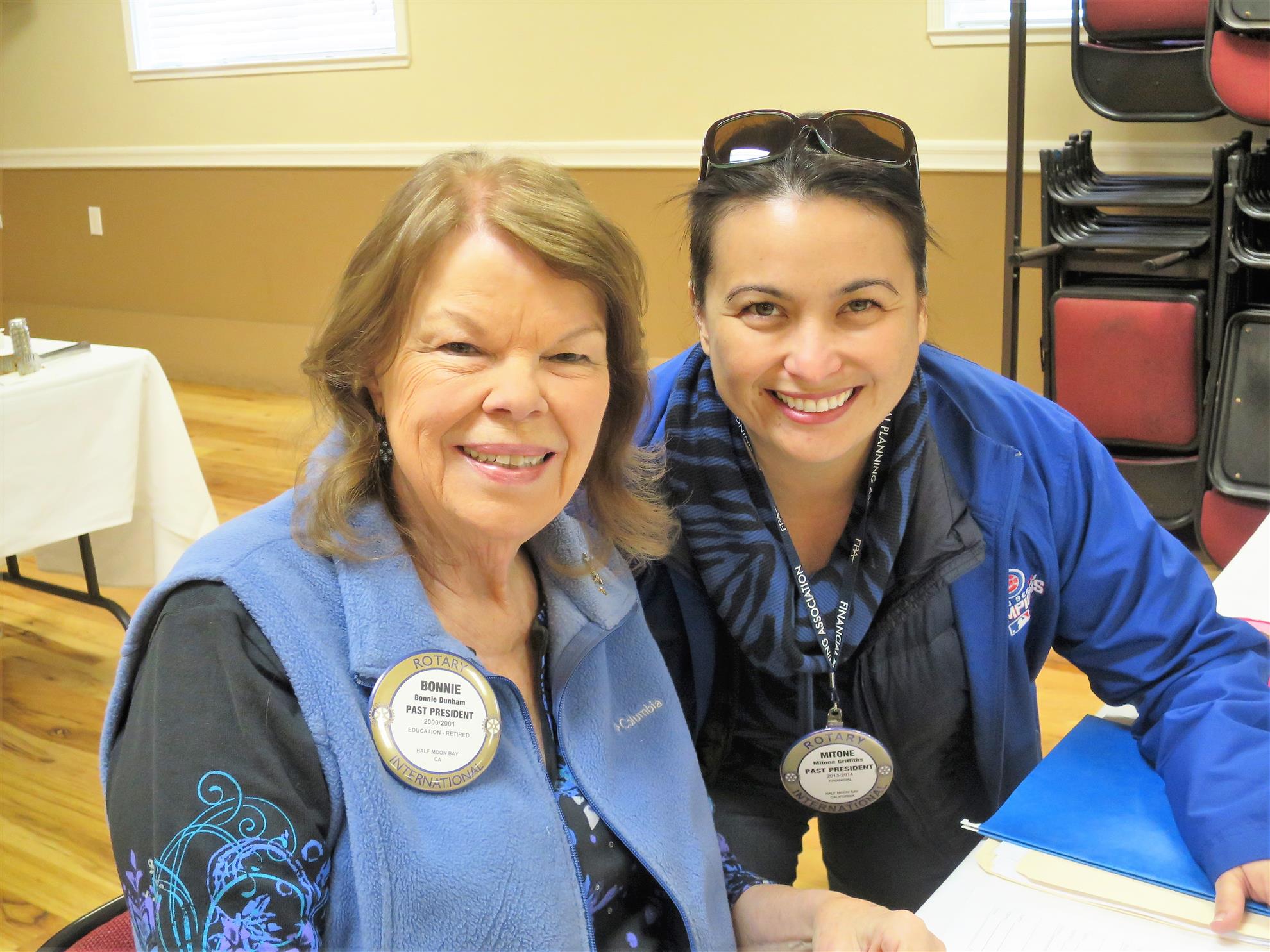
Greeters: PP Bonnie Dunham and PP Mitone Griffiths greeted members today.
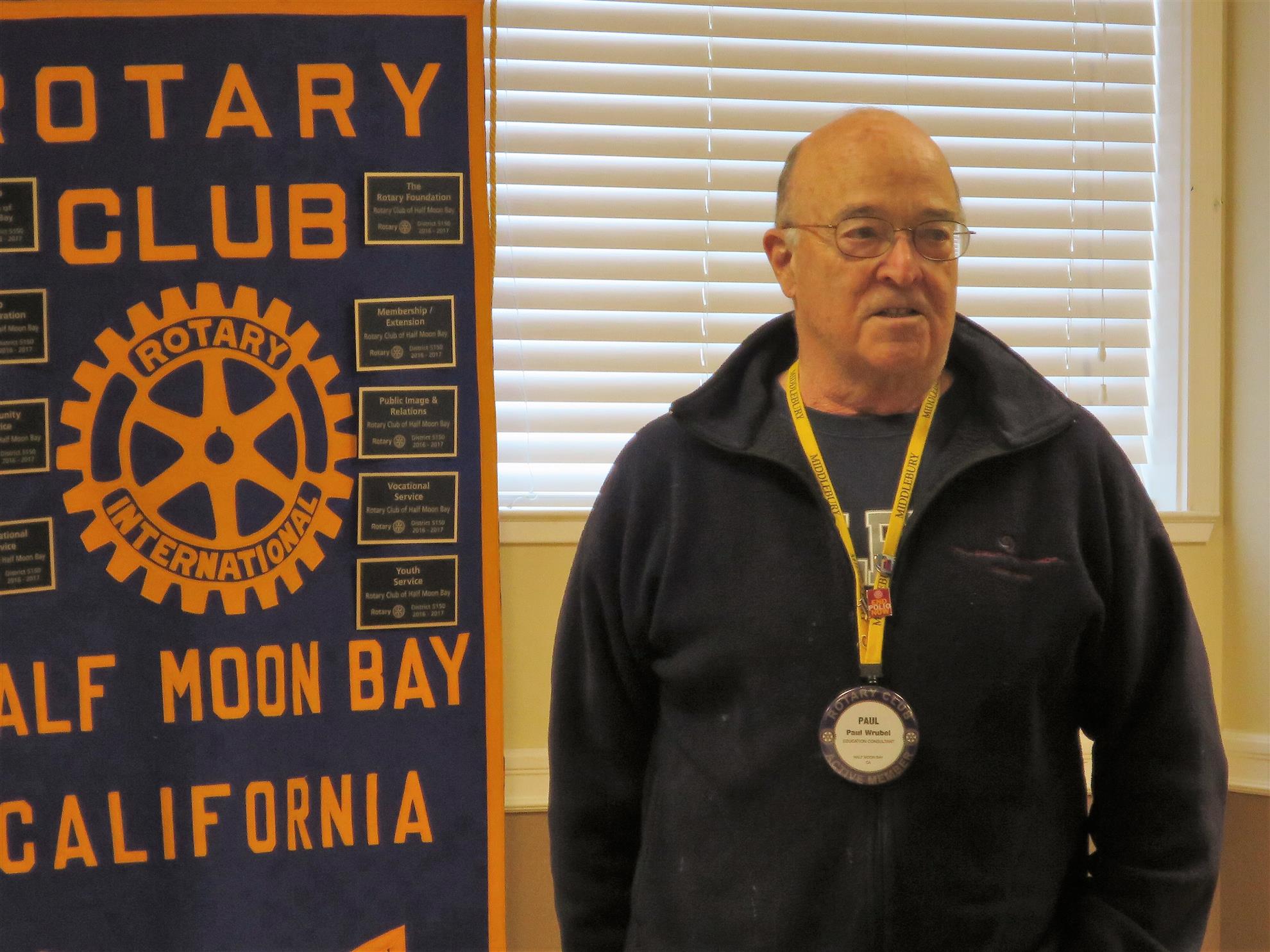
Inspirational Thought: Paul Wrubel focused on ending polio finishing by reminding us that the greatest disease is ignorance and with a quote from Thomas Jefferson, "If a nation expects to be free and ignorant, in a state of civilization, It expects what never was and never will be."
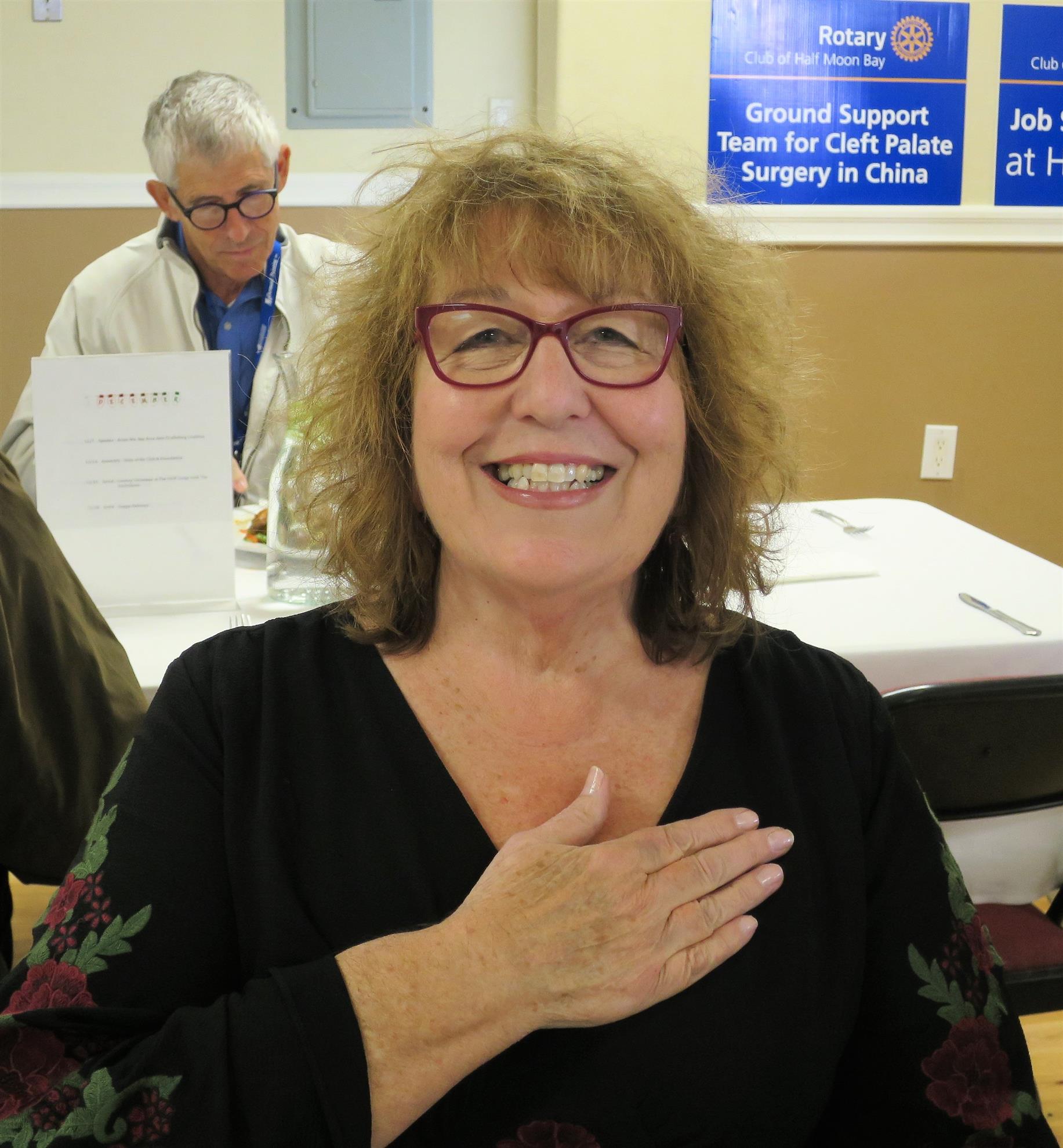
Guests and Visitors
Mary Rogren introduced the co-presidents of the Interact Club, Sienna and Bella.
Happy/Not So Happy News

.JPG)
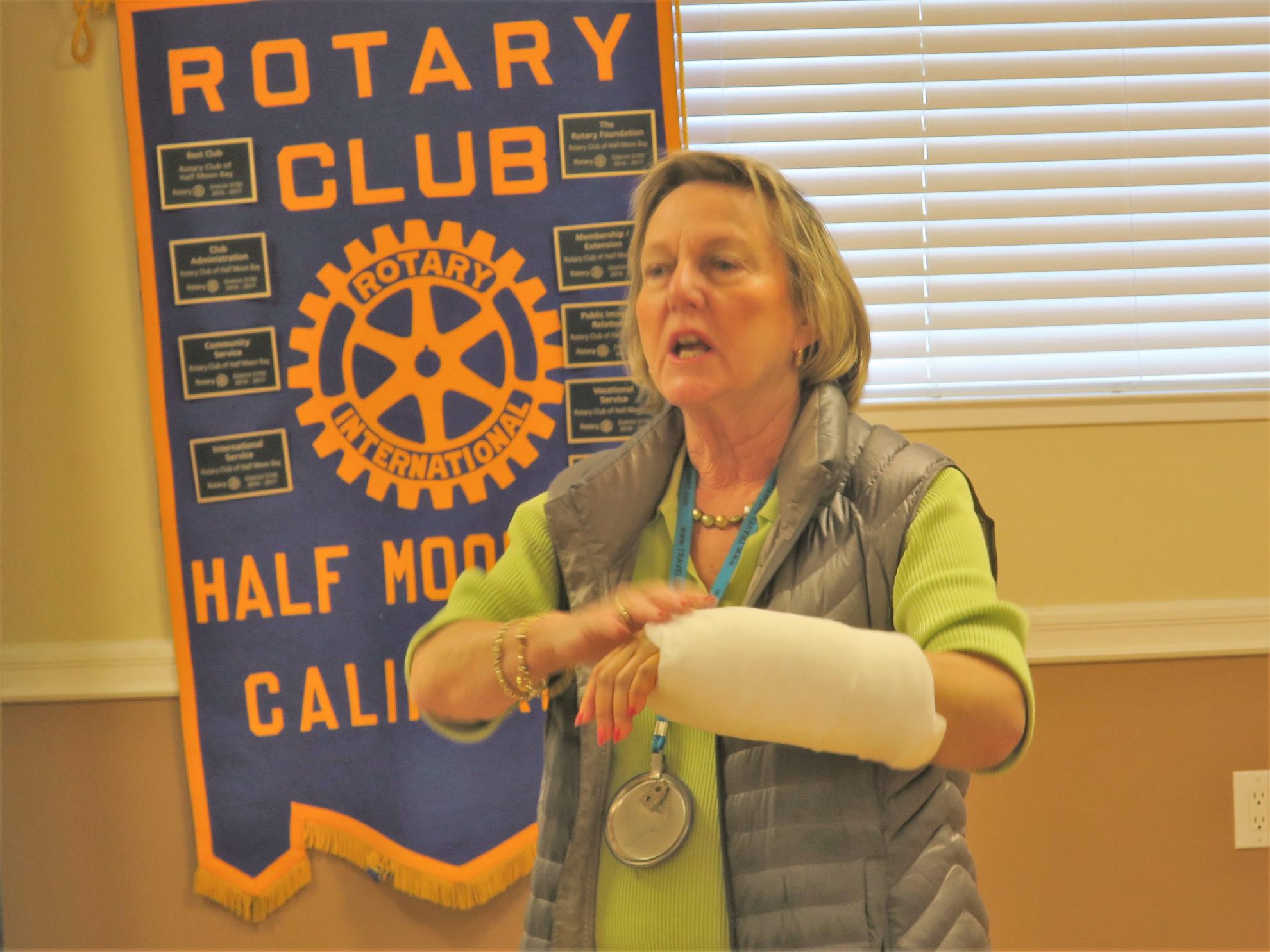
Ginger Minoletti showed us her broken arm. She tripped on a revised part on a sidewalk on Saturday at noon . Had to go to the ER at Mills and had surgery on Sunday at 7 a.m. and was home that afternoon. The break was pretty severe. It hurts some but the good news is that the cast will be off in 6 weeks just in time for her next trip.
Rusty Reilly-Pond complemented Ed Daniels who cleared time to help her with a clients whose mother had died and had a very tight deadline that required Ed's legal help. He was great! She recommends him to all of us.
Charise McHugh wished everyone Happy Holidays since she will be leaving next week for Tahoe.
Kevin O'Brien donated a check to the Club's Foundation for his birthday. He was going to Napa to celebrate
Announcements
Rusty Reilly-Pond reported that Coastside Hope had people volunteer to provide Christmas gifts to 225 families and 90 seniors. She also updated us on the Raindy Day Project headed by Eric DeBode of Abundant Grace Coastside Worker. The Coastside Lutheran Church will provide facilities for the homeless for this project. Liz Schuck will chair our Club's support efforts for this project. We will have to provide a team of volunteers on Mondays when it rains. More details will be coming.
Charise McHugh asked for a few more volunteers for the Prescadero HS mock interviews on Friday. This is our joint project with the Chamber.
Ed Daniels, Director of World Community Services, said that the decision on how we will allocate our DDF funds needs to be made by the end of December. He and the committee are recommending that at least some of the funds go to the agrarian enterprise of the Altiplano Cuno Global Grant Project, a Peruvian Greenhouse project.
.JPG)
.JPG)
Exchange Students Update
.JPG)
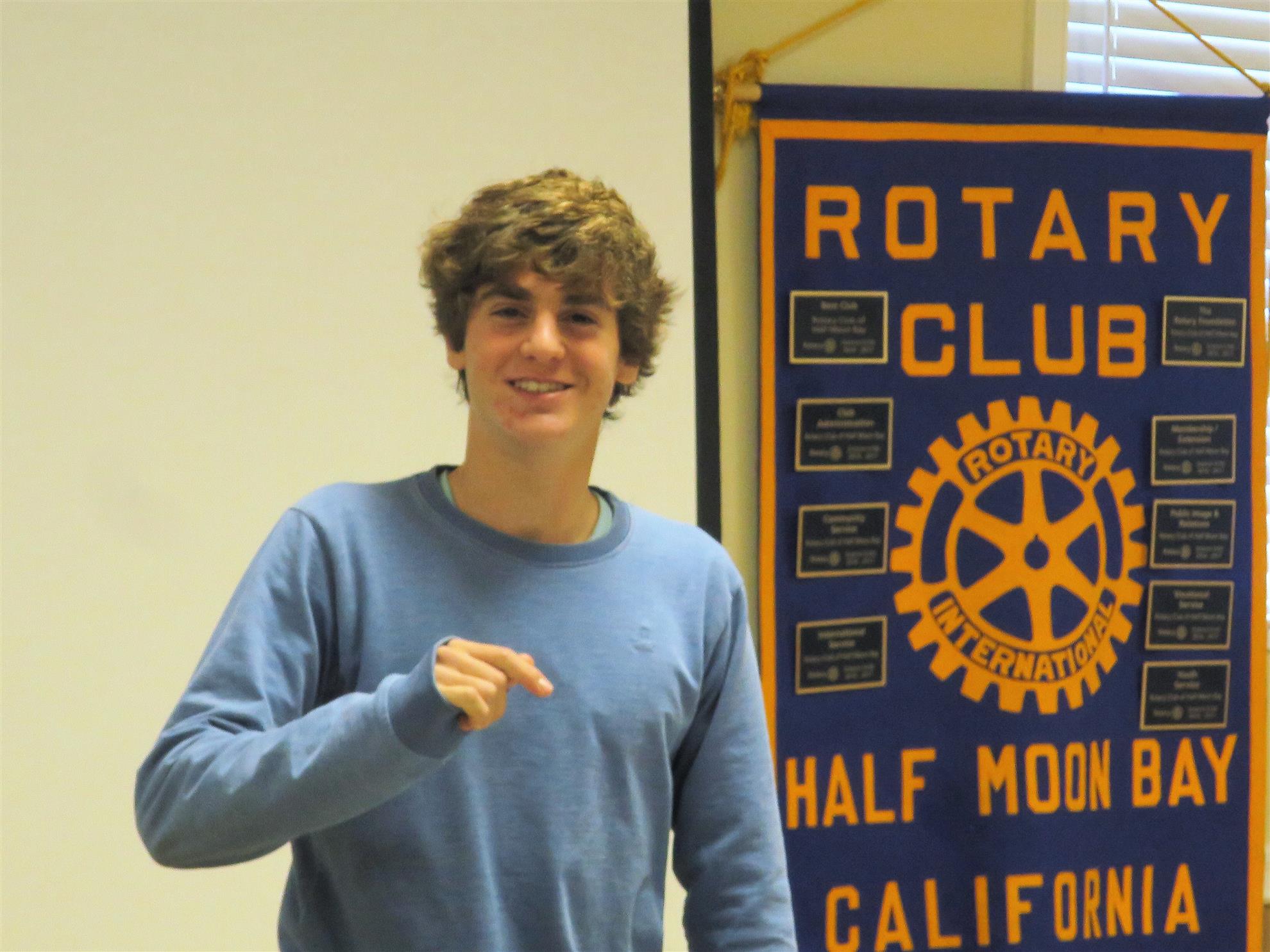
Louise had another busy and interesting week. She went to Mavericks , attended a play with her drama class, and went to an interfaith concert of Gospel music with the Evans and Wilsons.
Rafa reported that he was now with his second family, Julie and Dave Mill, who have a daughter in the same grade as he is. He spent Thanksgiving in Southern California with Mary Rogren's family before he moved to the Mills. He met her mother and went to Disneyland.
Interact Club Report
.JPG)
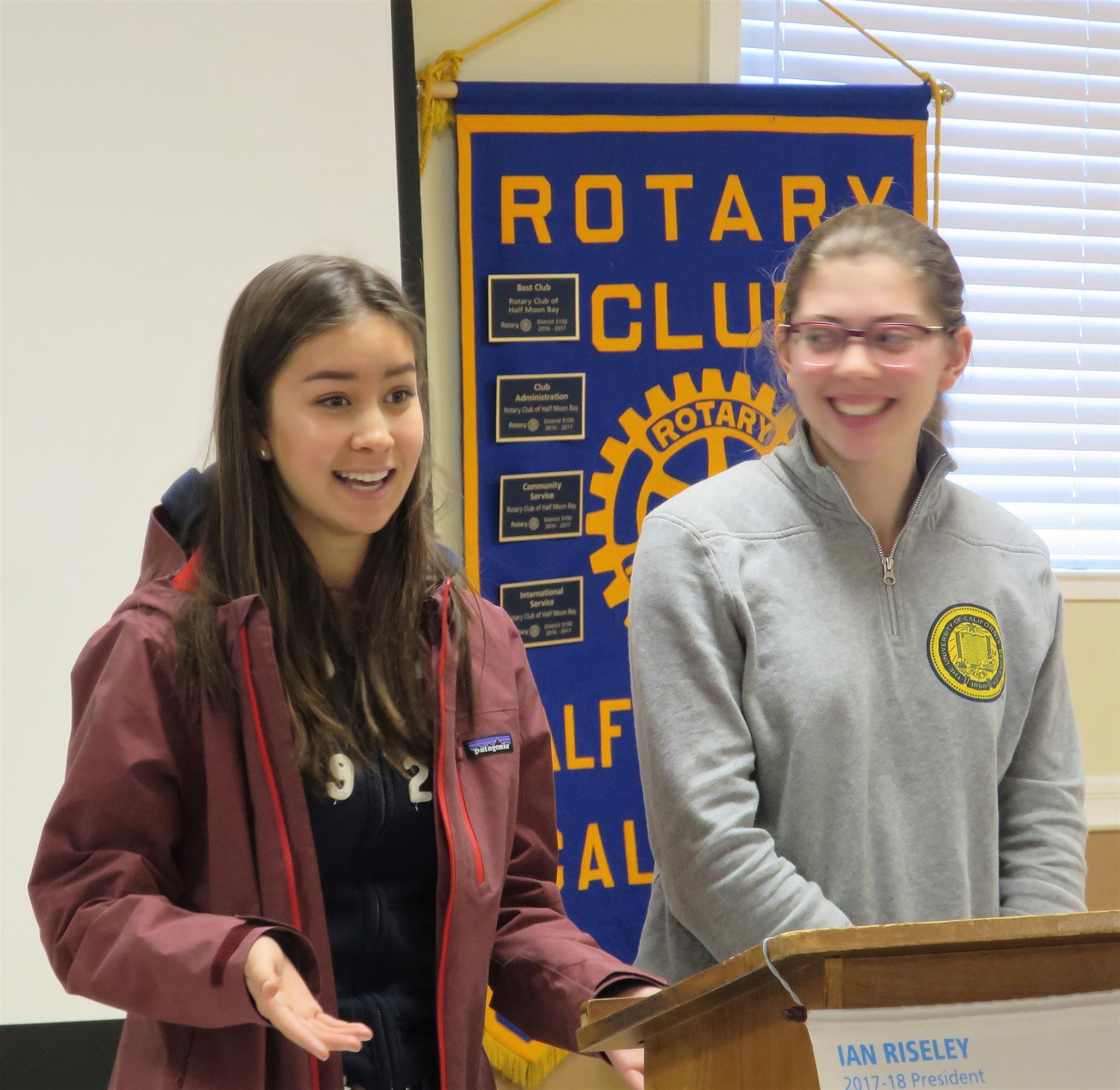
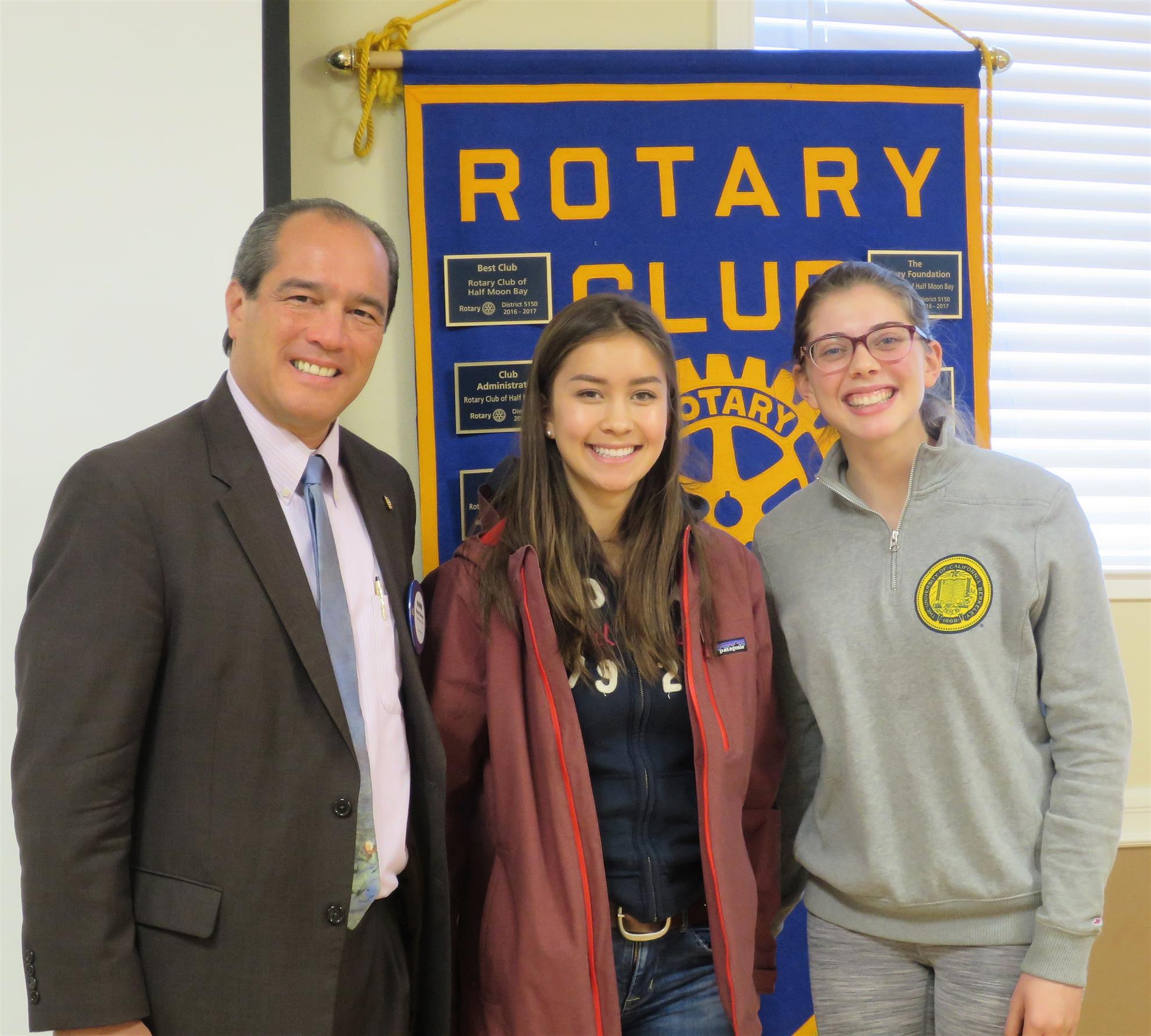
Bella and Sienna provided an exciting update on the Interact Club which is thriving this year. They had tremendous participation from their Club members in the District Leadership day. They are involved in Project H 2 Opendoors to provide clean water in collaboration with other Interact Clubs.
Marble Drawing
NO luck again this week 
COMING EVENTS AND SPEAKERS
OUR SPEAKERS and PROGRAMS for DECEMBER
Dec. 21 Social - Cowboy Christmas at The IOOF Lodge with The Oddfellows
Dec. 28 NO MEETING - Happy Holidays
PHOTO GALLERY
.JPG)
.JPG)