FogHorn May 4, 2017 - Nonagenarian Al Koehler's Life Memories
________________________________________________________________________________________________
The FOGHORN
ROTARY CLUB OF HALF MOON BAY
May 4 , 2017
LIFE MEMORIES - Nonagenarian Al Koehler
Article by Stacy Trevenon
Photos by EJ Dieterle
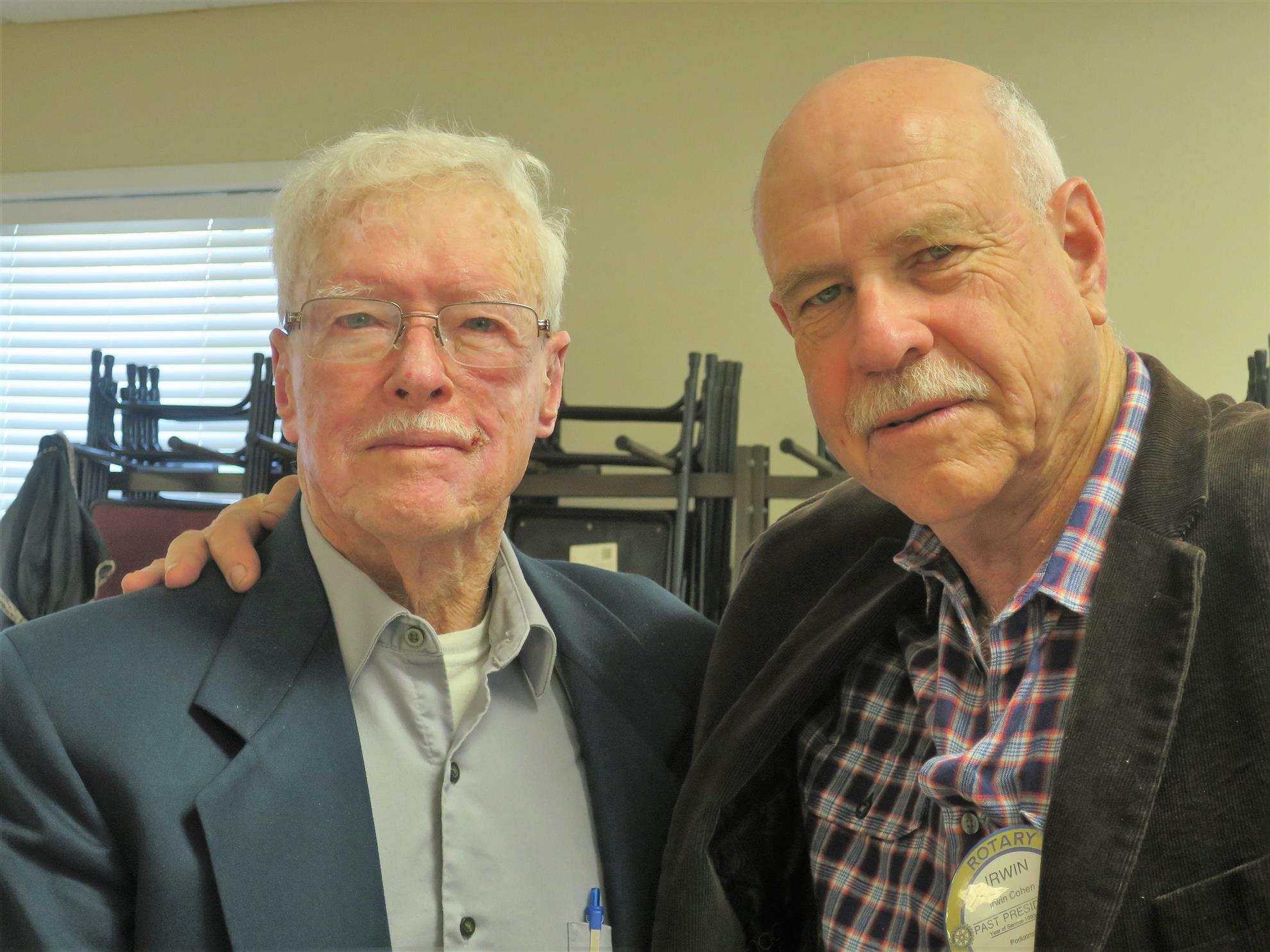
Irwin Cohen introduced the speaker, Palo Alto resident Alfred "Al" Kaehler.
At age 96, Mr. Kaehler said he had clear memories of "things that took place that literally shook the world." He spoke a little of his own philosophy: He said he had three rules in life, which were that you have to survive, try not to do anything dumb, and know when you are too cool or not cool enough. His own motto, he said, is: it ain't braggin' if you done it.
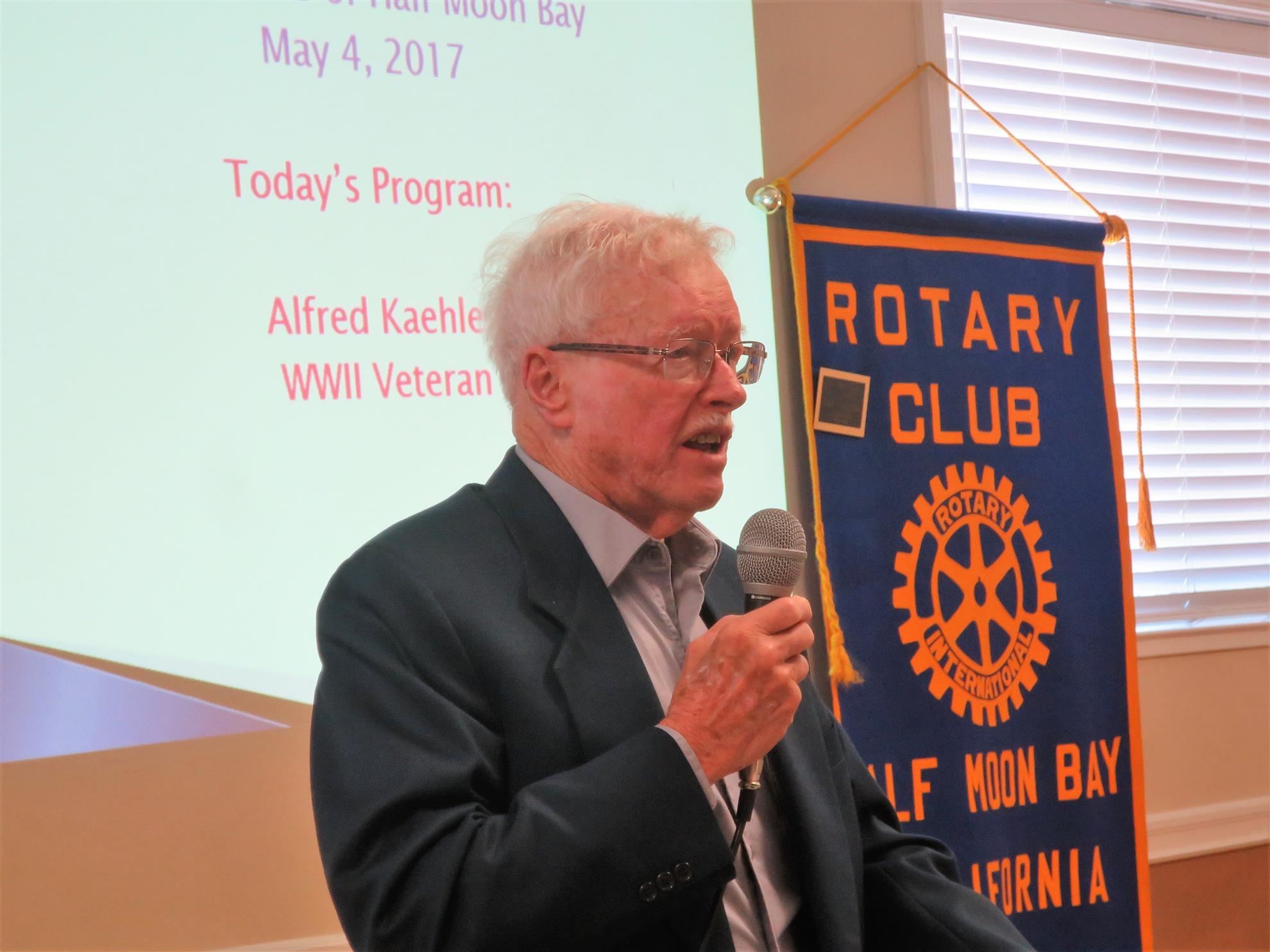
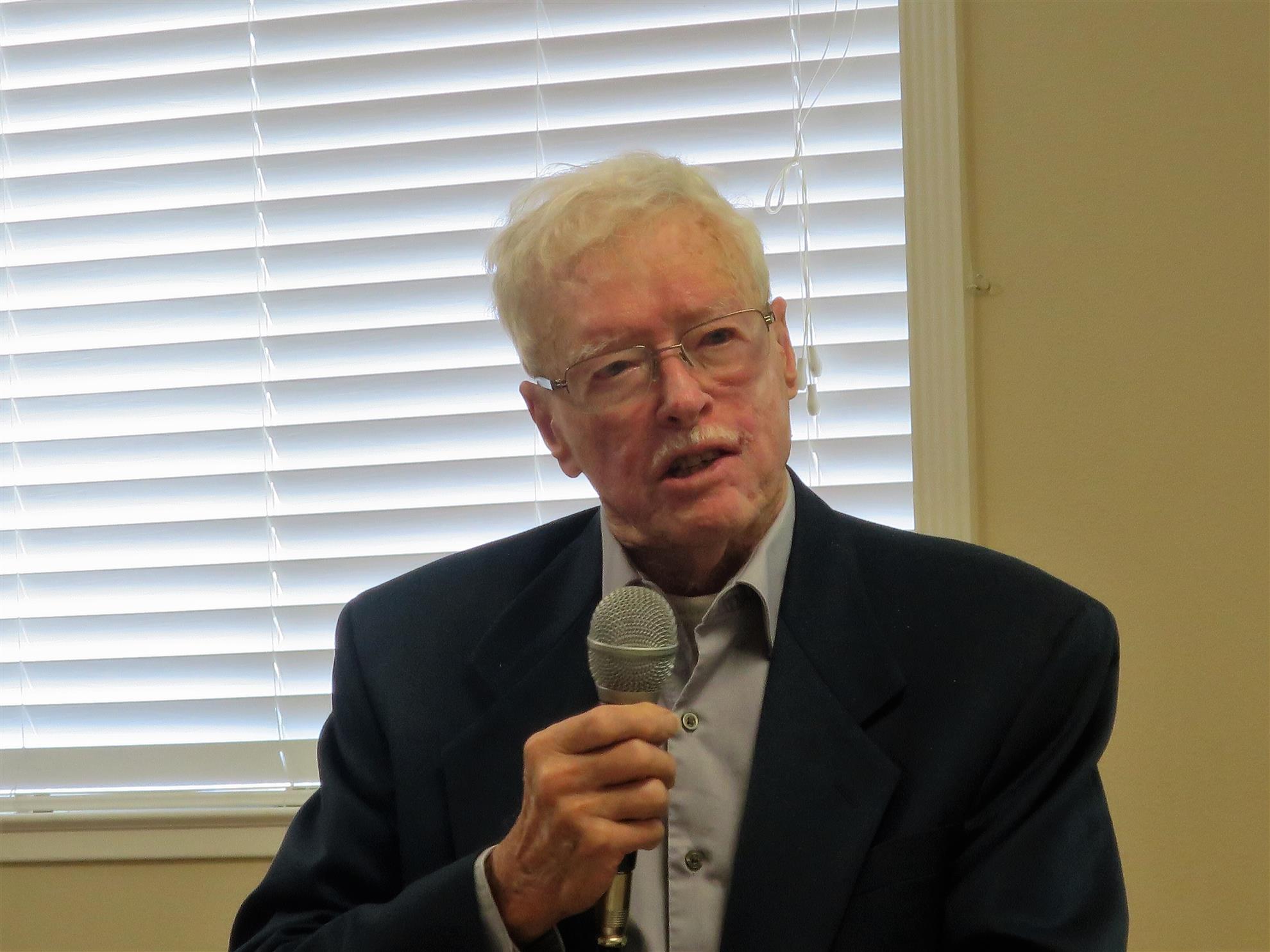
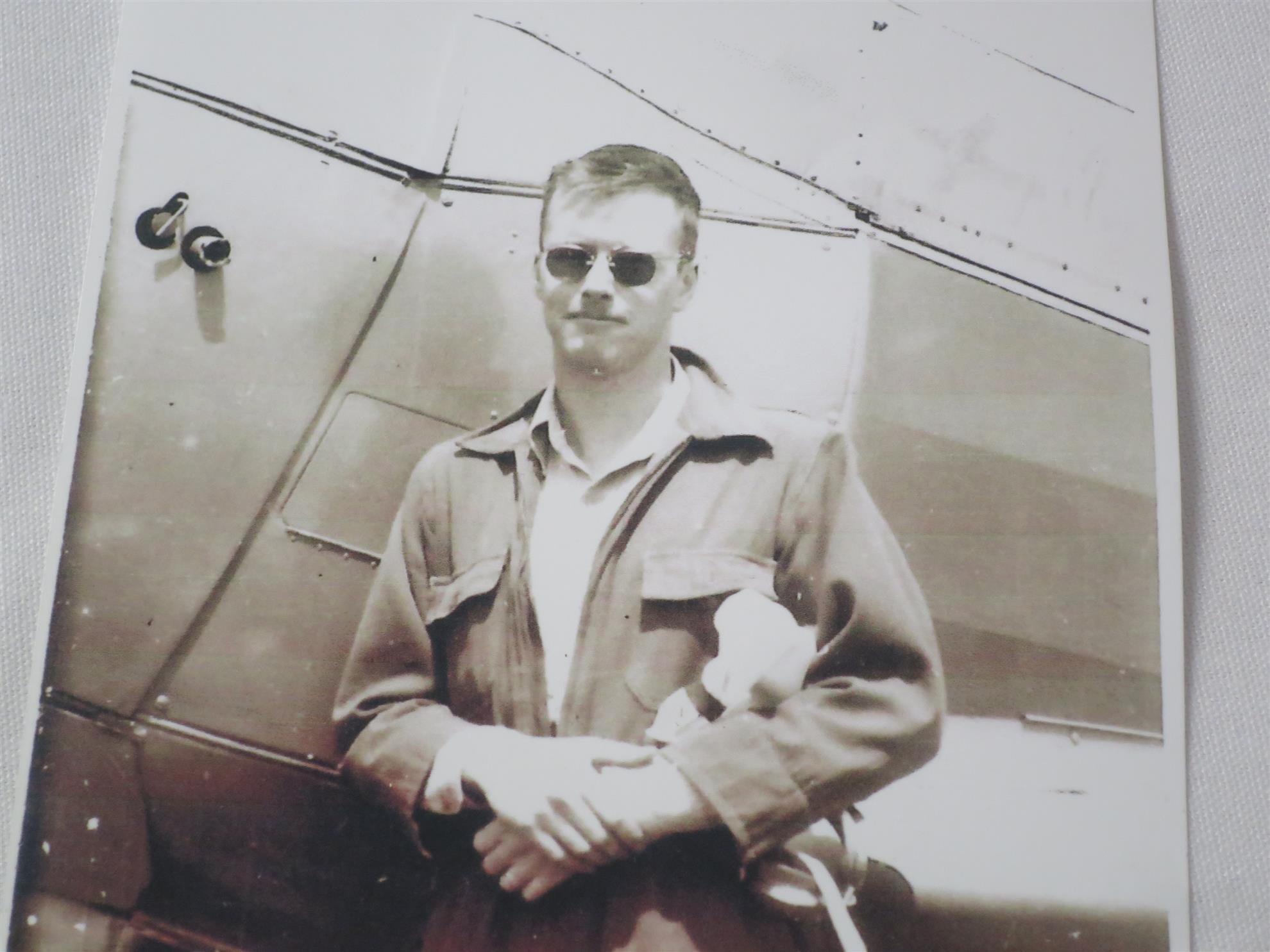
Born in 1921 in Ferndale, California at his grandmother's house, he lived in Orland, Calif. until age 6, and lived in Lolita, Calif. and worked on farms in the summer until going to college. Later he worked for 42 years in engineering. The places he worked included SRI, Lockheed and Ray-Chem in Palo Alto. In the summer of 1942 he worked in the Richmond shipyards, and in 1943, he got a job with the Manhattan Project. He graduated in 1944 from the University of California at Berkeley with a bachelor of science degree in mechanical engineering, and worked with the Manhattan Project until October 1945
His work brought him into contact with a lot of things, and at one point he said he suffered some stomach pains which he attributed to food, but were actually caused by exposure to carbon tetrachloride, which is a cleaning fluid. Some of his work was very dangerous, requiring him to be in a confined area, like an enclosed tank, working in a magnetic field with uranium compounds.
He was classified 4-F, which kept him out of the Army during World War II. But as a civilian scientist, he worked on the machine invented in Berkeley, Calif., that enriched uranium 235 as the core of "Little Boy," the bomb that was dropped on Hiroshima. In addition to Berkeley, he worked at Oak Ridge, Tenn., and Los Alamos, N.M. Most of his work was on the electromagnetic enrichment of uranium 235. Most people don't know what was their biggest contribution to the war effort; his was the design of an electrical insulator which solved a major production problem.
He observed the women who operated the Calutrons, machines which separated the isotopes of uranium. For that work, the women received bonuses based on the amount of time they kept the electrical meters reading correctly. The workers fudged the numbers and fooled the machines to keep the meters at high levels by using their fingernail files, until they were stopped by the people in charge. He recalled a sign that warned employees not to talk to the women operators but he did anyway, as did other young men. His work demanded knowing a great deal about machine design.
He talked about his salary. In 1944 dollars, he said, he made $7,500 for 30 months' work. Most jobs in 1942 would pay about 50 cents an hour except for war-related jobs, which paid 85 cents and up an hour.
He passed around some photographs of the Calutrons with the insulators he had designed. He passed around the book "The Girls of Atomic City," which focused on the domestic war efforts of women. The cover includes a photo of Y-12, the name of the area he worked in on insulators. For additional income, he played saxophone and clarinet in a big band, performing regularly in recreational halls used by construction workers. Sometimes, he said, altercations would break out among the workers and the band would use music to drown out the shouting.
Talking a little bit more about himself, he said he enjoyed horseback riding English style for a while, and then turned to flying. At age 92, he did a parachute jump. He and his wife enjoyed many adventures flying together, and also traveled to places like England, Alaska and Hawaii.
He spoke of going to Oak Ridge, Tenn., five days on a troop train, in 1944. He mentioned "code words" like "Tuballoy" for uranium or plutonium and "the gadget" for the bomb. He never felt the need to use them because the people he was working with knew what he was talking about anyway.
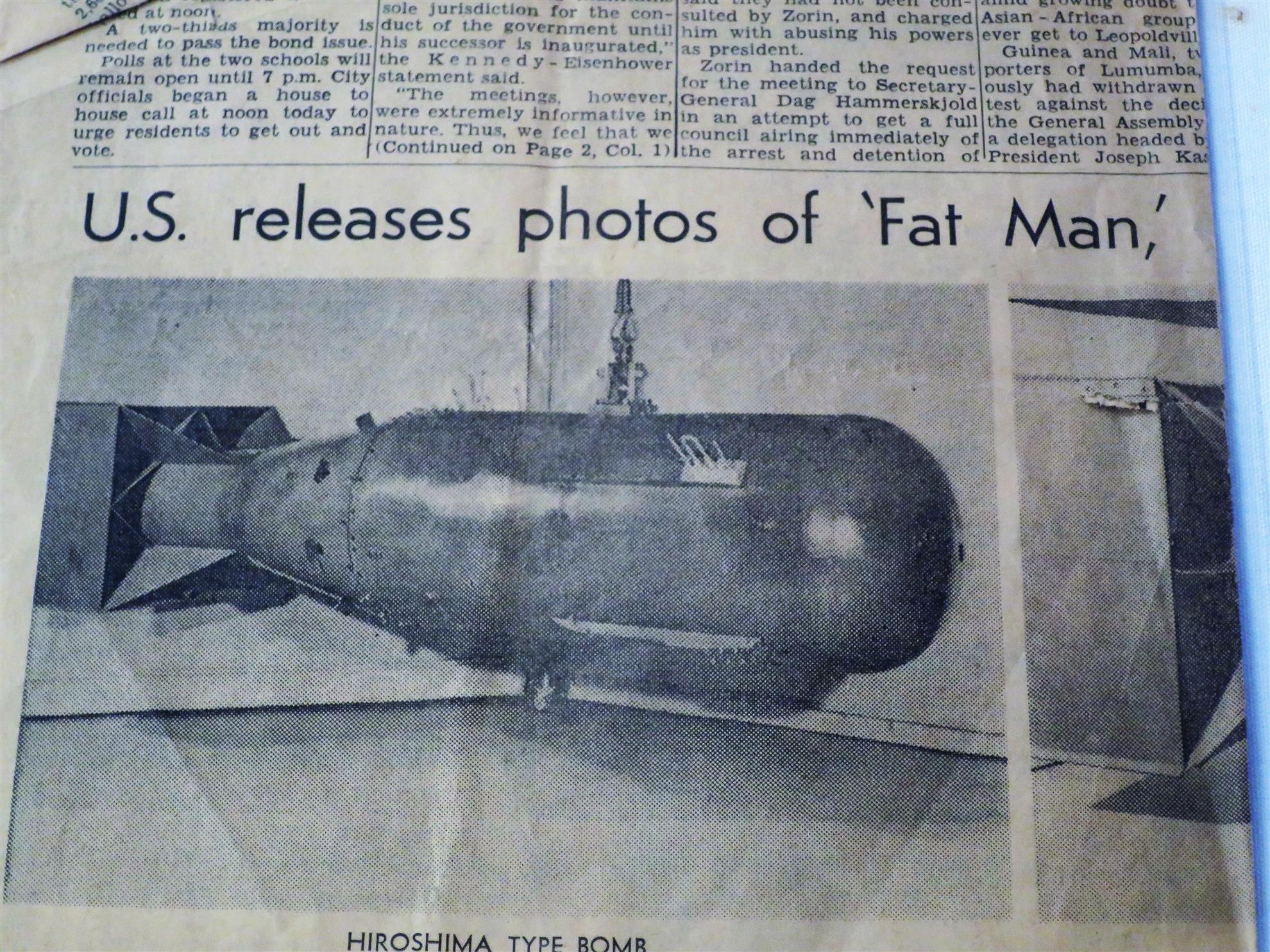
In May 1945 he returned to Berkeley and Lolita, California (where he had lived as a boy) for his only vacation during the war, and then he went to Los Alamos in late July. Due to a case of the mumps, he missed being in Los Alamos in mid-July of that year, when the atomic bomb was tested at the Trinity site. He would have gotten up early in time to see the flash 250 miles away. He tested the detonators for Fat Man, the plutonium bomb that was dropped on Nagasaki. At Los Alamos, arriving after most of the work in preparation for the bombs was done, as a "new boy" he was shown a sample of "heavy-heavy water," which was to be used in making the hydrogen bomb.
He spoke of President Truman, who he felt did not order using the bomb, but left that decision up to the military. But he felt that Truman did enable the surrender of the Japanese by allowing them to keep their emperor. He also spoke of his mentor, Dr. Rick Condit, a physicist who was at Berkeley, Oak Ridge and Los Alamos at the same time he was.
What he called the highest point of the war for him was being in a square dance at Los Alamos with Dr. Enrico Fermi, whom he called the most important physicist in the project after Oppenheimer, and Fermi's wife and daughter. The wife, Laura, was Albert's partner who said, "Don't swing me so fast," which he said would be the subtitle of a book about his war experiences, if he were to write one.
He also riveted listeners with stories about potential disasters like the time he was standing near a woman pouring acetone, an extremely flammable material, into a vacuum trap while holding a cigarette. Finally he presented some historical items from the times, including yellowed, delicate clippings from a Santa Fe newspaper showing photos of both "Little Boy " (the bomb dropped on Hiroshima) and "Fat Man " (the bomb dropped on Nagasaki) and the first announcement of the dropping of the bomb at Hiroshima. Rotarians had questions and discussion followed, touching on Los Alamos after the war, on safety glasses, on what happened to the leftover enriched uranium, details about the actual plutonium core ("as big as a softball" he said) and what were the feelings of those involved in the project both before and after the bombs were dropped. He said that some wondered whether they would even work, and whether the Germans were ahead of the Allies in the development of these weapons.
The presentation concluded when several Rotarians gave a standing ovation to Mr. Kaehler.
May 4, 2017 Meeting Recap
Article by Dianne Bobko
Photos by EJ Dieterle
Call to Order – Pres. Liz Schuck started off with the Pledge of Allegiance.
Greeters: PP Susan Kealey and Ed Daniels who read an Inspiration Thought based on the celebration of Earth Day " This grand show is eternal......"
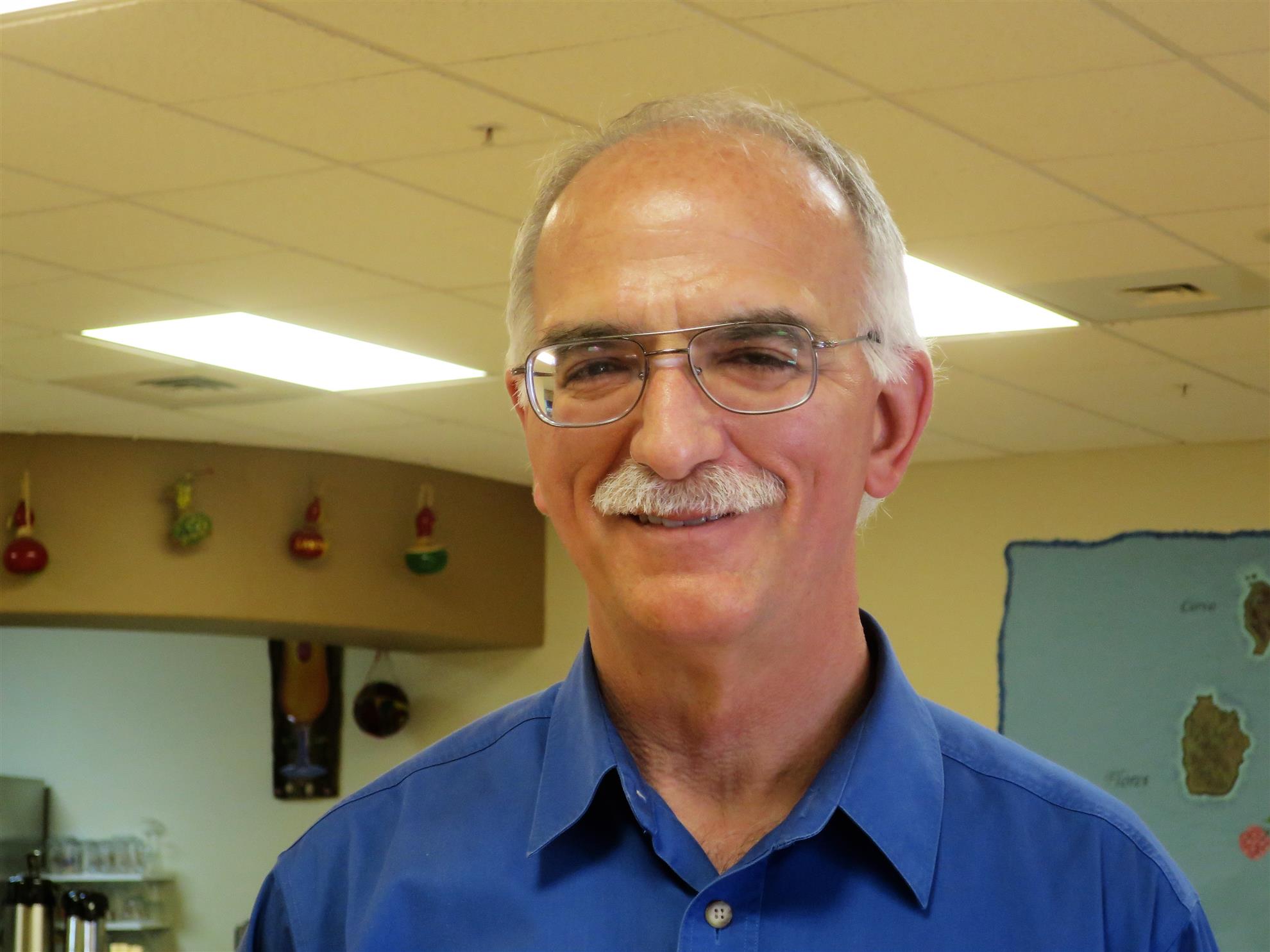
Guests
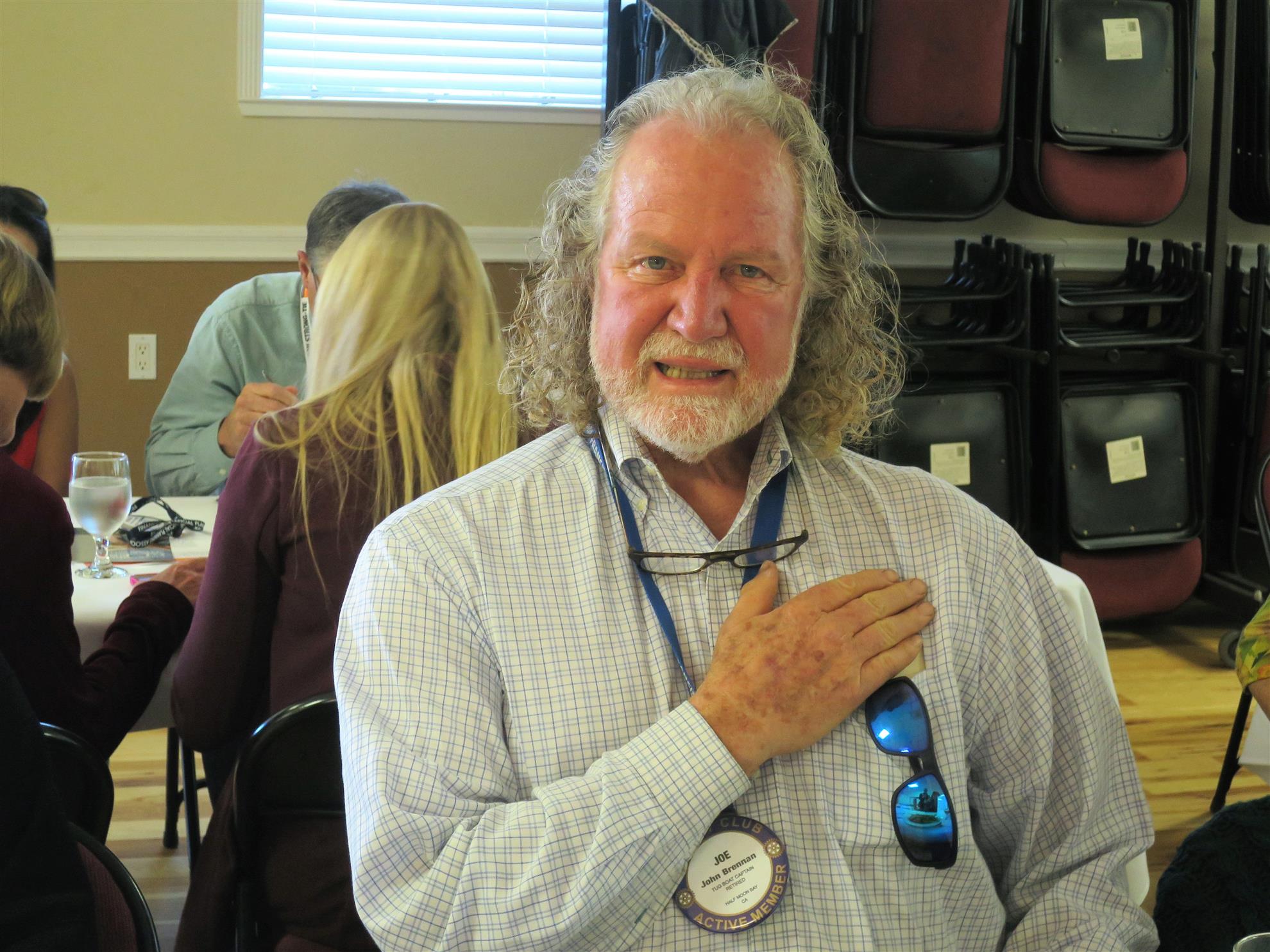
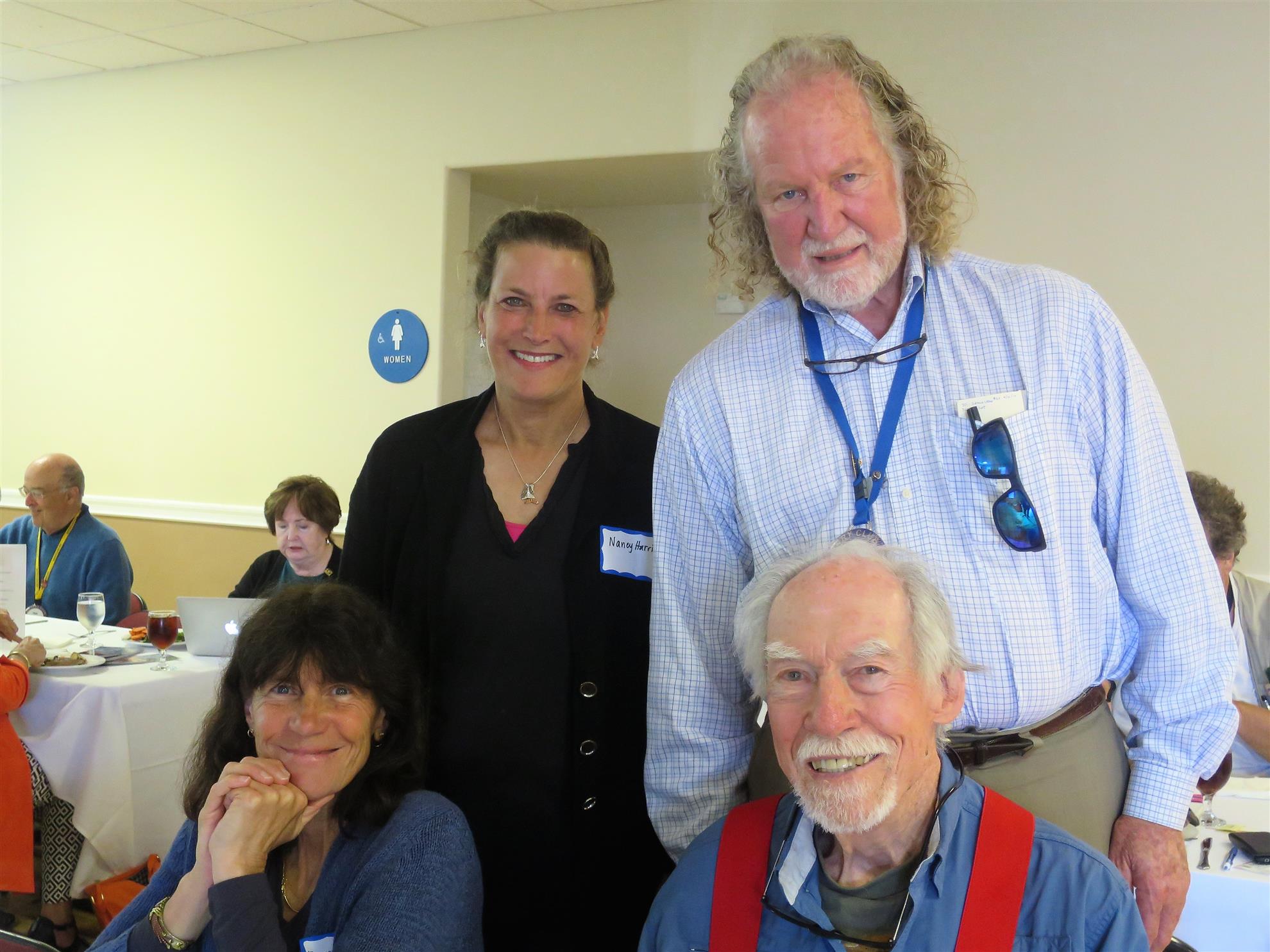
Joe Brennan introduced his guests:
Dr. Nancy Harris; Director of the Terma Foundation, A Tibetan Health Initiative (in HMB)
Franciose; Terma Assistant Director
Bob Swift, American Mountaineer, Geologist and Teacher
Happy/Not So Happy News
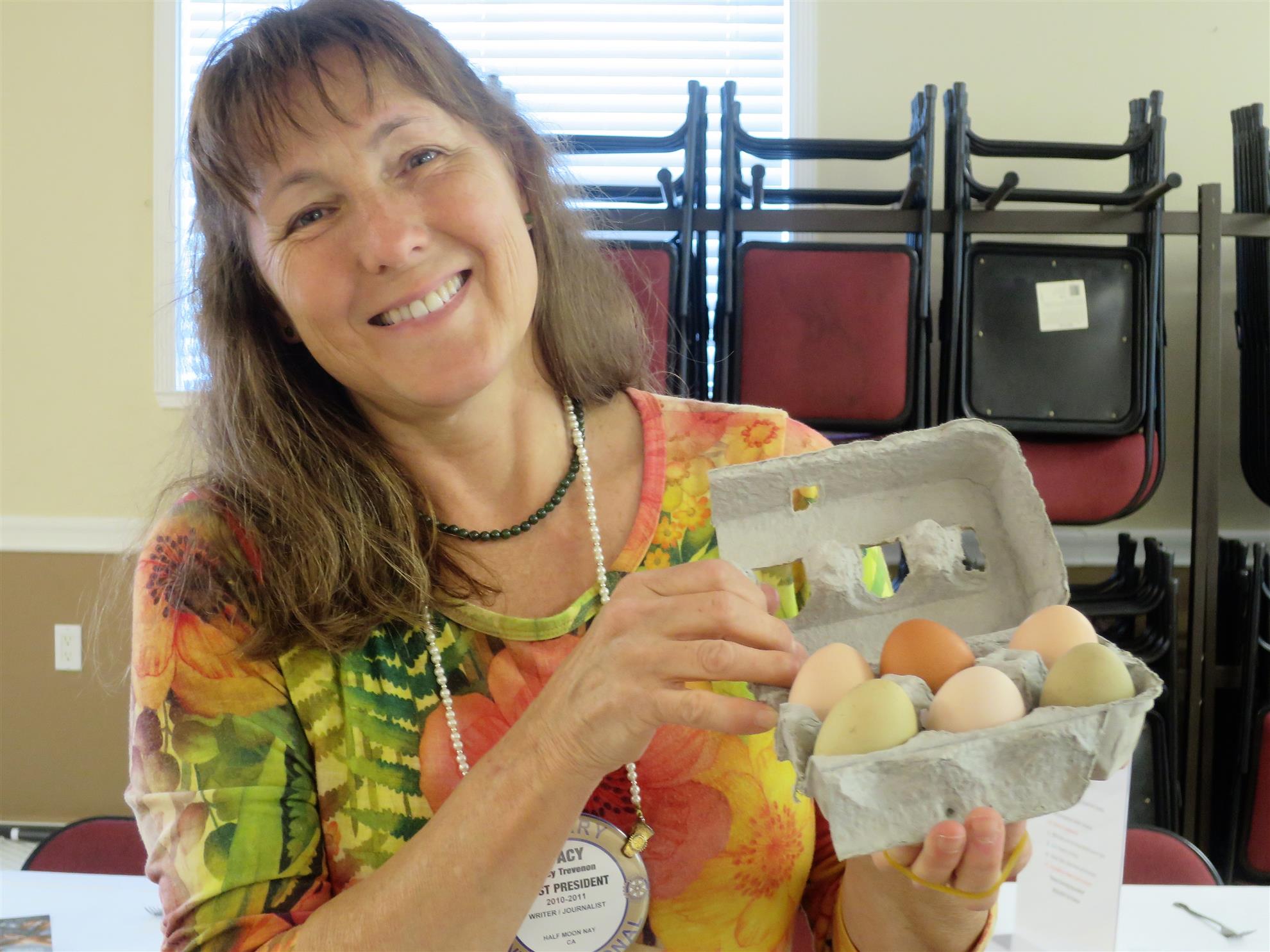
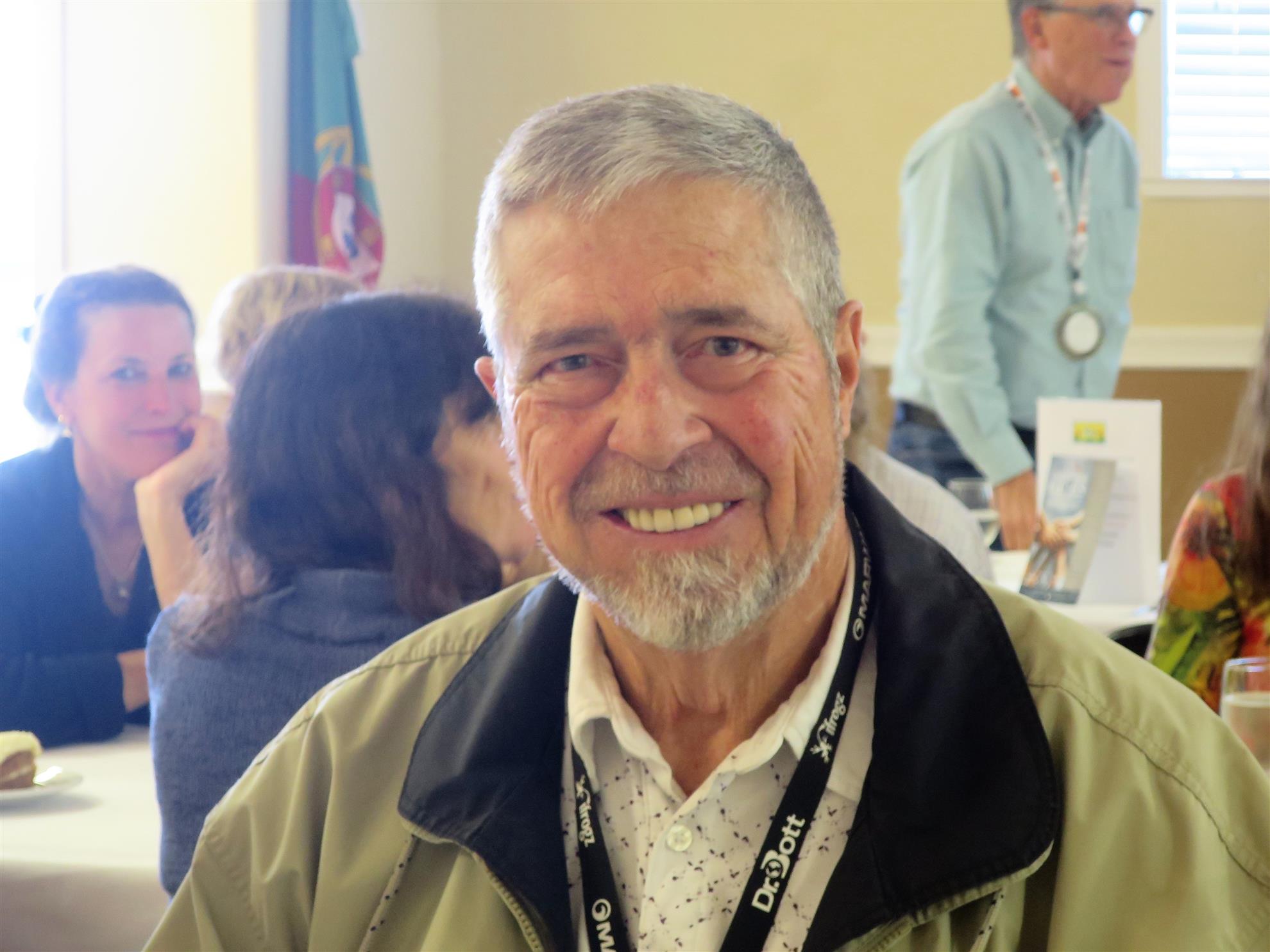
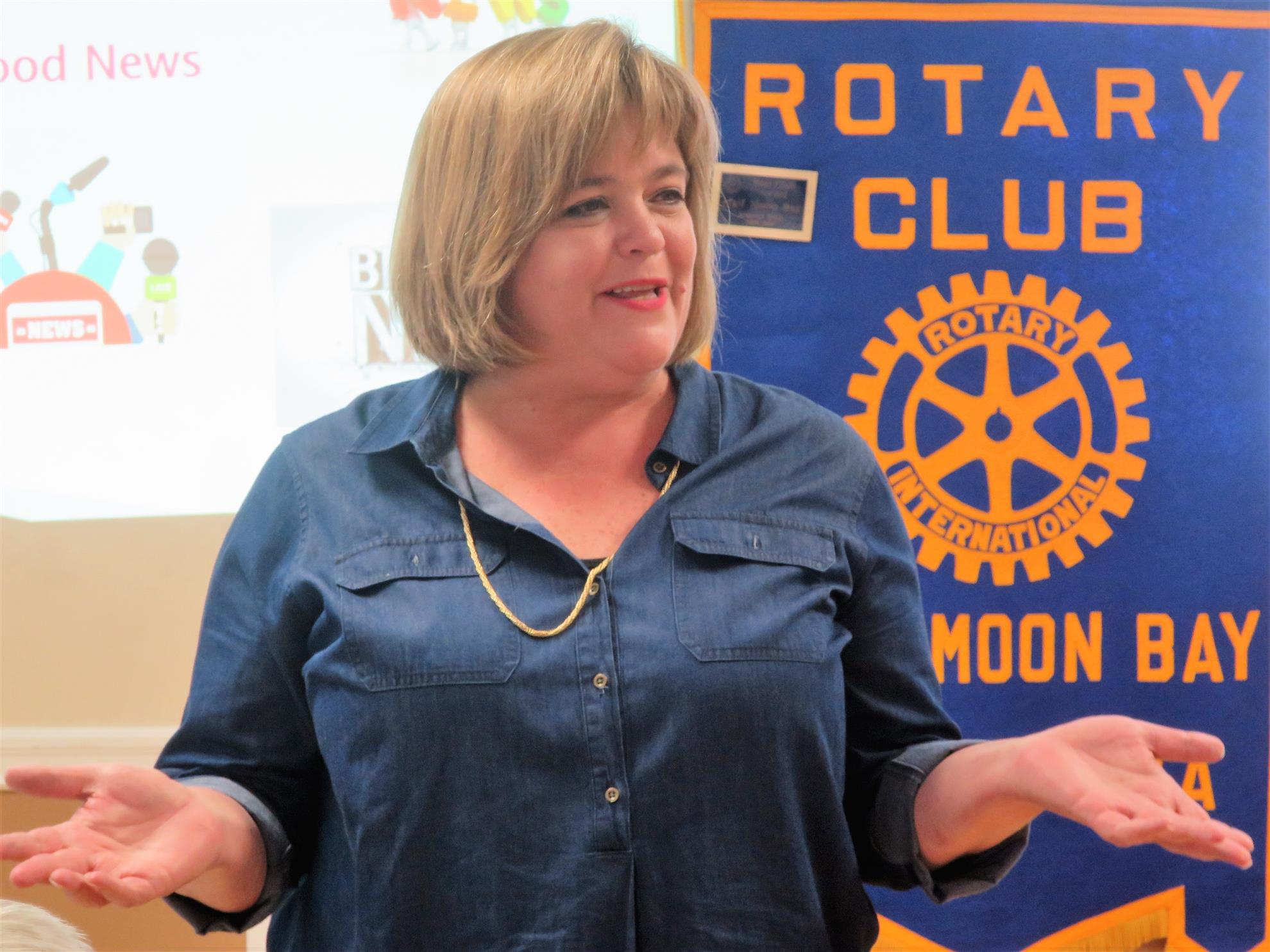
Stacy Trevenon had 6-packs of very fresh eggs from her "girls" for anyone who wanted them.
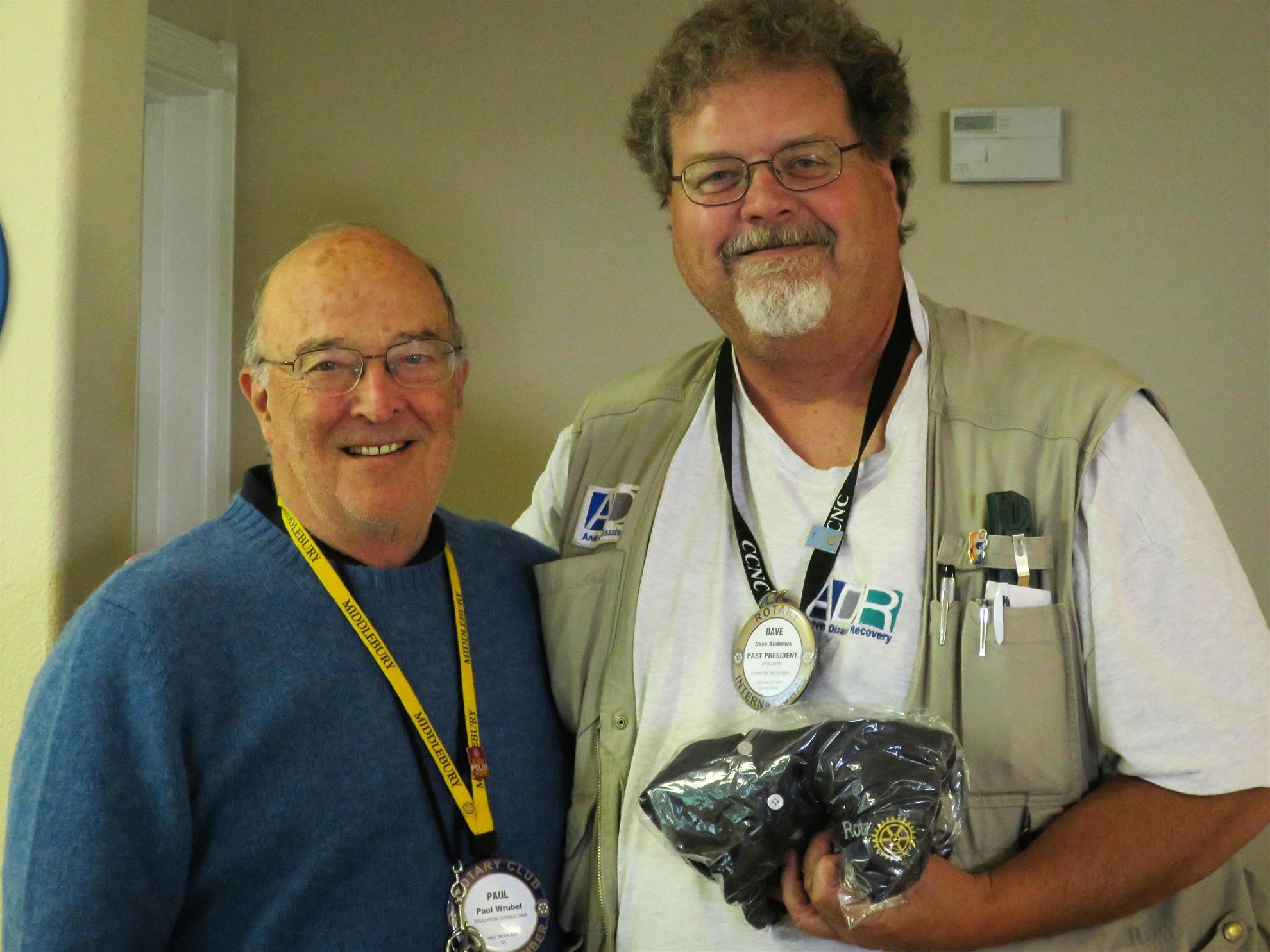
Paul Wrubel the special Rotary Shirts he had promised him.
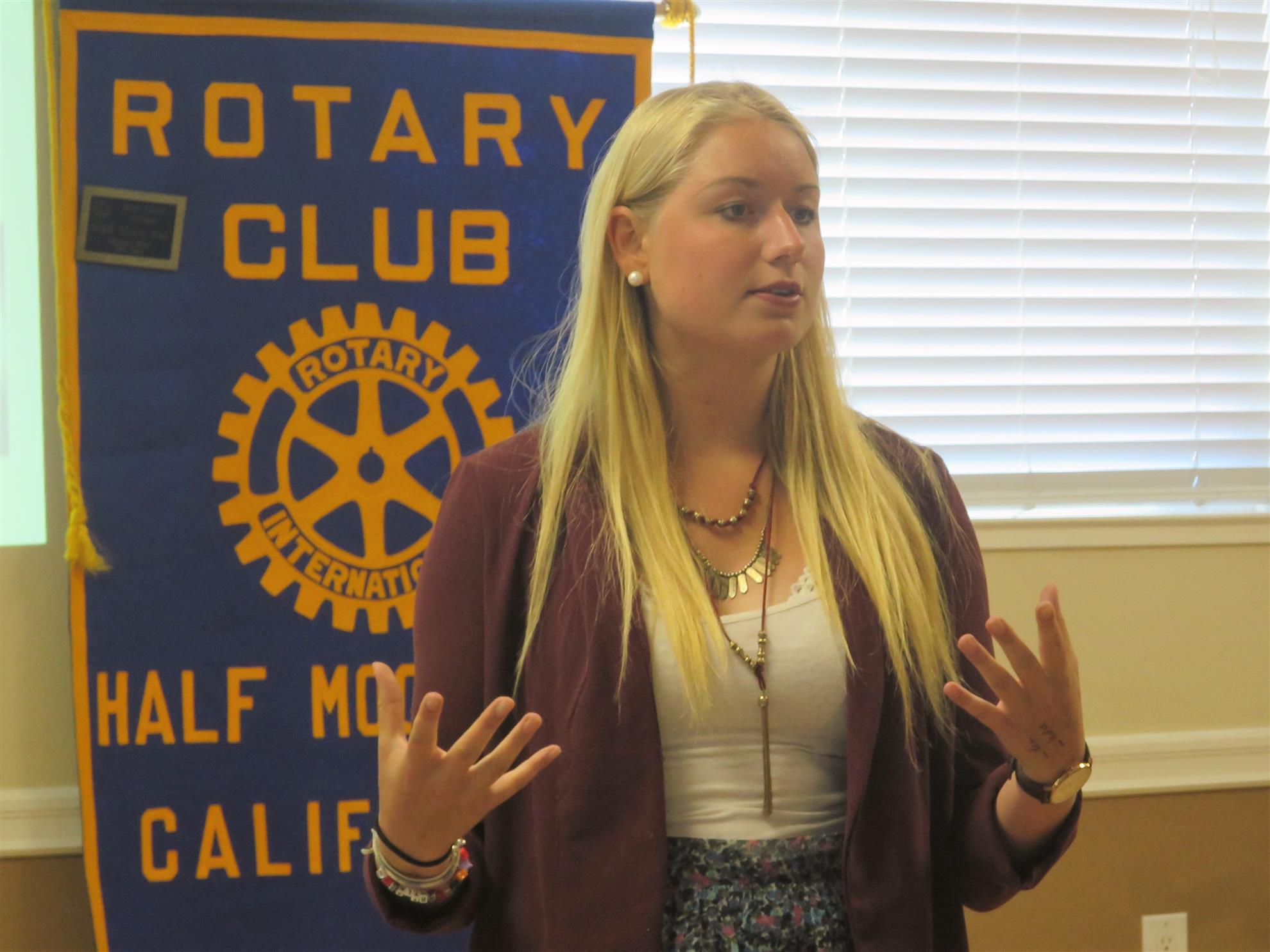
Caroline Gossart had missed the last couple of meeting because she was at RYLA, our Leadership Camp for Youth to which we provide support for several students to attend. She found it very nice and enjoyed getting to know more students and found many interested in the Rotary Youth Exchange Program. This last weekend she went to Yosemite and hiked for 8 hours in the gorgeous weather, The waterfalls were fantastic. And everyday this week she went to the beach
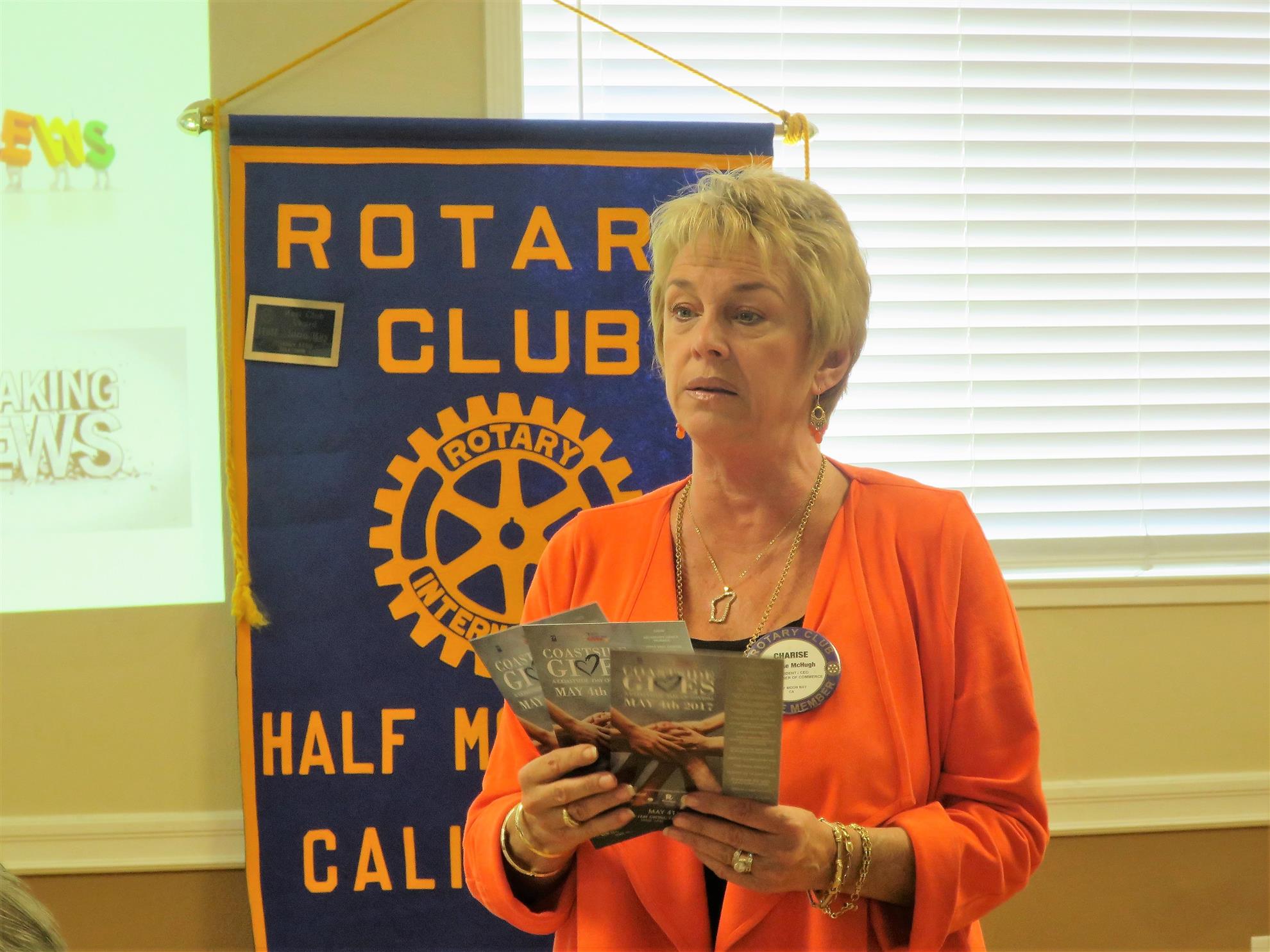
Charise McHugh announced that the Merced River is flowing 4X faster than normal and is threatening to overflow its banks.She also reminded everyone that Coastside Gives was currently active for the day. Many of our local nonprofits and other organizations are featured and she would like people to donate to the HMB Coastside Community Foundation to fund the landscaping on the last part of the median.
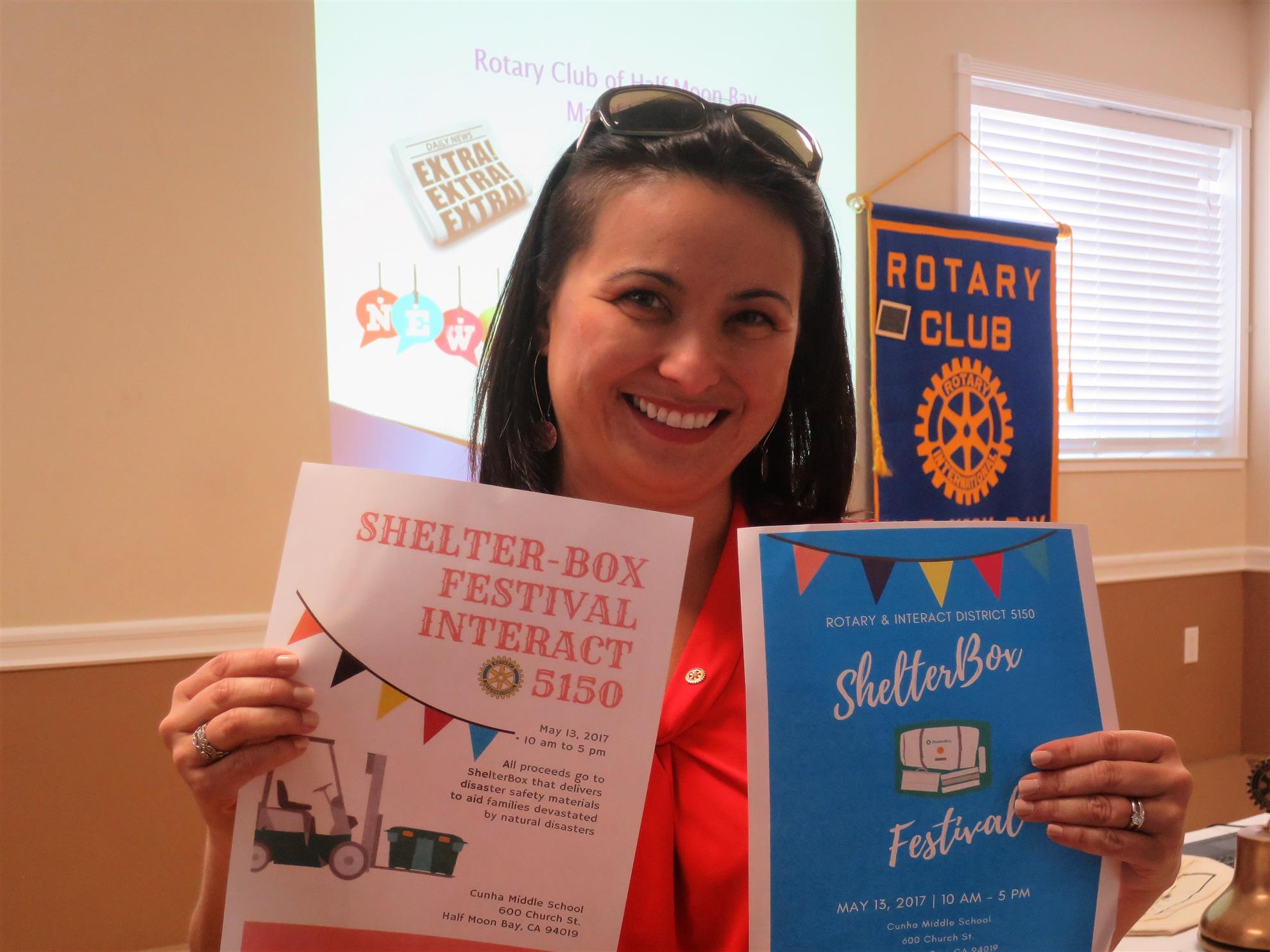
Mitone Griffiths proudly announced that Mia would be swimming in 3 events at the trials for PALS. It is such an extraordinary groups of girl swimmers who have great camaraderie and support each other fully. She also had flyers on the tables promoting the May 13 Shelter-Box Festival sponsored by the Interact Cluse in District 5150. Our Interact Club members are very busy with preparations and hope we will attend to support their event. Mitone will be there to promote the Shelter Box Organization.
Ralph Ely has good news about his son who was spotlighted in the Real Estate Section of the HMB Review. He was recommended by another Real Estate Office, not by Ralph.
Rose Serdy has been away for work and also for her 6-month-old grand daughter for her first music lesson. yes, that's right she is 6 months old. It was a lot of fun for Rose. Rose's birthday was in April so she donated to our RC of HMB Foundation.
Christine Quinn's son has been accepted at VMI and was awarded a scholarship he hadn't even applied for.
Announcements
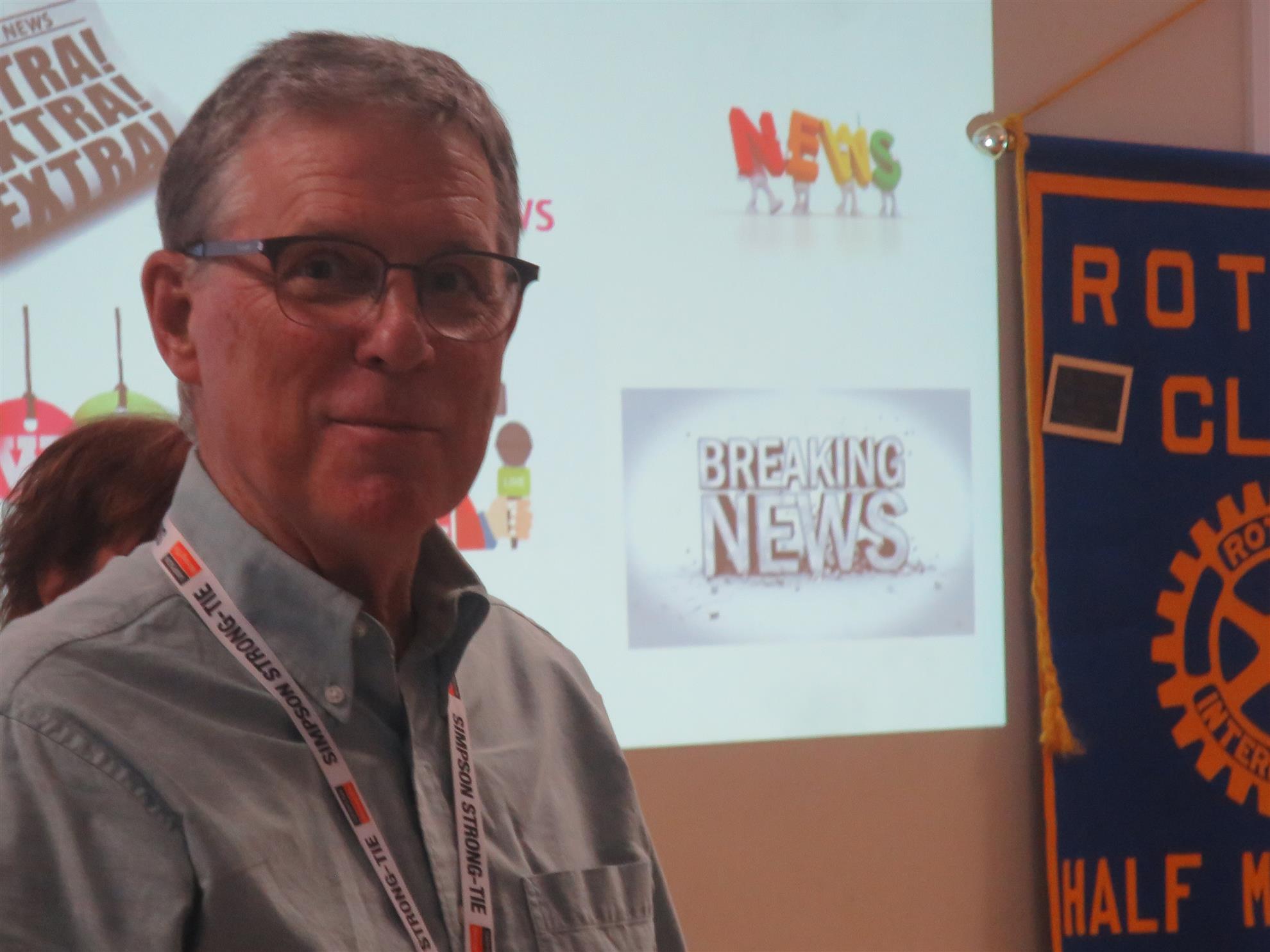
John Evans announced that the Exchange Students will be a the District Conference and he will be also. Last week he and Larkin went to LA and drove back taking the side roads that were empty, and it was beautiful He was very glad he was trained in CPR. While on their drive Larkin was eating a snack, and she started gagging so he pulled over. At that point she couldn’t breathe, so he opened door and proceed with the Heimlich Maneuver. It worked as expected, and she was OK
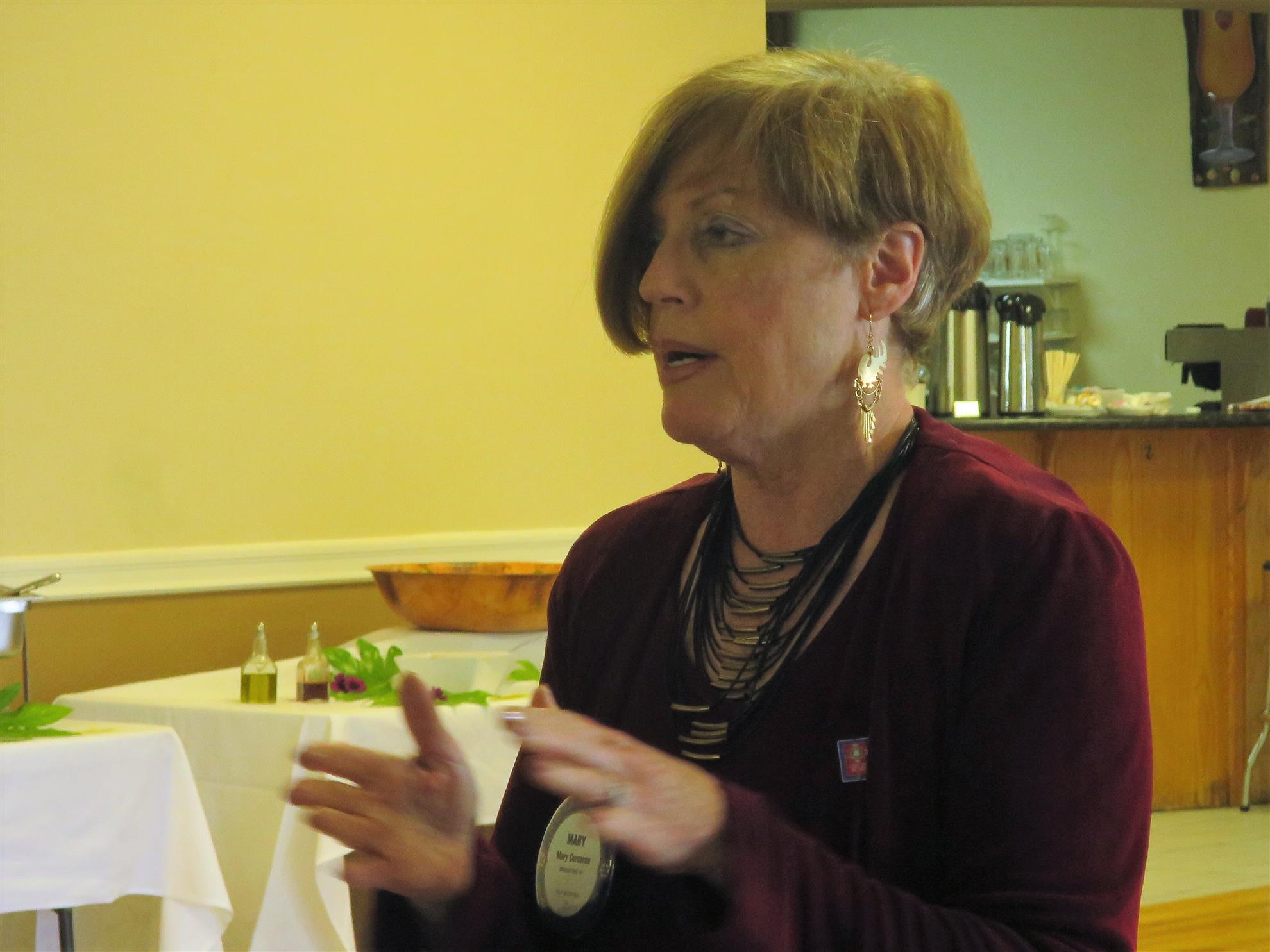
Mary Corcoran reminded everyone that our project with the Chamber at HMB High is Friday May 12. She needs people to help with the interview practice - 6 people per period. One always receives more than you give. It is a great activity to be a part of.
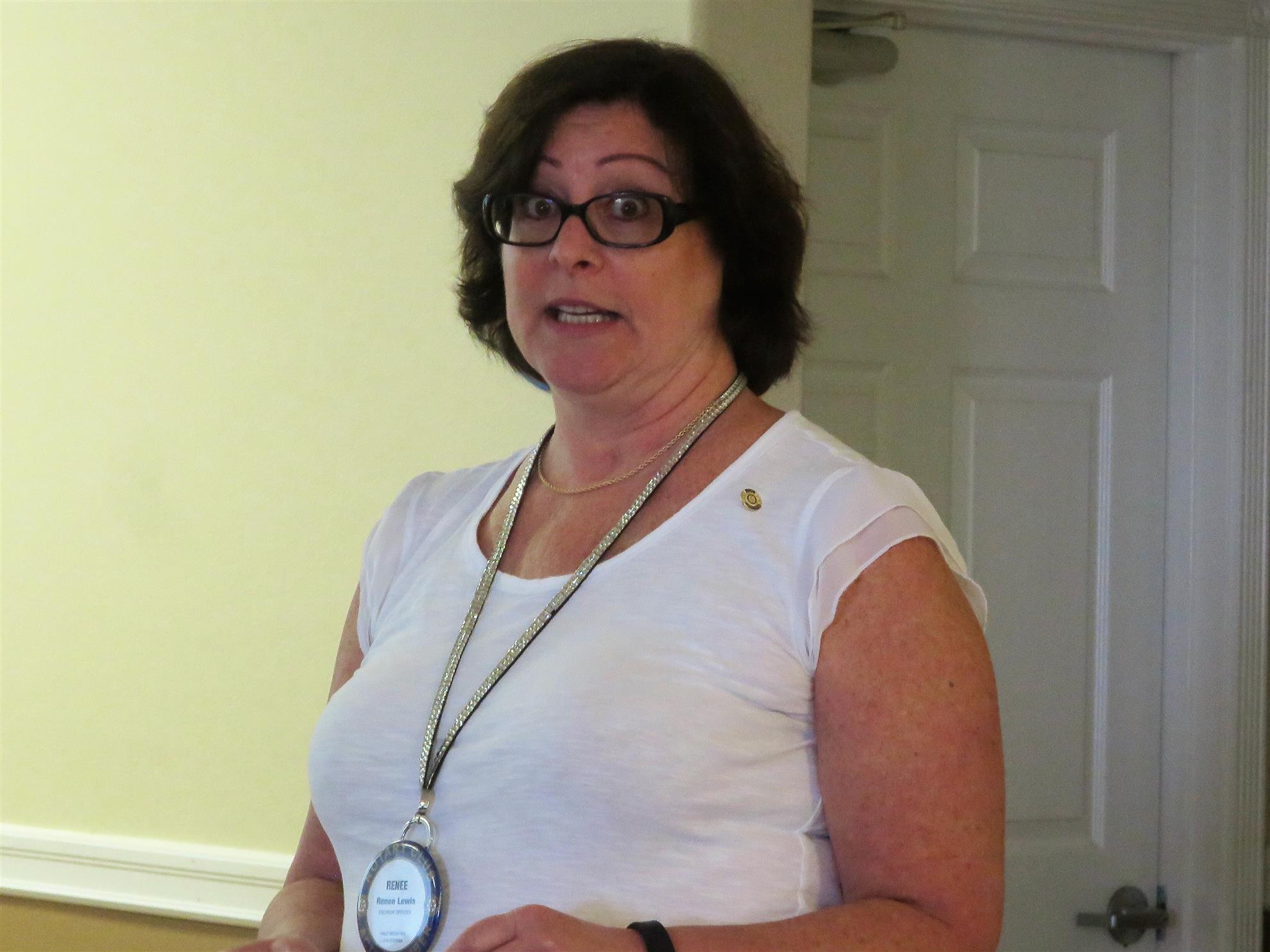
Renee Lewis mentioned that she and Rusty Reilly-Pond are getting ready for the Coastside's Relay for Life event. The Rotary Team is now just above $1000 in donations. Her project, Dine and Dance at Nick’s, is really fun. there are heavy hors d'oeuvres. Bill Cook will give dancing lessons. It is $50 a ticket.
Pres Liz encouraged members to attend the District Conference this weekend. Mitone is taking our banner. Liz will be there Sat. evening and MCing on Sunday during the Exchange Students part. Still time to sign up. Saturday night is when the Club awards will be given out.
Warren needs help to test water on the coast. Call him is you are interested
Pres Liz went to the HEAL Farm this week. The classroom is finished. While there she supervised a goup of Kindergardeners. She loved it!
On Wednesday we are invited to plant vines on back side of classroom.
THIS DAY IN HISTORY by Liz
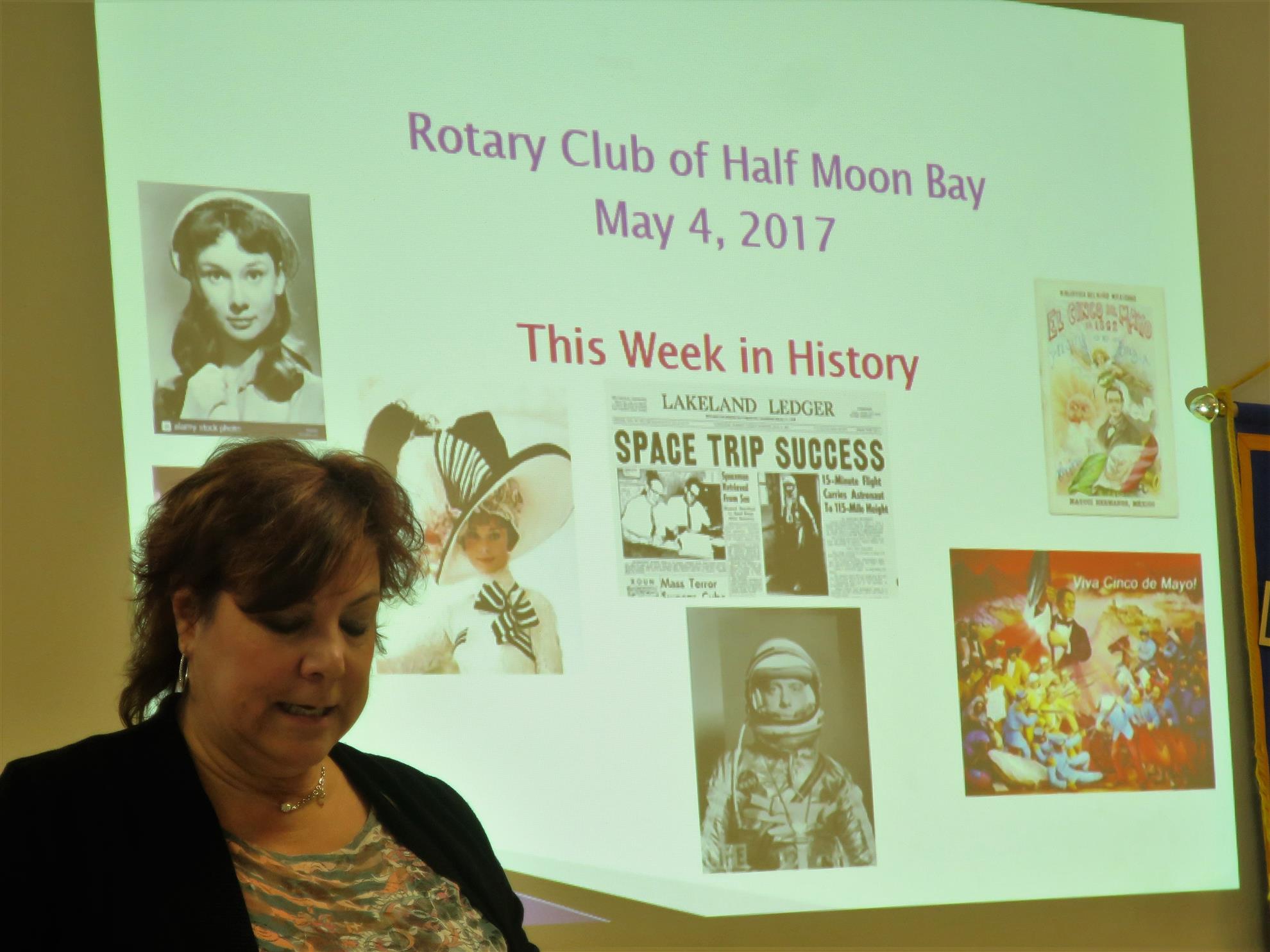
On May 4thAudrey Hepburn was born 1929 -
On May 5th, 1961 Alan Sheherd became the first American to go into Space.
May 5th Cinco de Mayo; it is not Mexico’s biggest holiday. Sept 16th is their biggest holiday which celebrated when they became a nation.
Polio vaccine testing began in 1954
The play Hair opened on Broadway in 1968
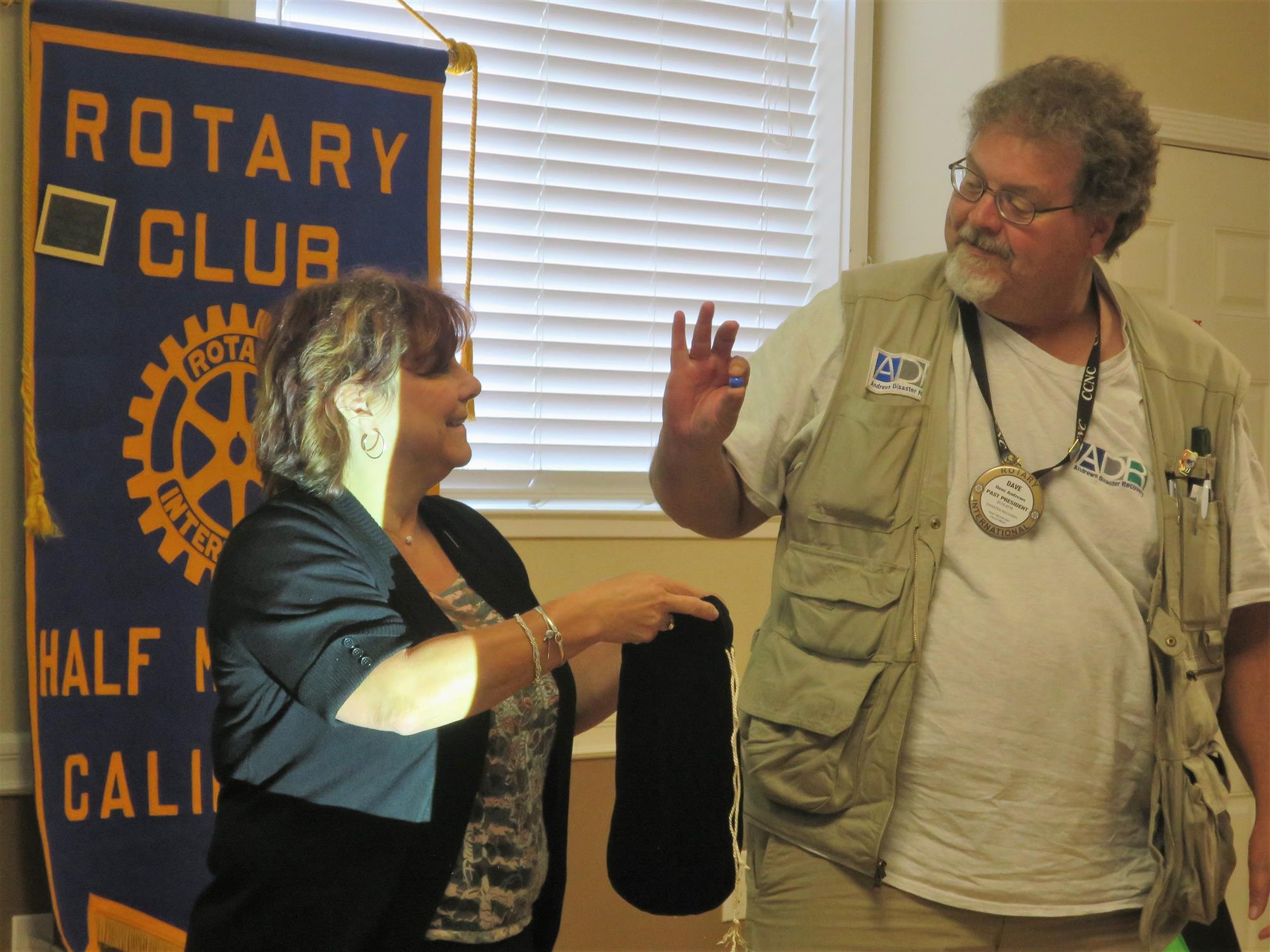
Dave Andrews got to draw the marble – Blue wins $10!
COMING EVENTS AND SPEAKERS
MAY
May 11 Mushroom Farming - Bill Cook
May 18 Eric Shapira on his recent work in China
May 25 Shop Talks: John Evans & Ed Daniels
JUNE
Jun 1 Speaker: Paula Hammack
Jun 8 Speaker: Ursula Schnyder, owner of Sweet55 who will be speaking on her passion for chocolate and how she came to Half Moon Bay and opened her dream business!
Jun 15 HEAL...Rotary Foundation Funded NEW Classroom OPEN HOUSE
Jun 22 Speaker: Caroline Gossart/Exchange Student
Jun 29 DEBUNKING LIZ
PHOTO GALLERY