FogHorn May 7 Meeting
FOGHORN
ROTARY CLUB OF HALF MOON BAY
MAY 7 2015 MEETING
Meeting Recap- May 7, 2015
Article by Dwight Wilson
Program: Dr. My T Le - The Stanford Gap Program
Article by Stacy Trevenon
MAY 7, 2015 Meeting Recap
- Dianne led with the group singing of “The Grand Ole Flag.”
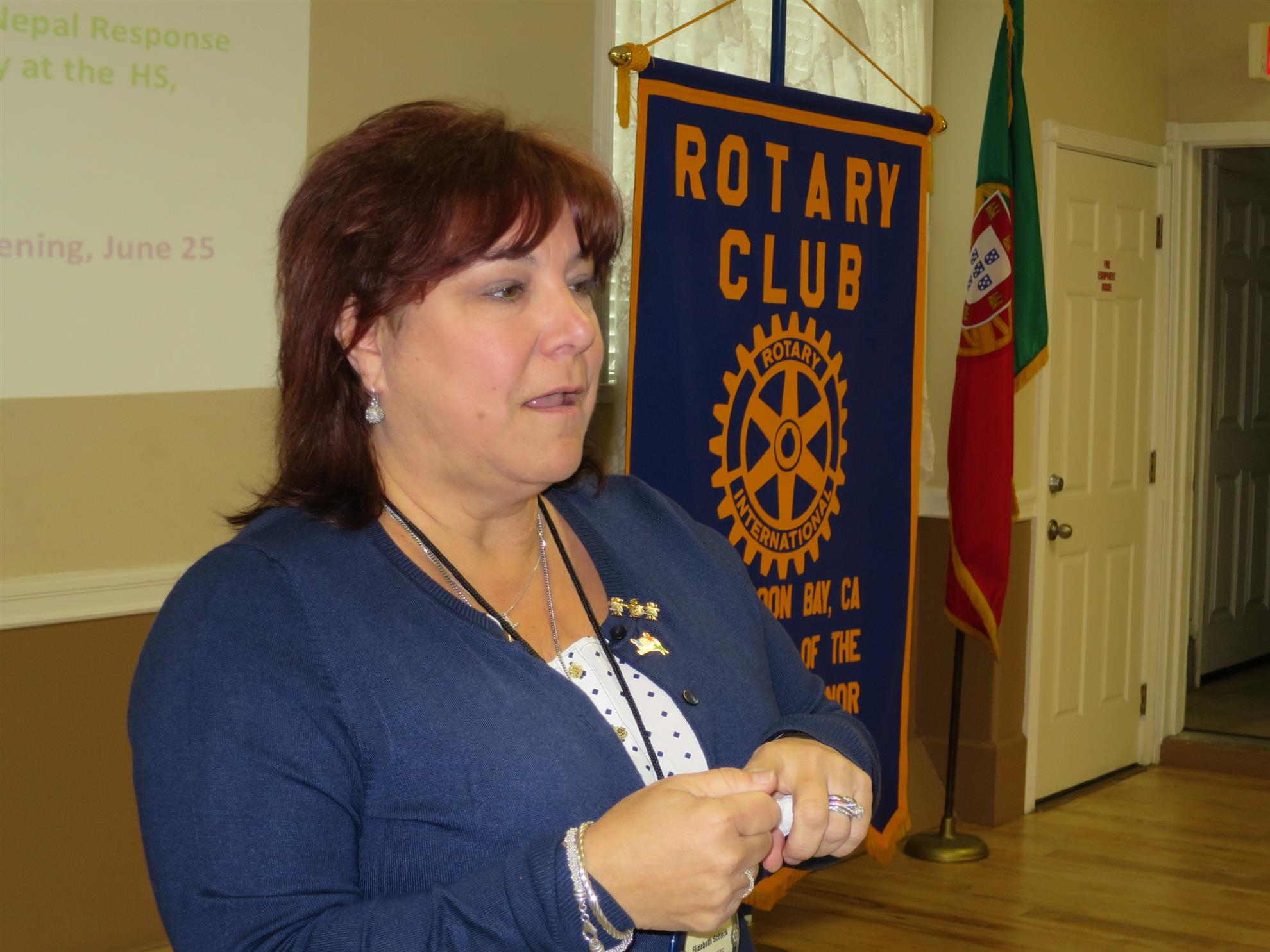
- Elizabeth Schuck started the meeting by honoring mothers with sayings from “Why God Made Mom’s.
- Guests: David Dye was introduced who is from the Rotary of San Francisco. He coordinated the district’s RYLA (Rotary Youth Leadership Awards) program.
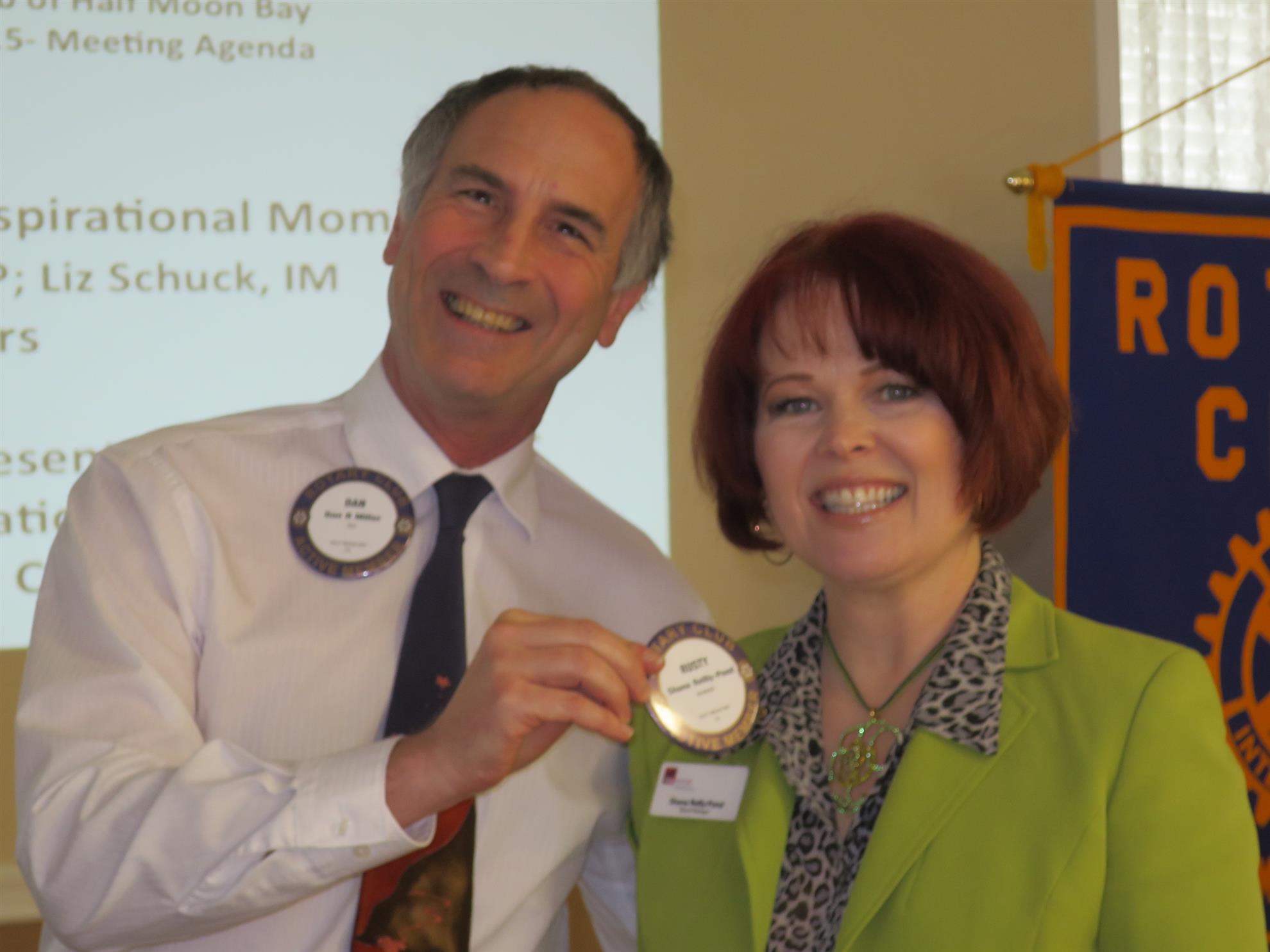
- Blue Badge Presentation – Dan Miller presented the Blue Badge to Rusty Reilly-Pond for meeting all the requirements of full membership
- Dianne presented a $10,000 check to Karen Larson, Director RotaCare Coastside Free Medial Clinic, from the Rotary Club of Half Moon Bay Foundation to continue our long term support of the clinic .
.JPG)
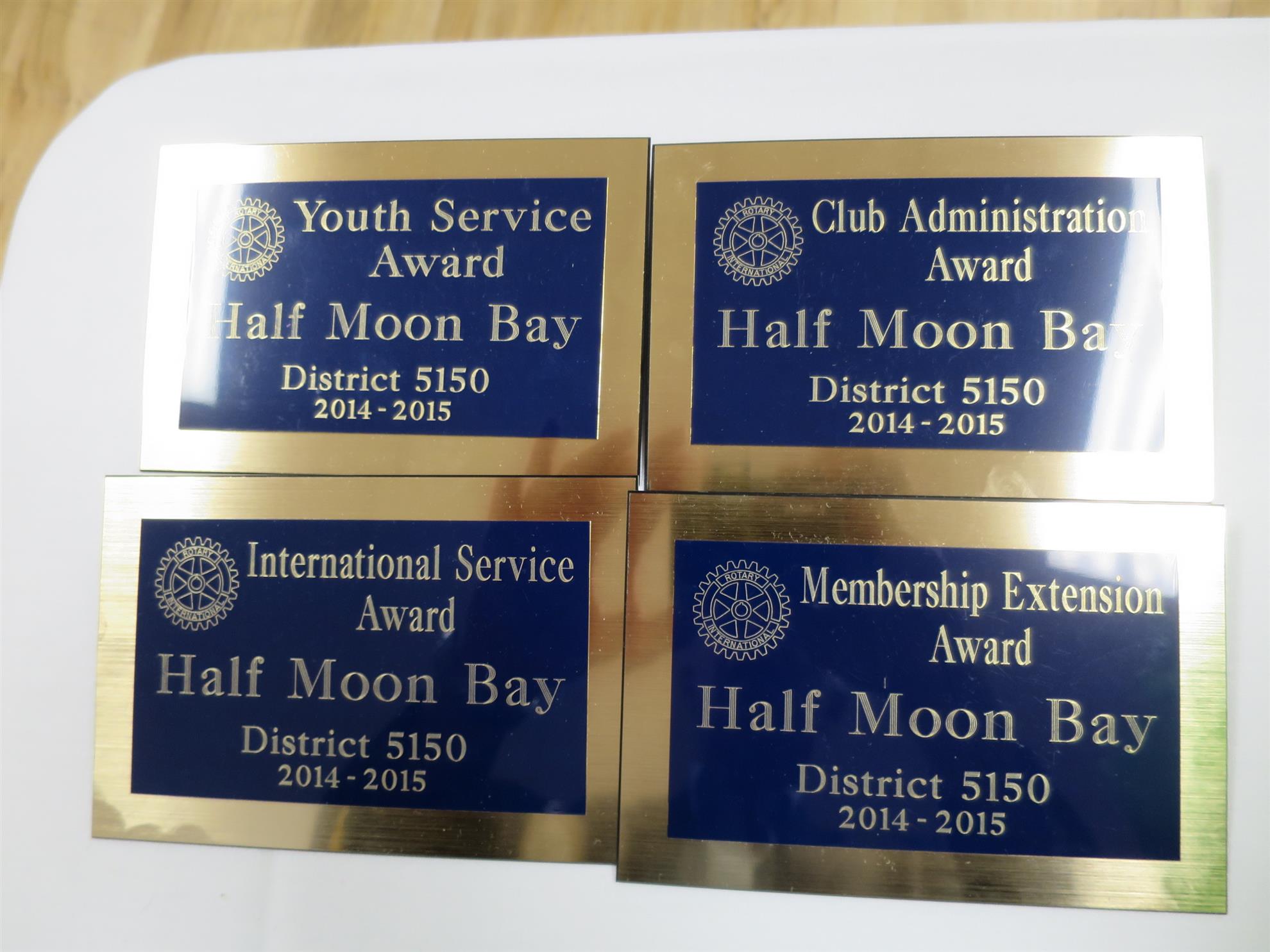
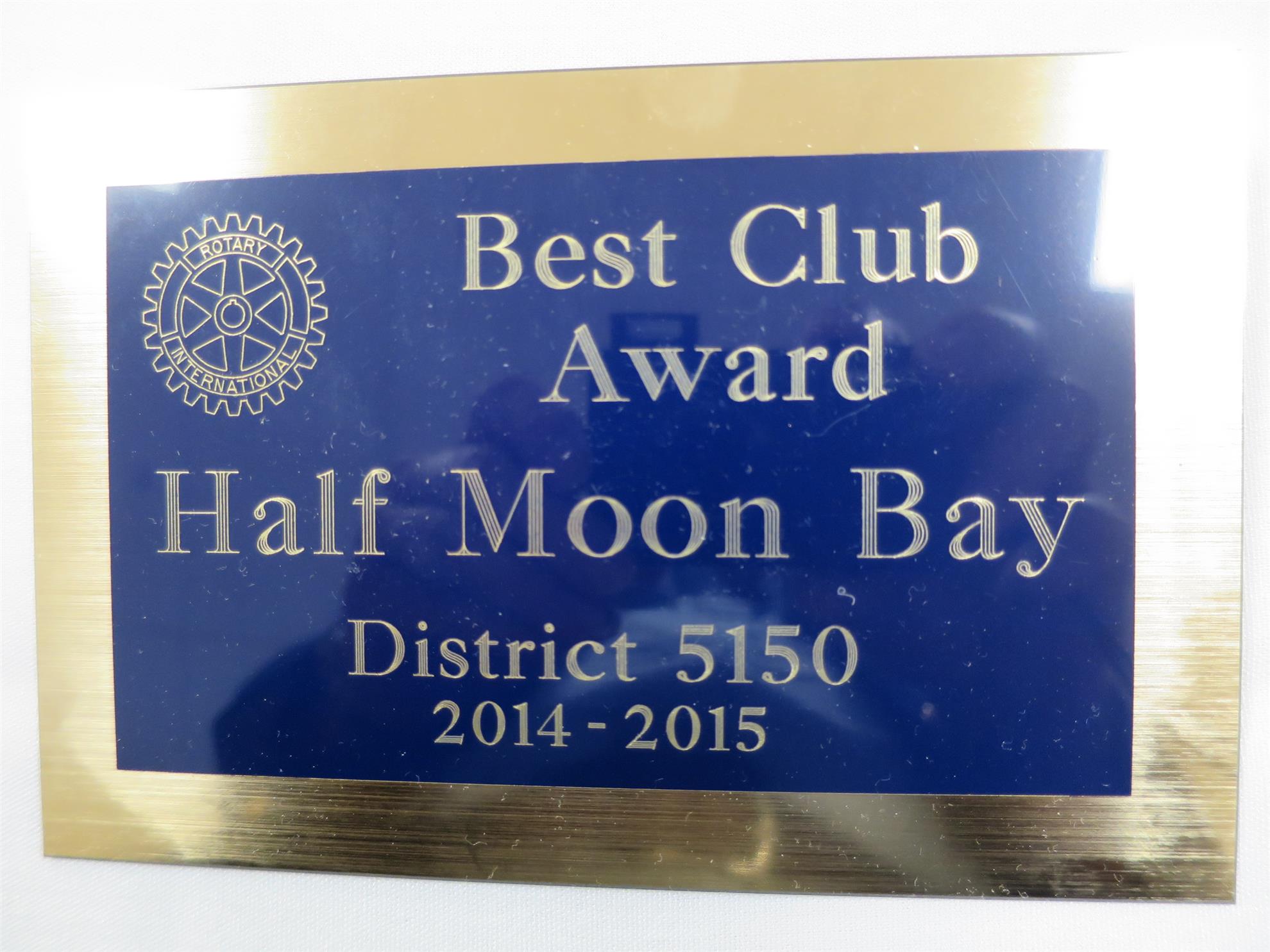
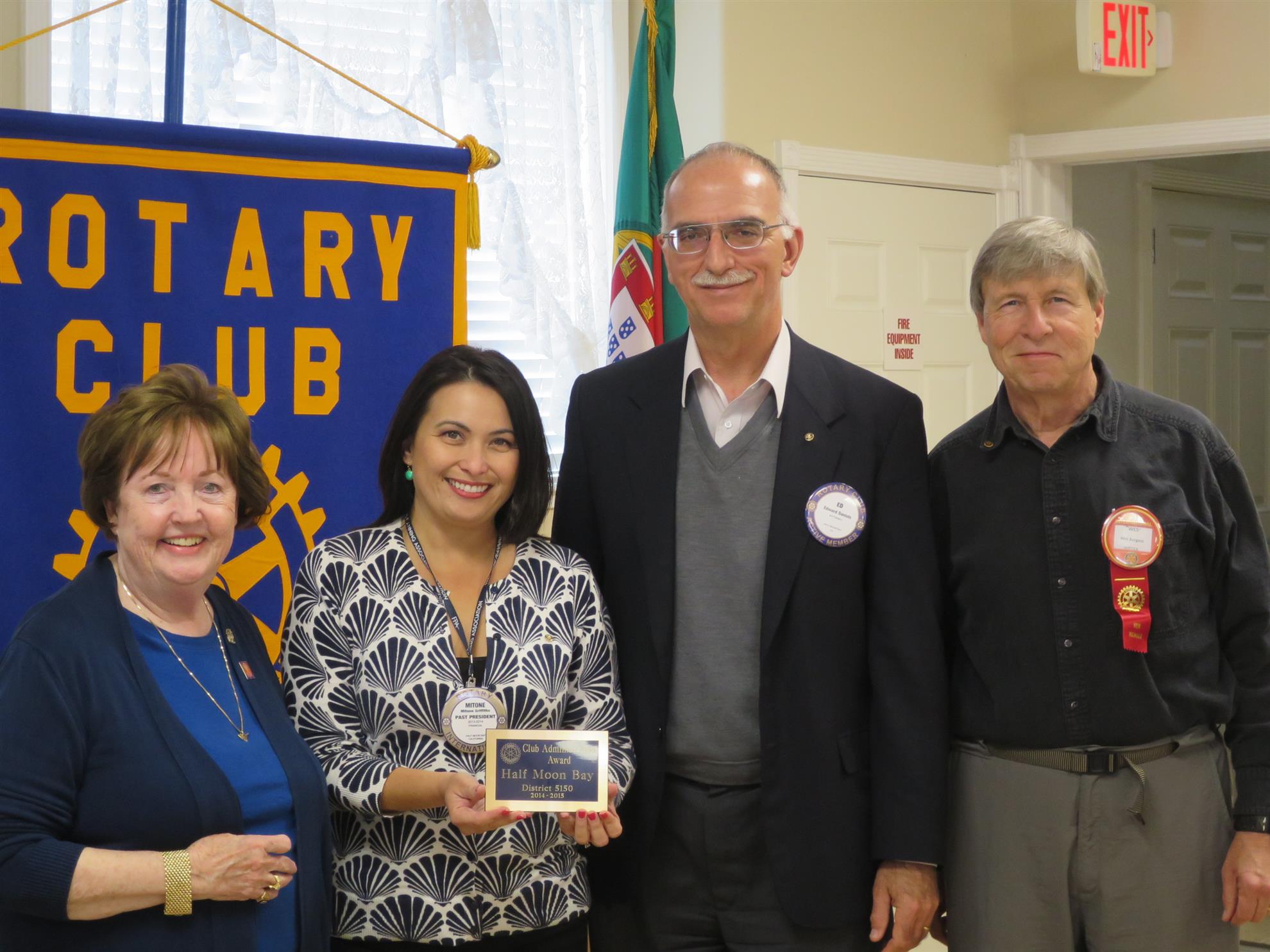
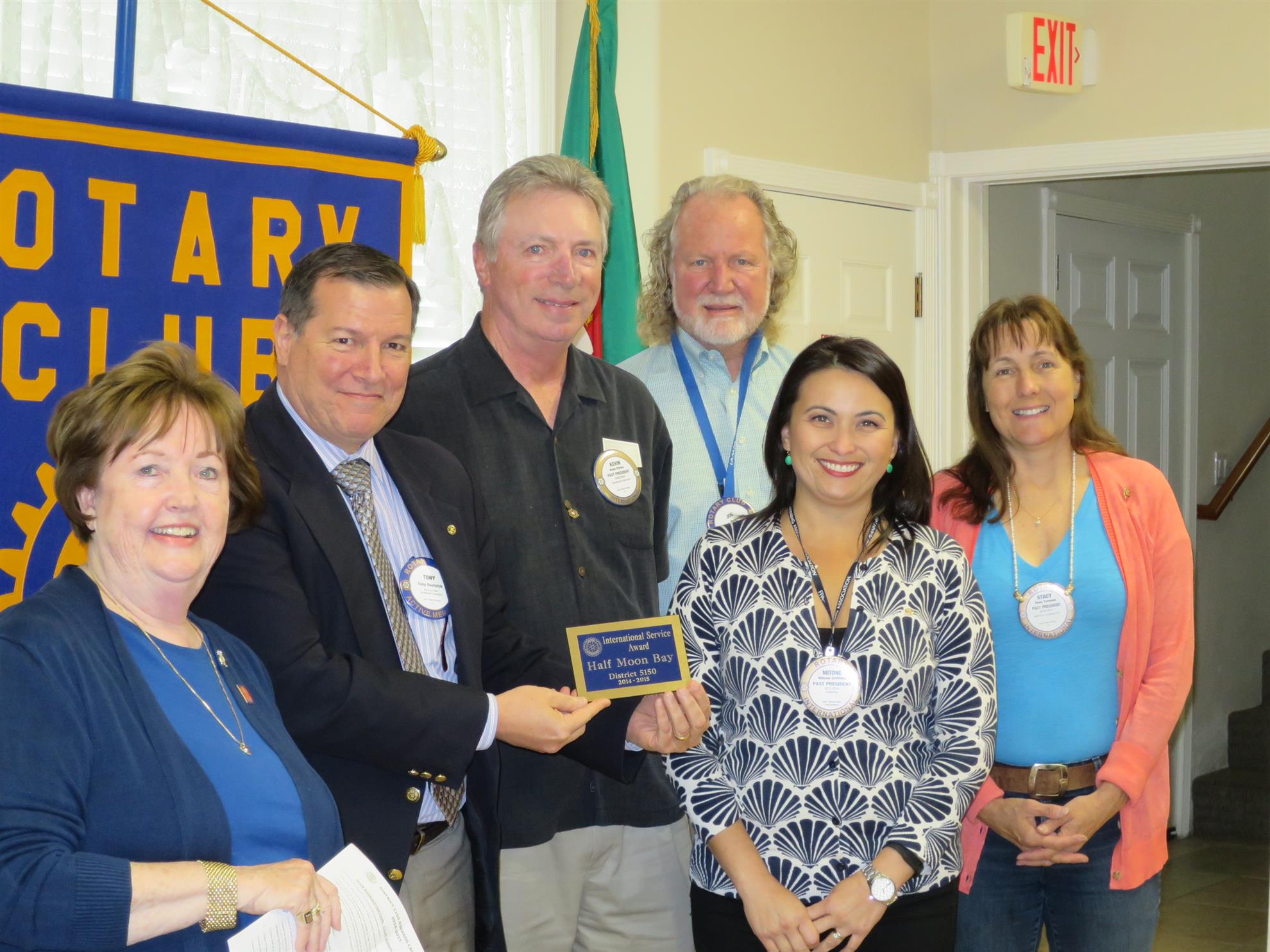
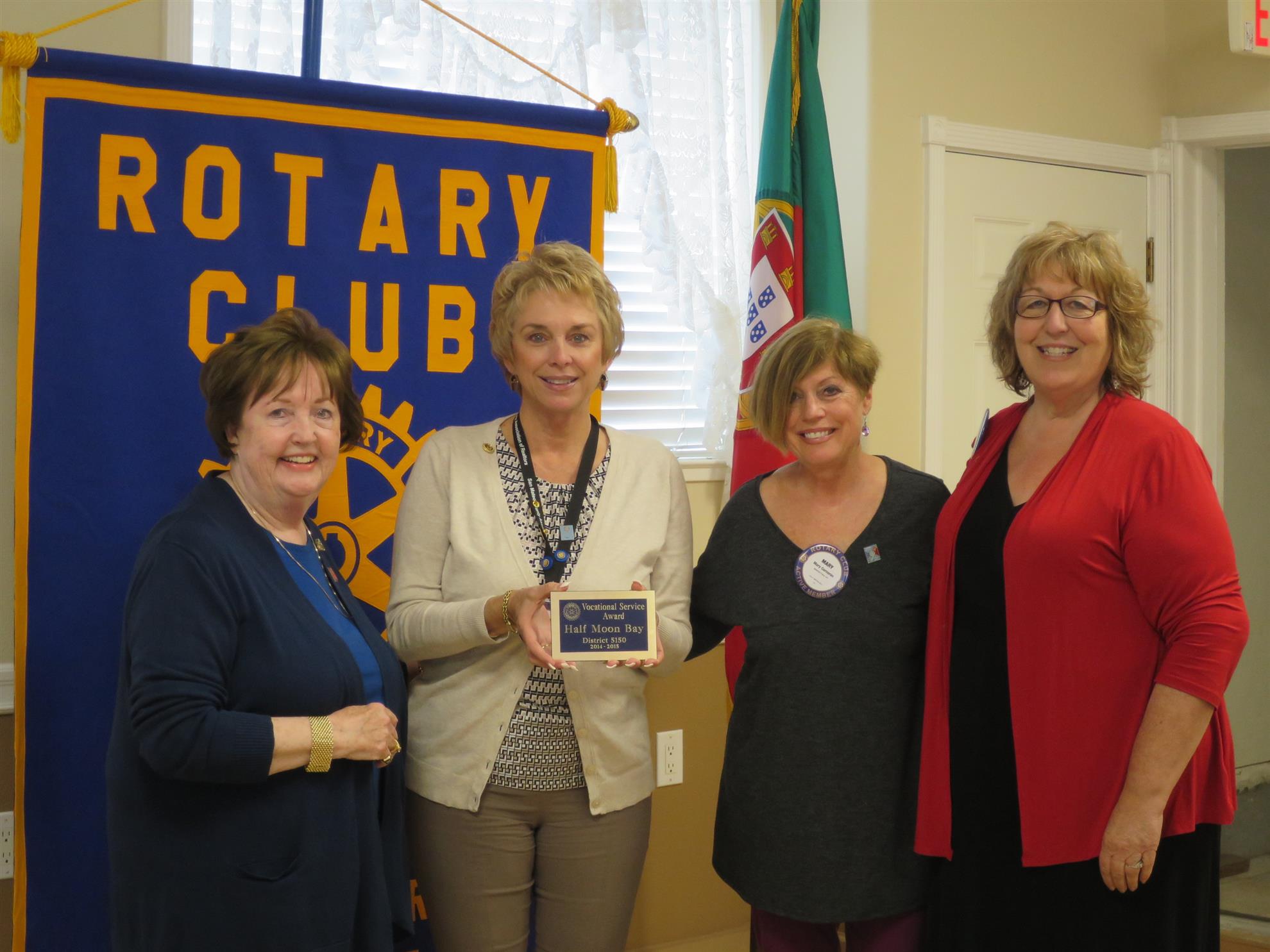
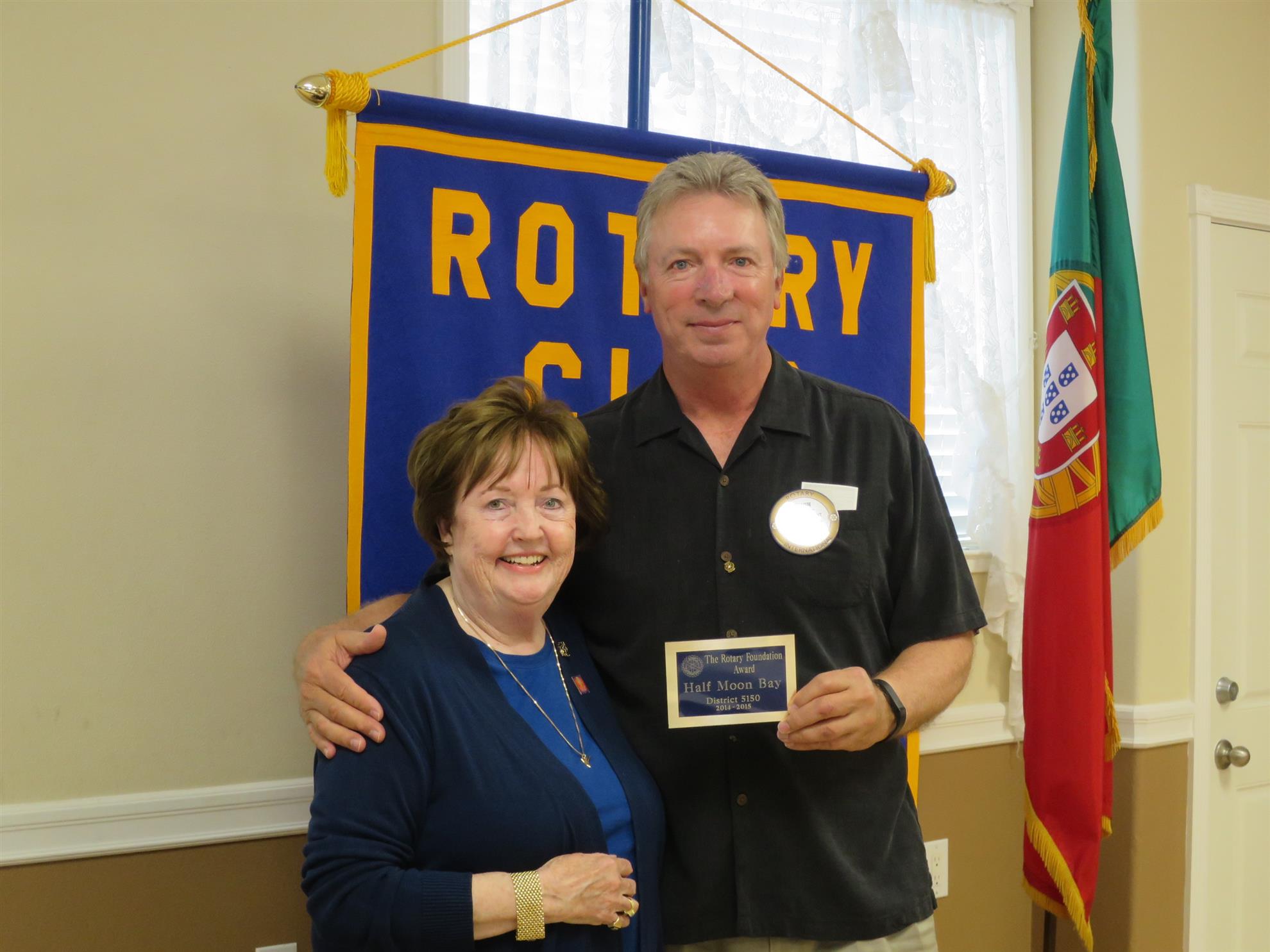
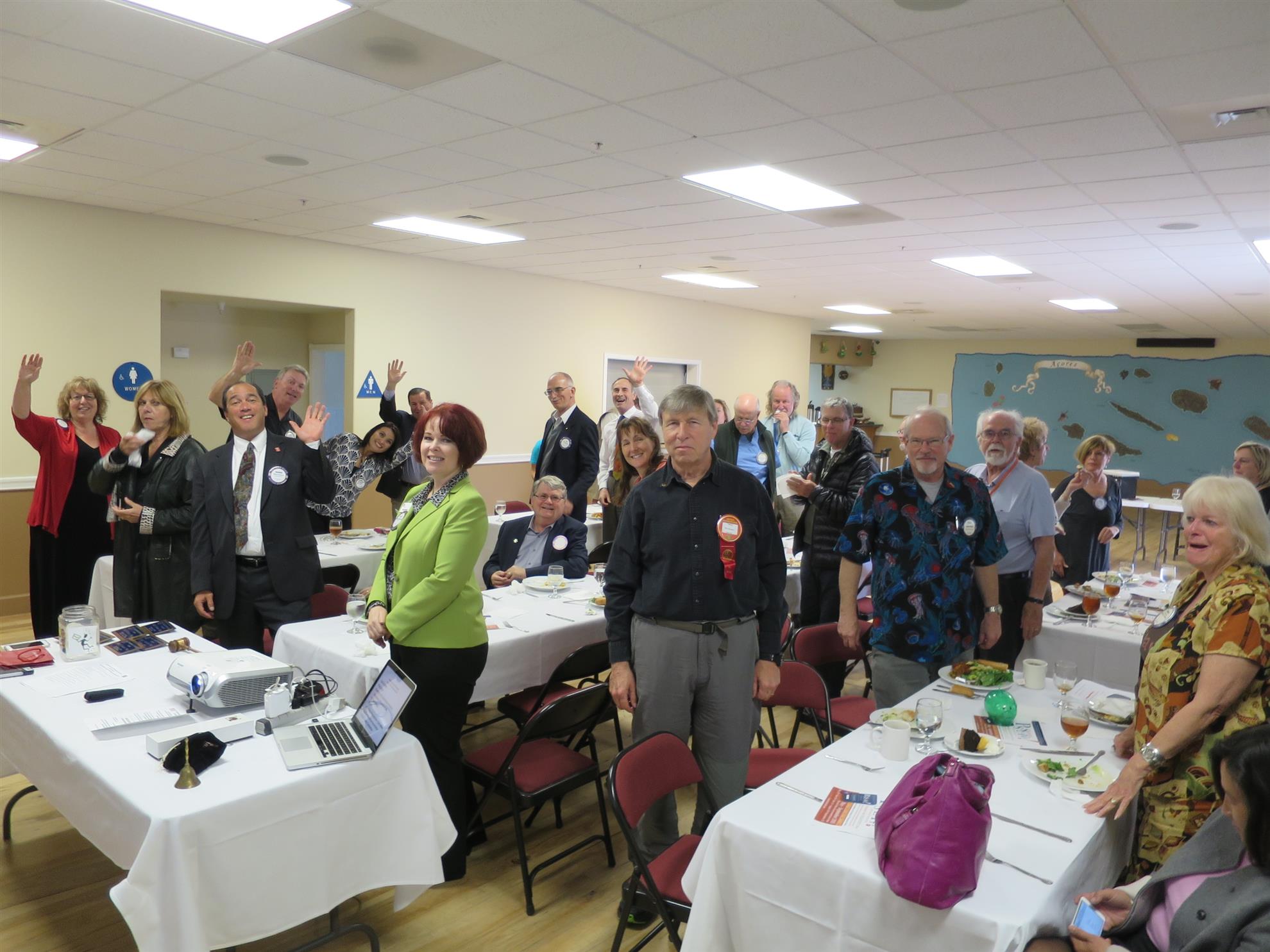
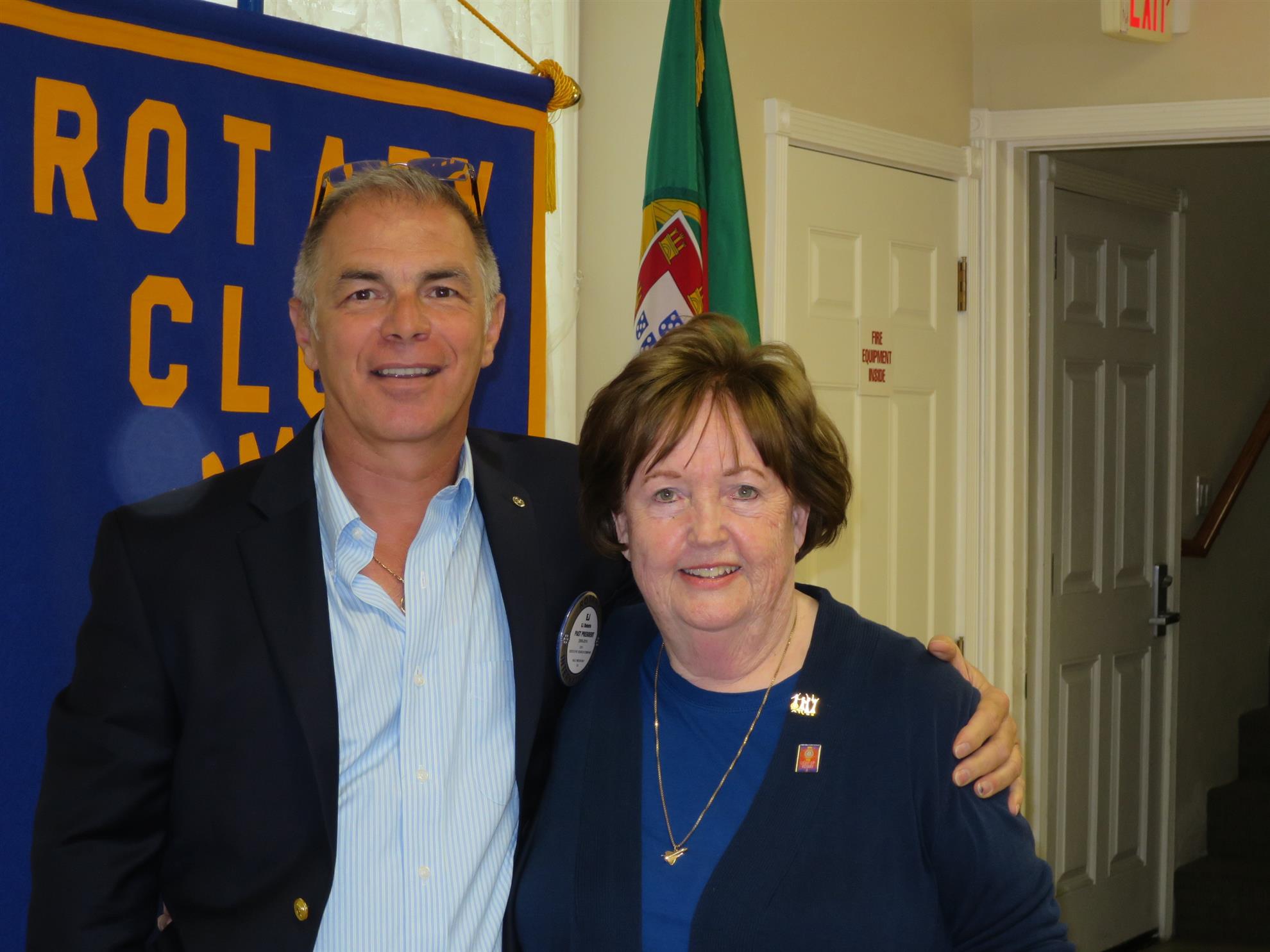
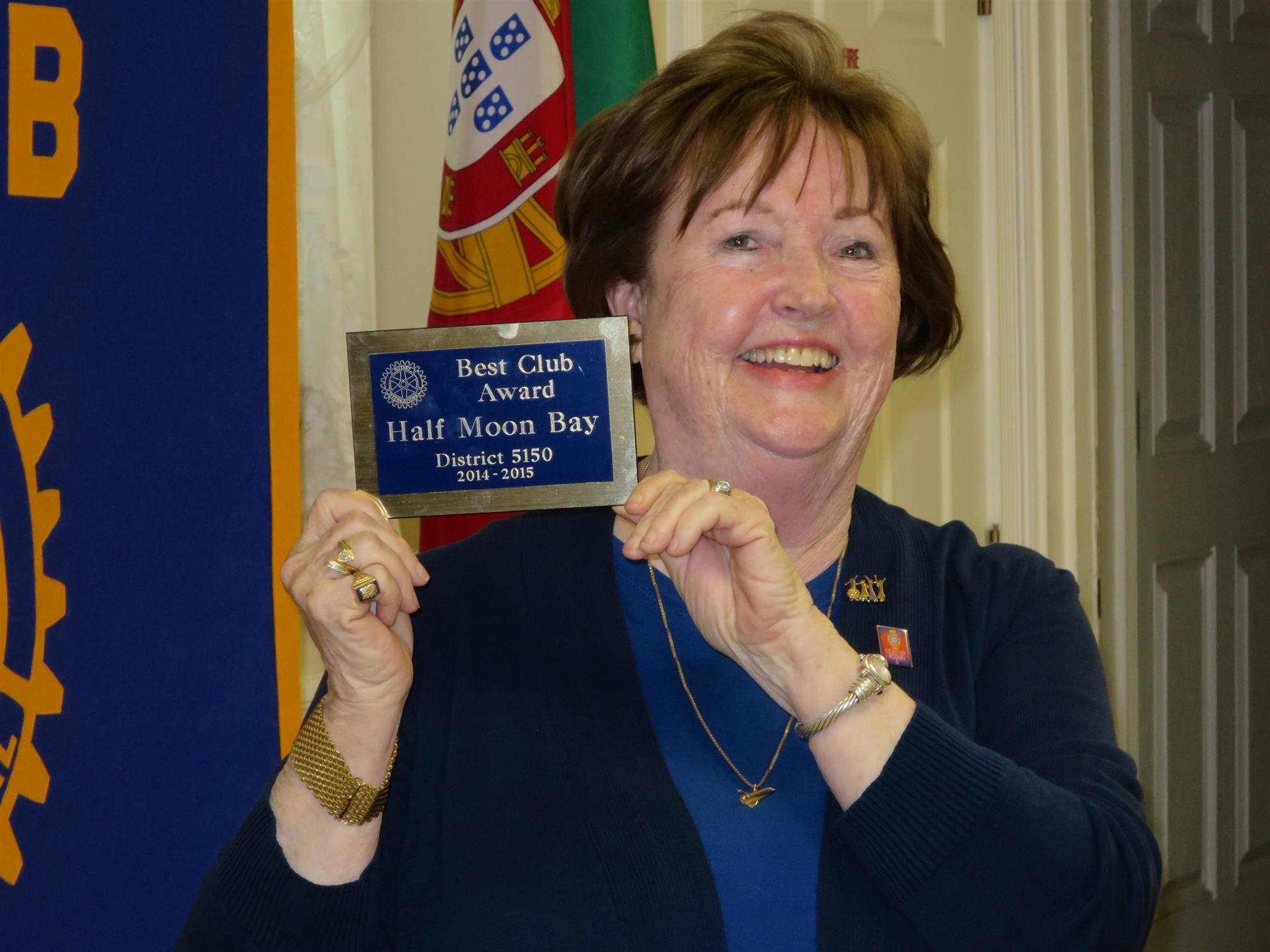
District Award Celebration and Recognition - BEST CLUB Dianne recognized many members of our Club for their leadership and work that qualified us for the awards at the District Conference.
They included:
- Club Administration (Ed, Mitone and Wes)
- International Service (Tony, Stacy, Joe, Kevin and Mitone)
- Vocational Service (Charise, Teresa, Mary)
- Rotary Foundation (Kevin)
- Membership (Dan)
- Youth Services (Warren and Paul)
- Public Image (Mary, Ed and Stacy)
- Community Services (Elizabeth and all the membership)
- EJ for all of his pictures (and his accordion?)
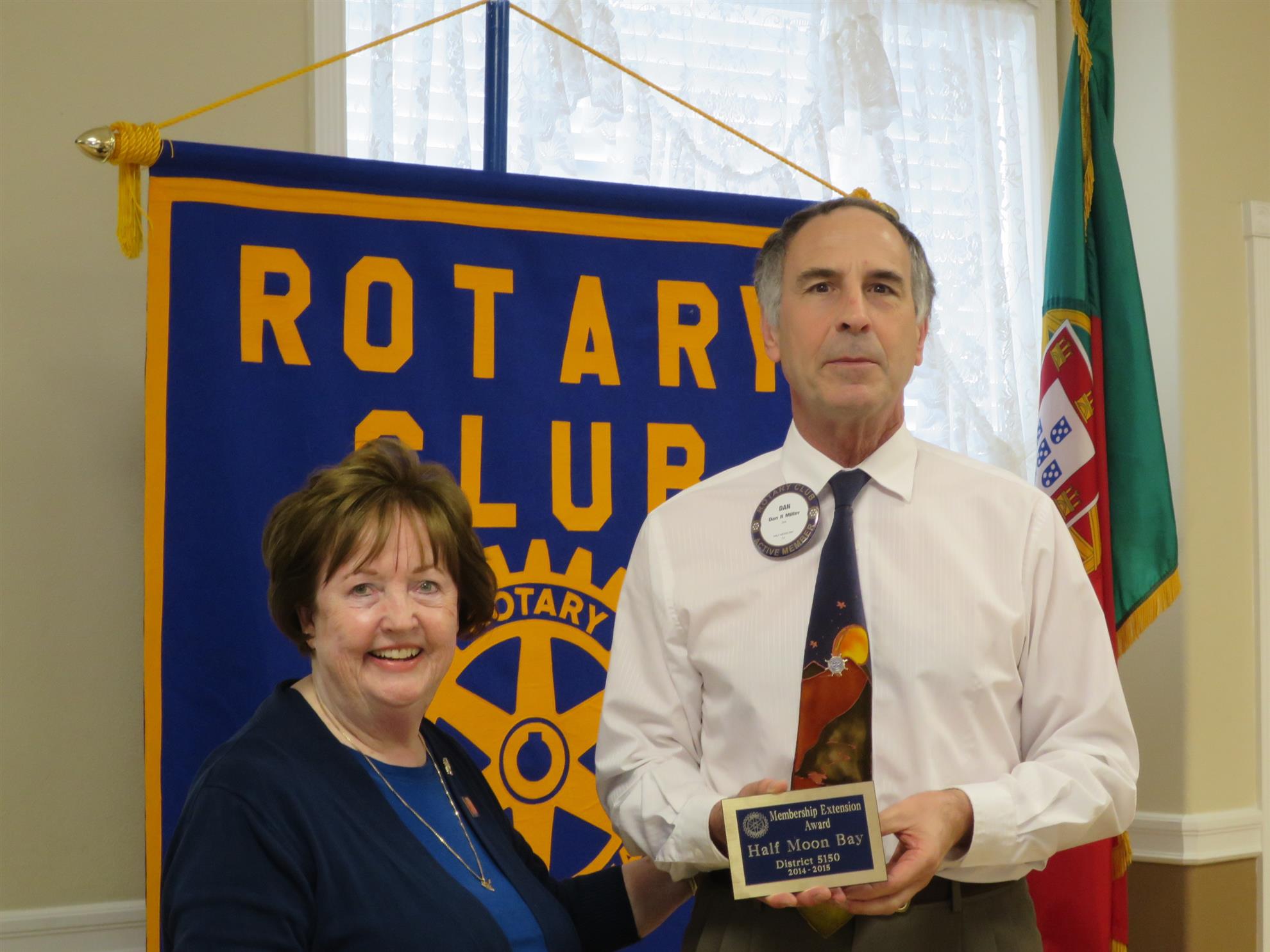
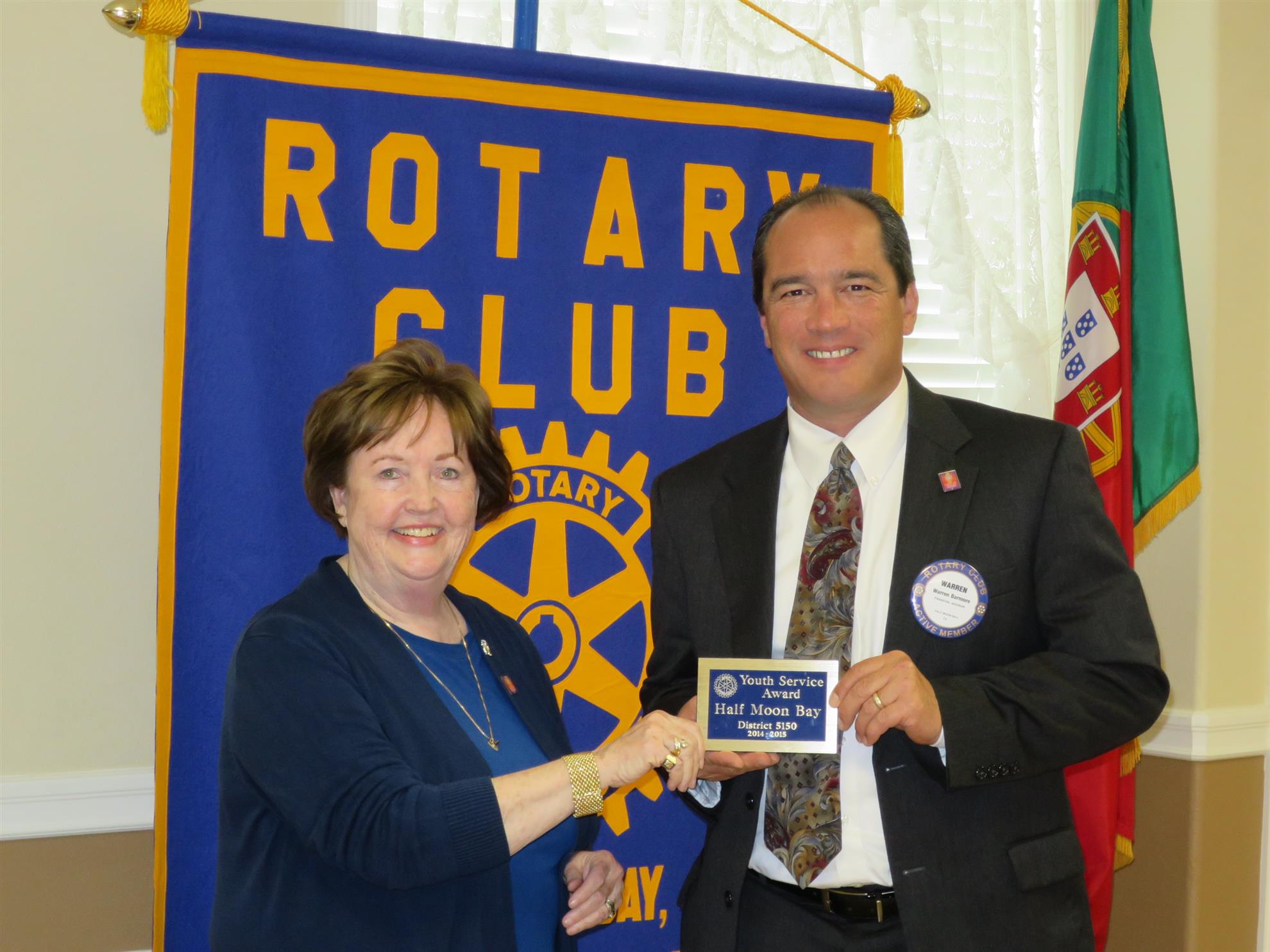
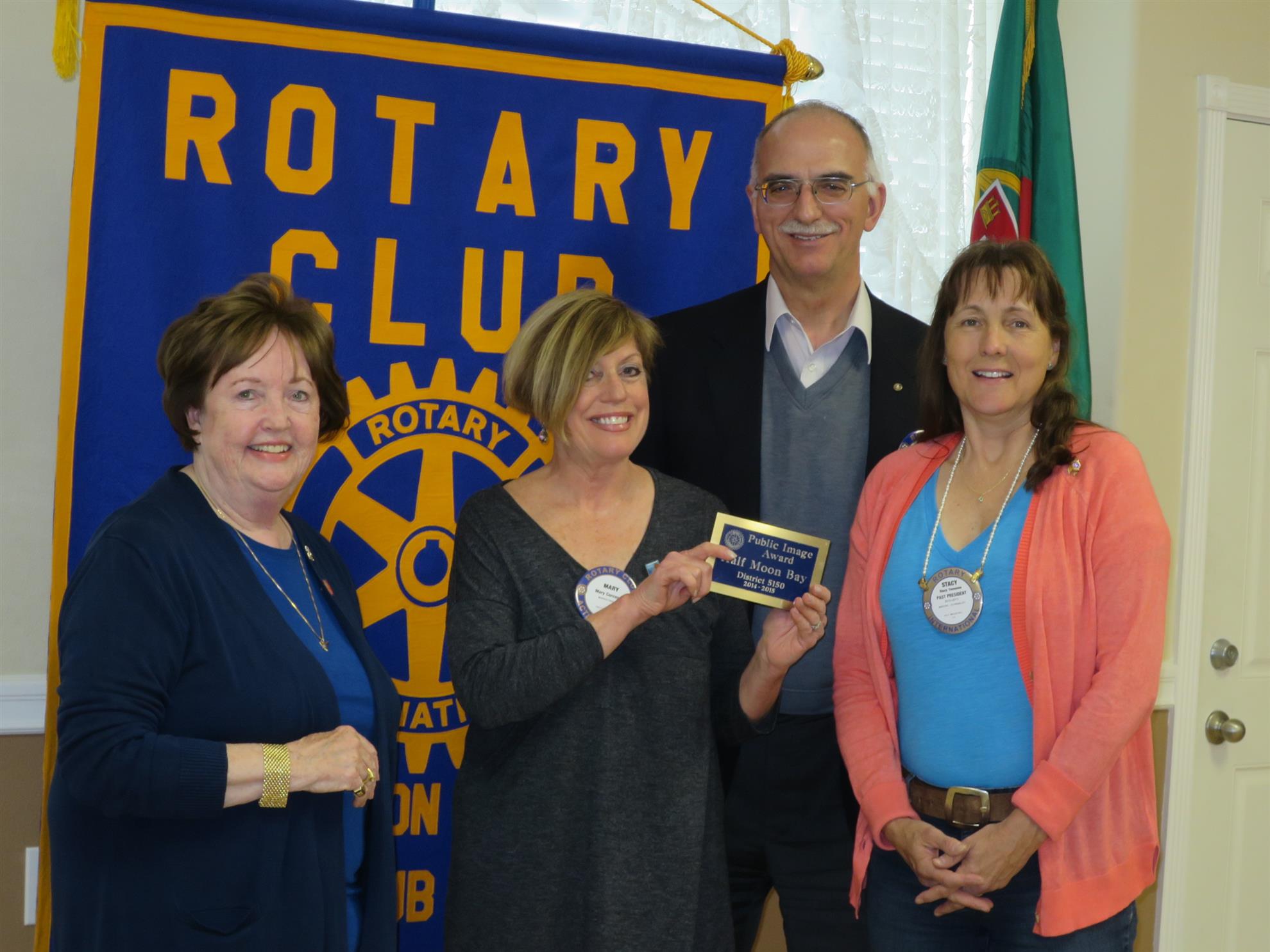
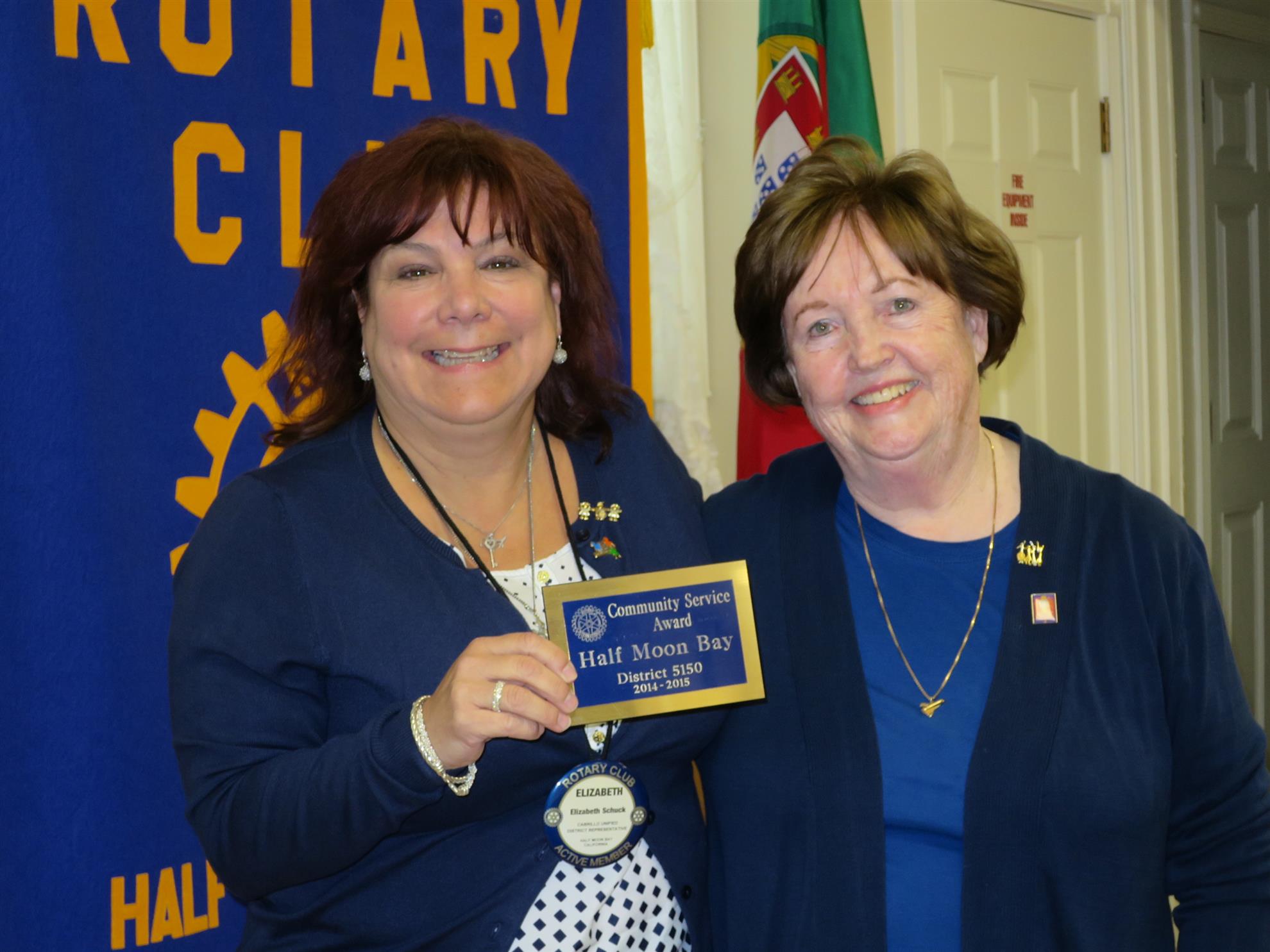
Happy/Crappy News:
- Elizabeth talked about her special-needs young woman whom she raised who is now pregnant with her first child, so Liz is retiring from the School District on June 30th.
- Mary has been married to Bill for 30 years. They have been remodeling their home and thanked Ginger and Paul for allowing them to stay with them during some of this period.
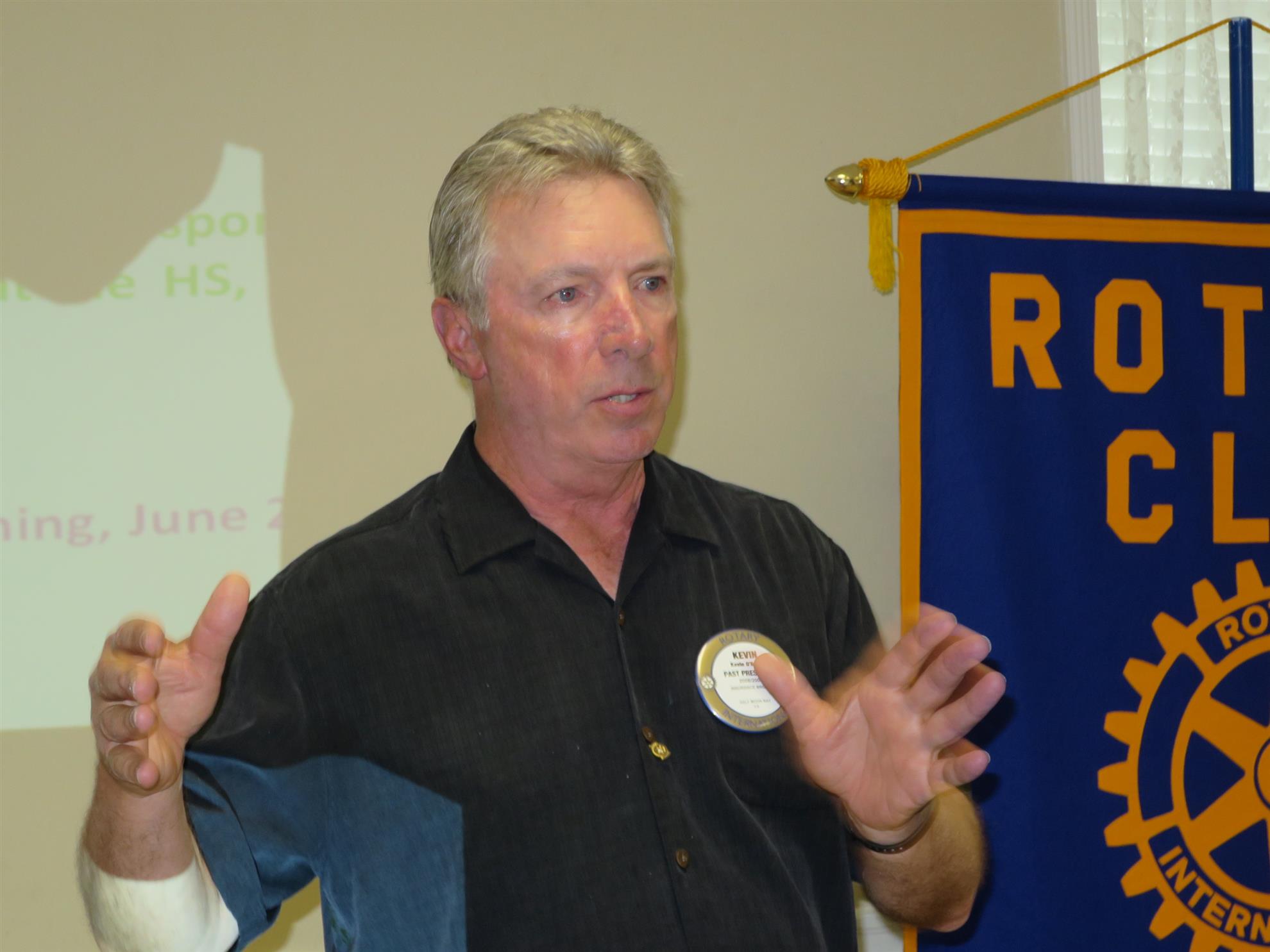
- Kevin just came back from Disneyland and reminded the membership that we have a local Foundation in addition to the Rotary International Foundation.
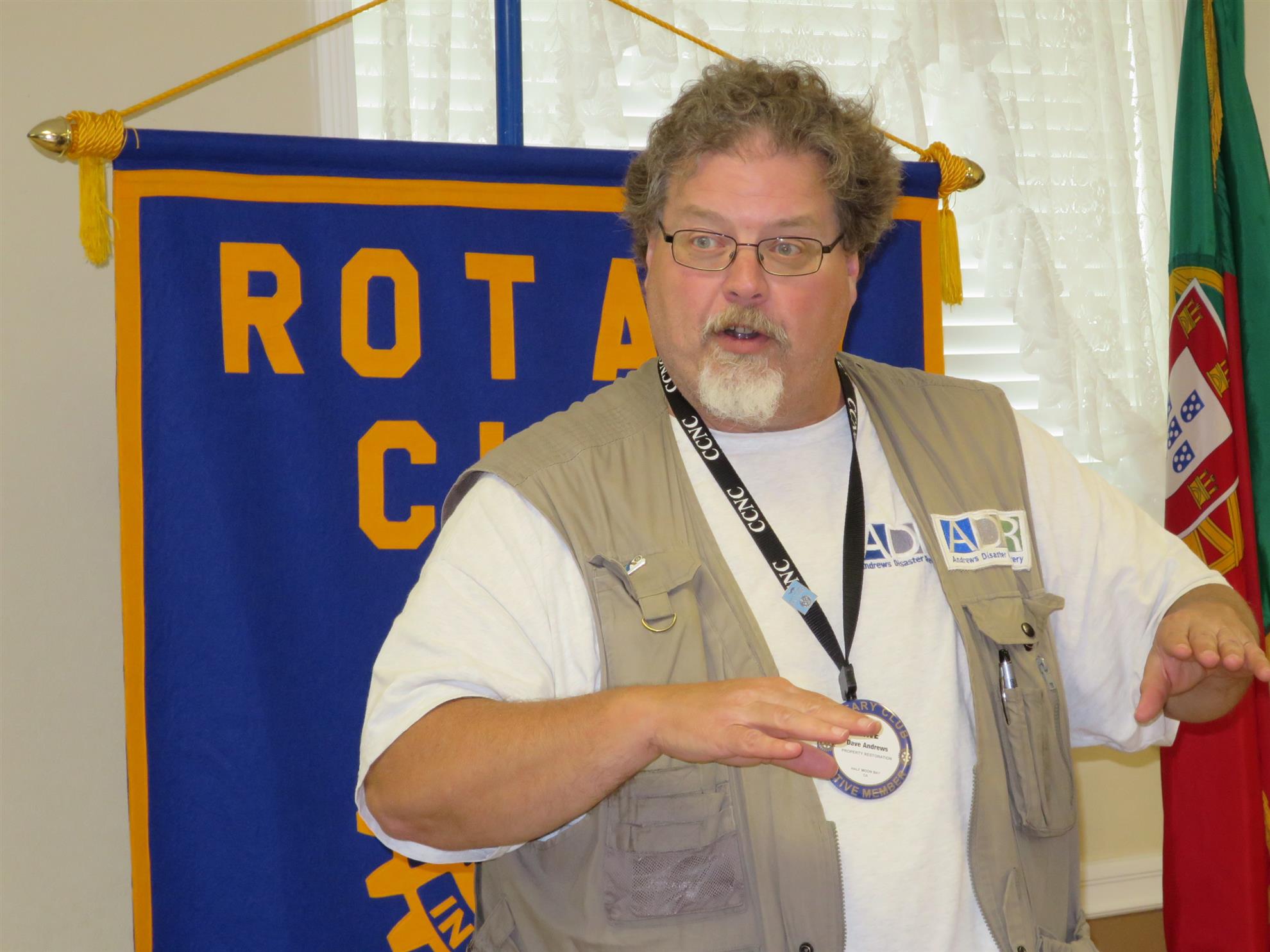
- Dave thanked Rose for paying him on time for his work which is often not the case during tax season.
Announcements
- Mitone reminded the membership to go into our website to assist with the donations to Nepal and Shelter Box project.
- Mary and Charise thanked the membership for their availability on Friday the 18th for the high school interviews. Charise was promoting the Chamber’s new upcoming directory.
- Dianne thanked everyone for contributing to help the Club earn the “Best Club Award.”
Dr. My T. Le, "Stanford Gap Program" - Program Recap
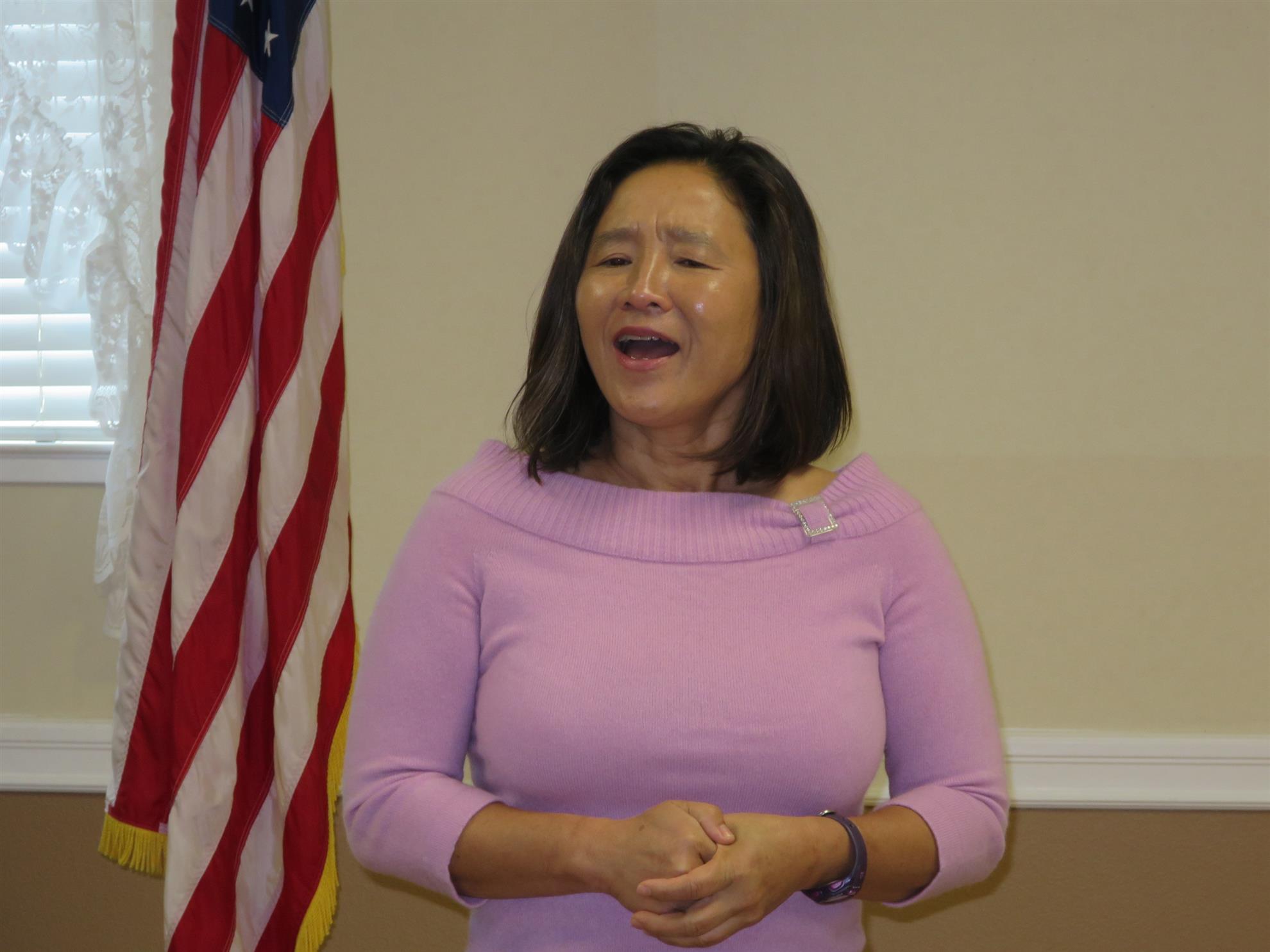
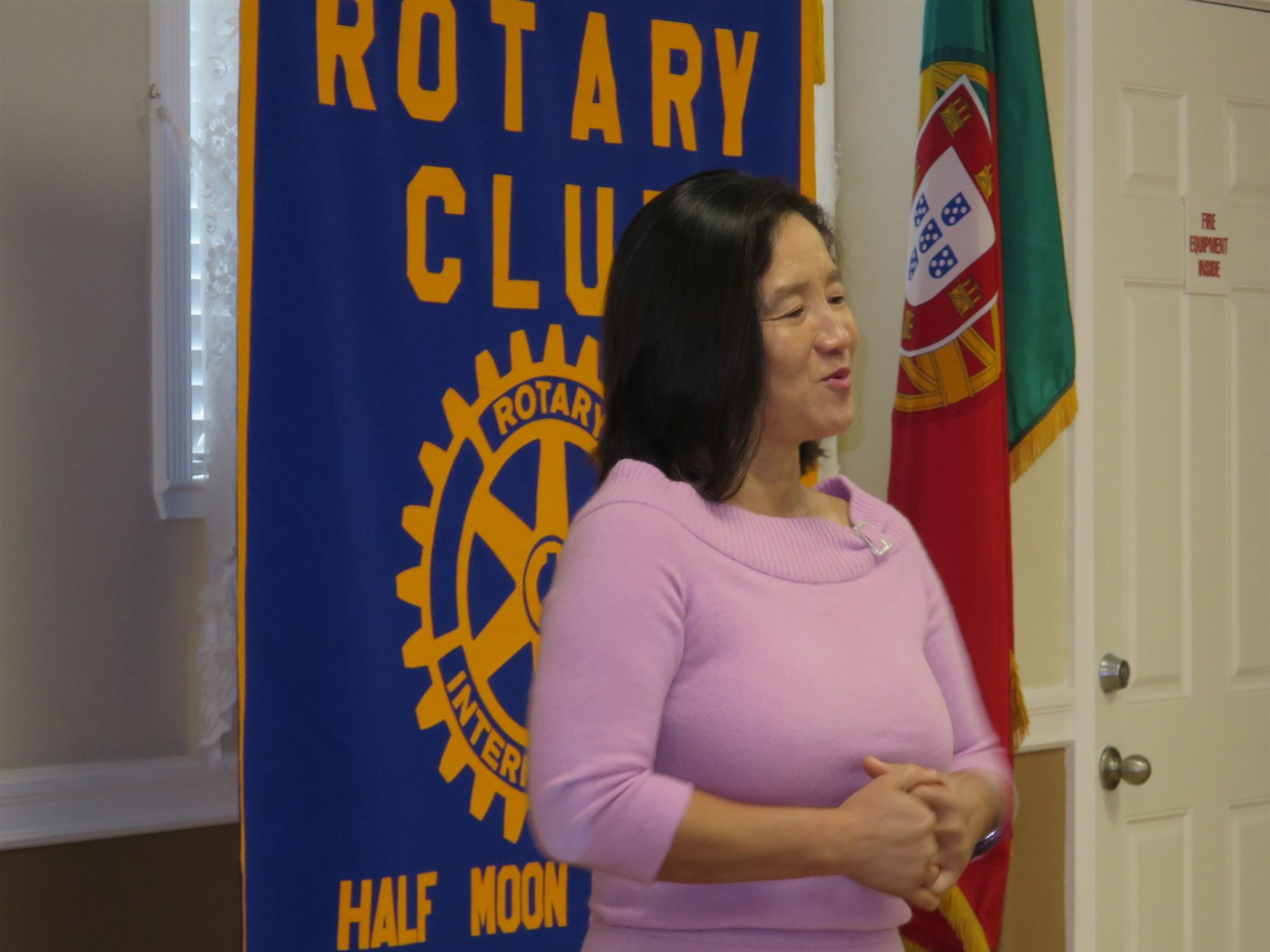
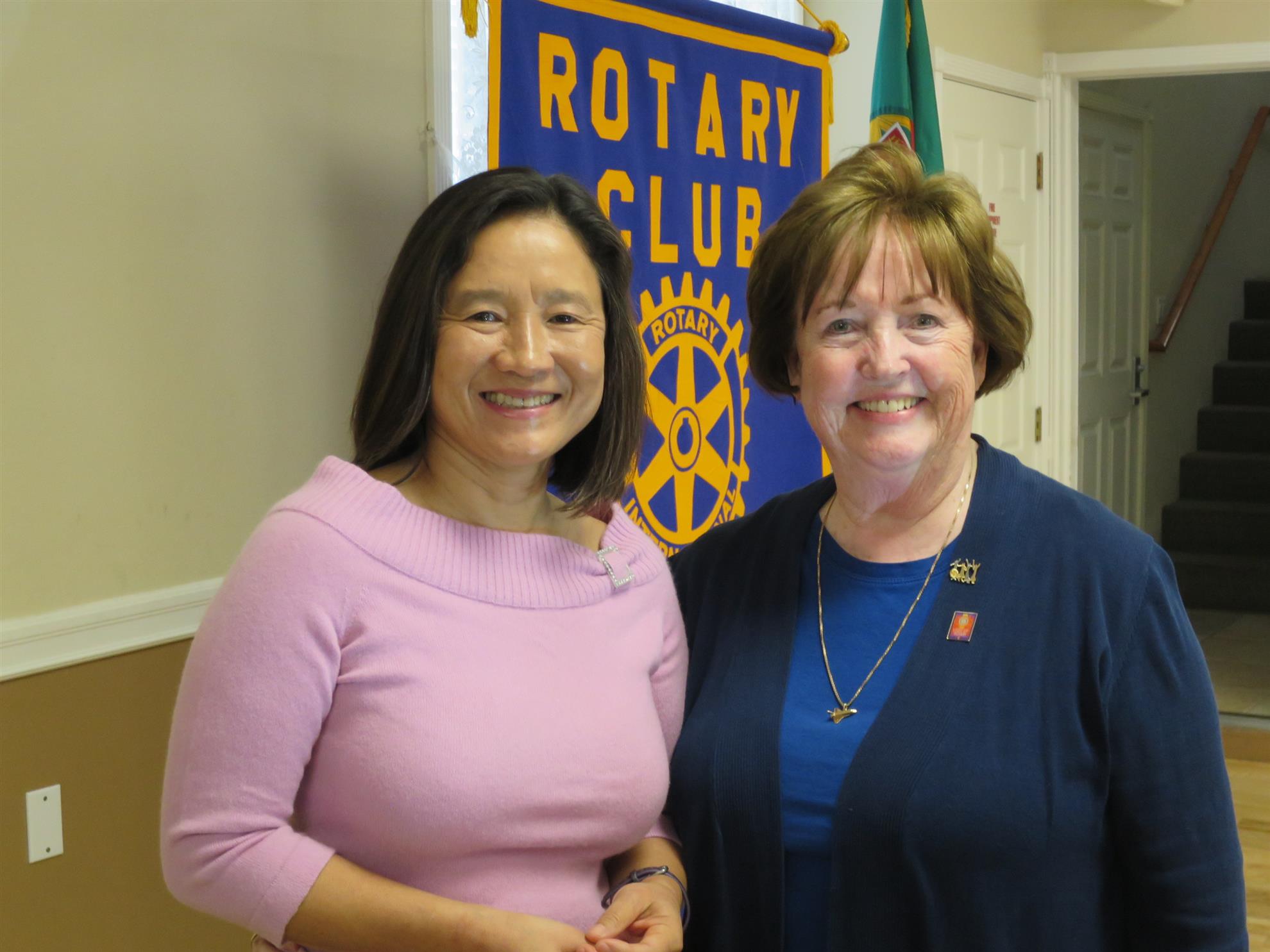
President Dianne introduced Dr. My T. Le, who was making her fourth talk before a Rotary Club but had no idea what to expect from this one. She was here to talk about her background and work in electrical engineering.
A personable and engaging speaker, Dr. Le attended the University of California, Davis, went to work in Silicon Valley, and attended grad school. Her work wasn't affected by the economic bust, but she decided she wanted to do something different. So she accepted a teaching position at Stanford, working with upper-class and grad students.
She wanted to teach something that students would enthusiastically want to take, so she designed a freshmen seminar in electrical engineering and asked the class to form teams to design and work on projects. Her approach became a “smashing success,” with hundreds of students applying for the 16 spots in the class.
She had heard from students that they would be more inclined to pursue engineering if it had more of a social component, an element of doing good, in it. So she designed and taught her class with that in mind, recruiting students to work on projects for NGOs or nonprofits for the first time in 2008, and it was well-received.
Feedback from her students revealed that they were happy that they clearly understood why they were learning what they were learning, how to apply the concepts they learned in class to the real world and where the subject matter fit a need.
One student project, she described, involved patients in Kenya who suffered from HIV and cancer, and there needed to be a way to track their progress and records. Three computer science students set to work on it, with WHO programs and computer codes, and within eight weeks were adding elements with which doctors could monitor changes in their patients.
She described how she keeps in touch with students.
She also described a project in which students went to Cambodia to work on a method to convert human waste into fertilizer, how they developed ideas to neutralize the waste using lime and also addressed issue of transporting lime for use in such work.
She also spoke of looking ahead, and her plans to send students to work on different projects next year.
She said she is proud of the diversity among her students. Some are Latino and others come from other countries. She described more scenarios with her students: one went to Nicaragua to work on testing water quality; another went to Costa Rica to do similar water-quality monitoring; teams returned recommendations of how to deal with tainted water in neighborhoods.
She spoke with pride of watching her students grow, working to better conditions of people in need. “I feel so blessed to do this,” she said, adding that she encouraged students' desire to be of service.
“The kids are all right,” she said. “I hope we can train the next generation to fix the problems we created.”
A personable and engaging speaker, Dr. Le attended the University of California, Davis, went to work in Silicon Valley, and attended grad school. Her work wasn't affected by the economic bust, but she decided she wanted to do something different. So she accepted a teaching position at Stanford, working with upper-class and grad students.
She wanted to teach something that students would enthusiastically want to take, so she designed a freshmen seminar in electrical engineering and asked the class to form teams to design and work on projects. Her approach became a “smashing success,” with hundreds of students applying for the 16 spots in the class.
She had heard from students that they would be more inclined to pursue engineering if it had more of a social component, an element of doing good, in it. So she designed and taught her class with that in mind, recruiting students to work on projects for NGOs or nonprofits for the first time in 2008, and it was well-received.
Feedback from her students revealed that they were happy that they clearly understood why they were learning what they were learning, how to apply the concepts they learned in class to the real world and where the subject matter fit a need.
One student project, she described, involved patients in Kenya who suffered from HIV and cancer, and there needed to be a way to track their progress and records. Three computer science students set to work on it, with WHO programs and computer codes, and within eight weeks were adding elements with which doctors could monitor changes in their patients.
She described how she keeps in touch with students.
She also described a project in which students went to Cambodia to work on a method to convert human waste into fertilizer, how they developed ideas to neutralize the waste using lime and also addressed issue of transporting lime for use in such work.
She also spoke of looking ahead, and her plans to send students to work on different projects next year.
She said she is proud of the diversity among her students. Some are Latino and others come from other countries. She described more scenarios with her students: one went to Nicaragua to work on testing water quality; another went to Costa Rica to do similar water-quality monitoring; teams returned recommendations of how to deal with tainted water in neighborhoods.
She spoke with pride of watching her students grow, working to better conditions of people in need. “I feel so blessed to do this,” she said, adding that she encouraged students' desire to be of service.
“The kids are all right,” she said. “I hope we can train the next generation to fix the problems we created.”