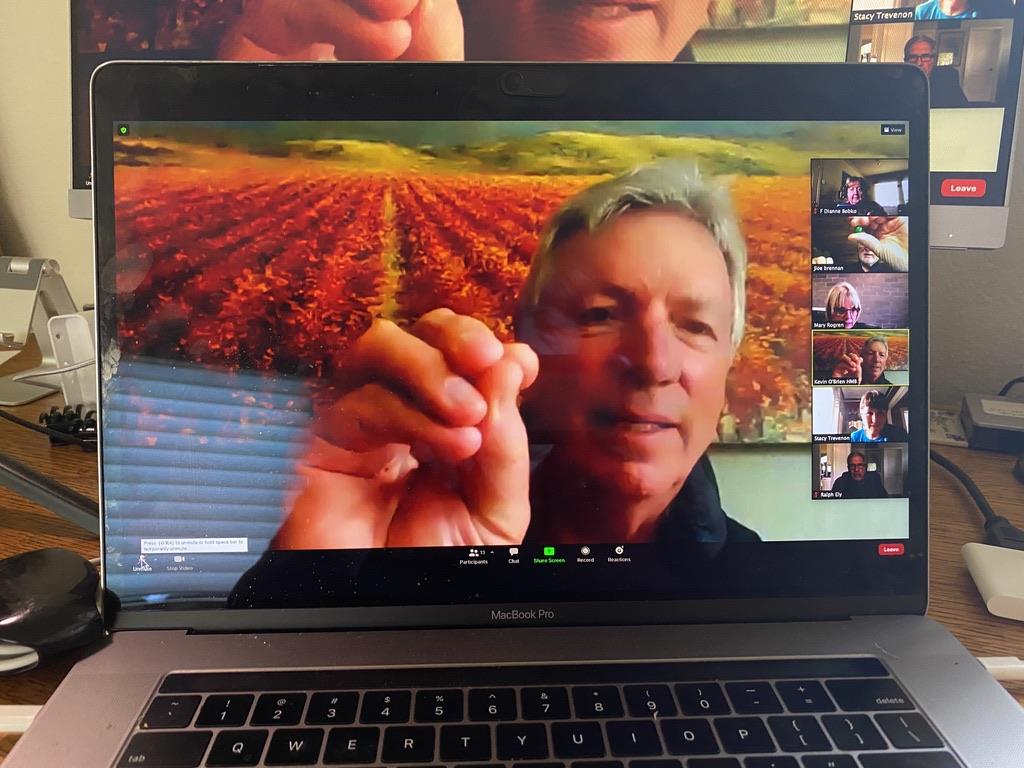
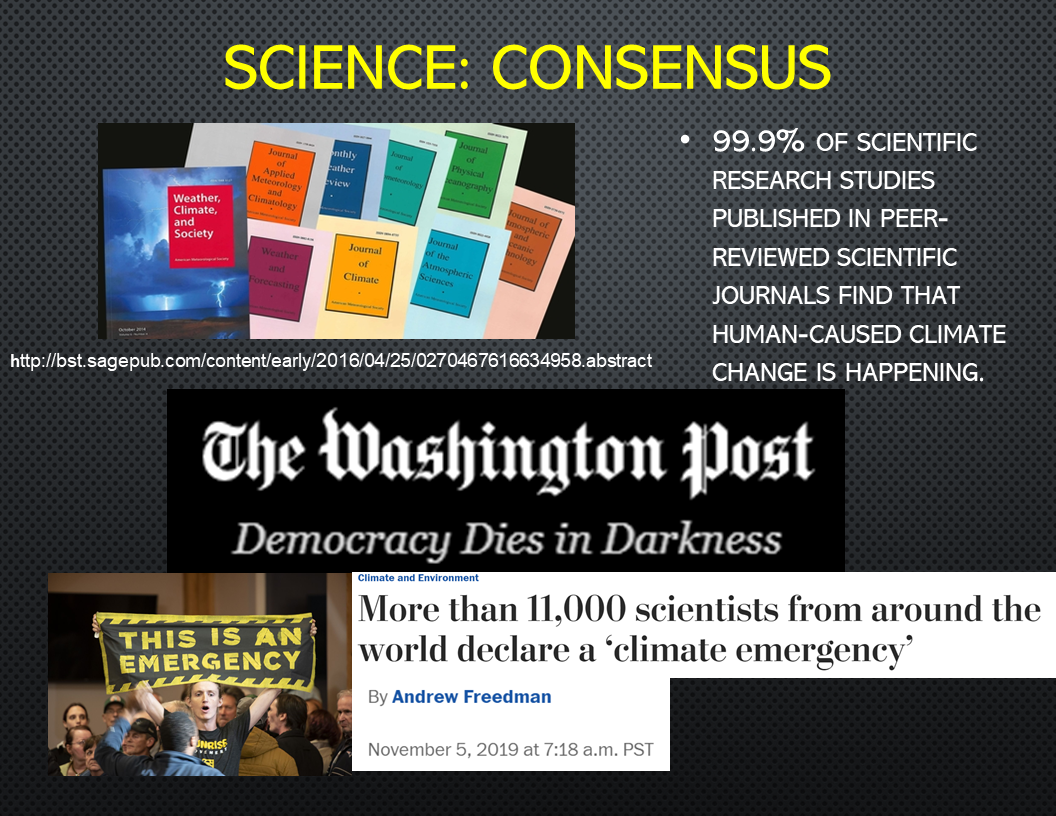
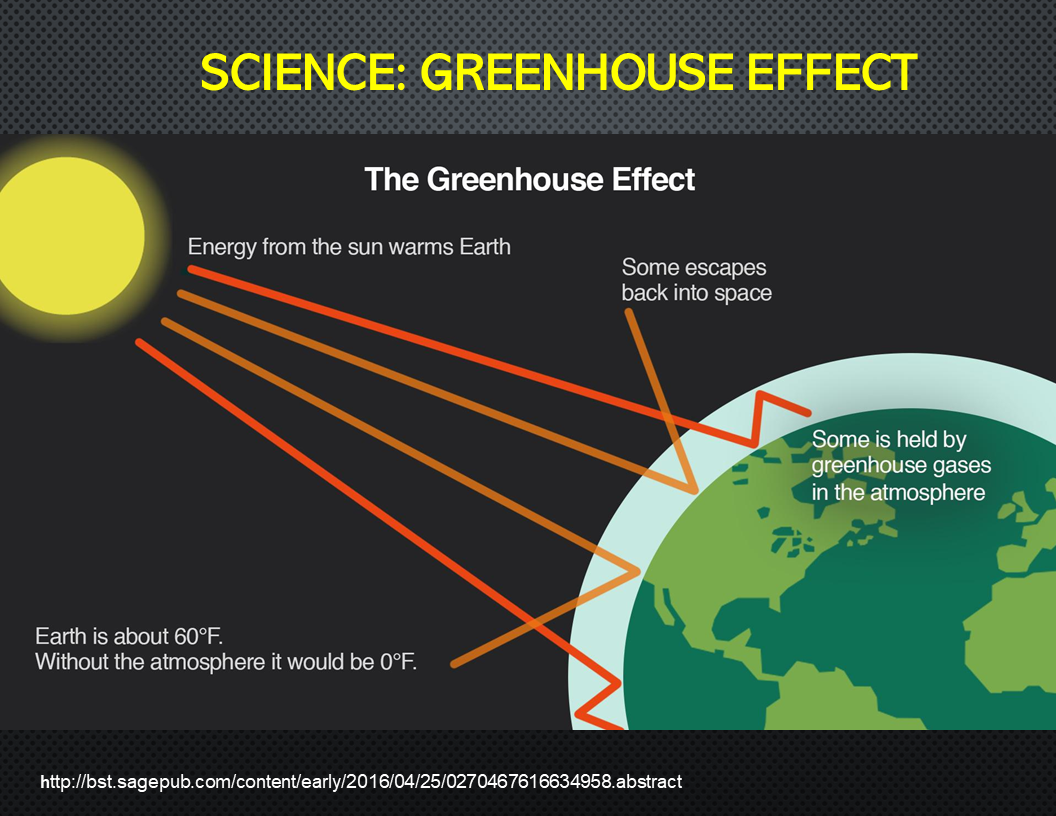
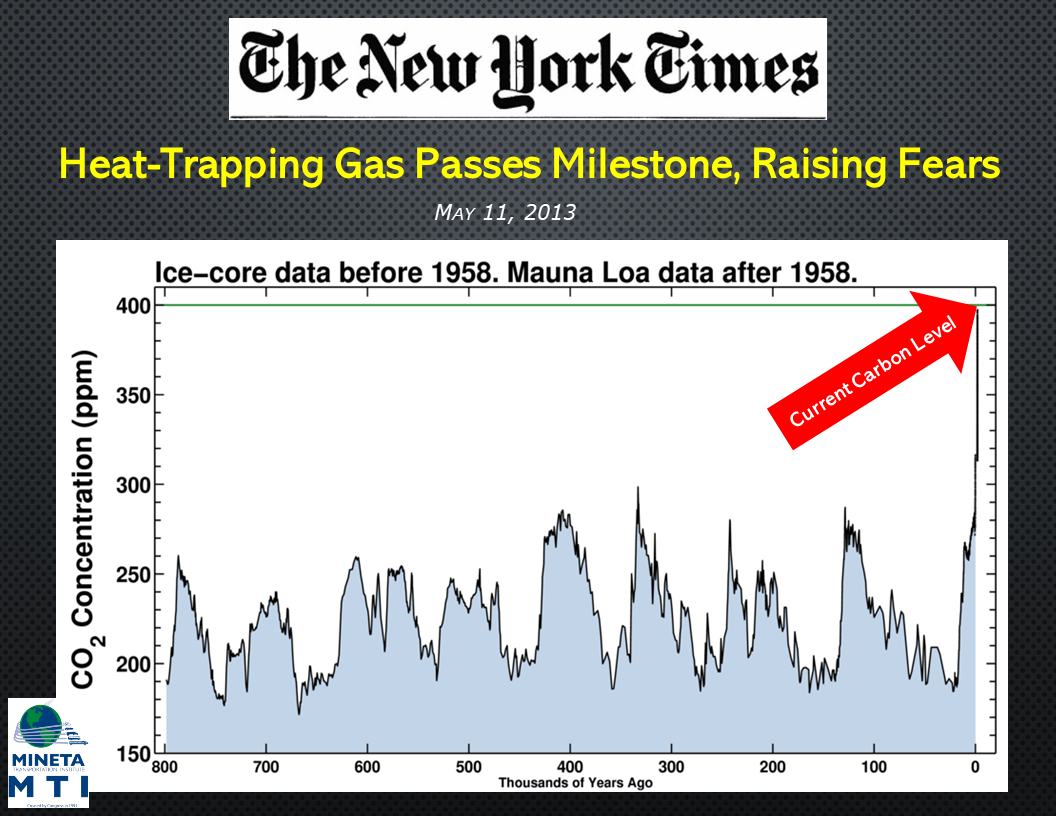
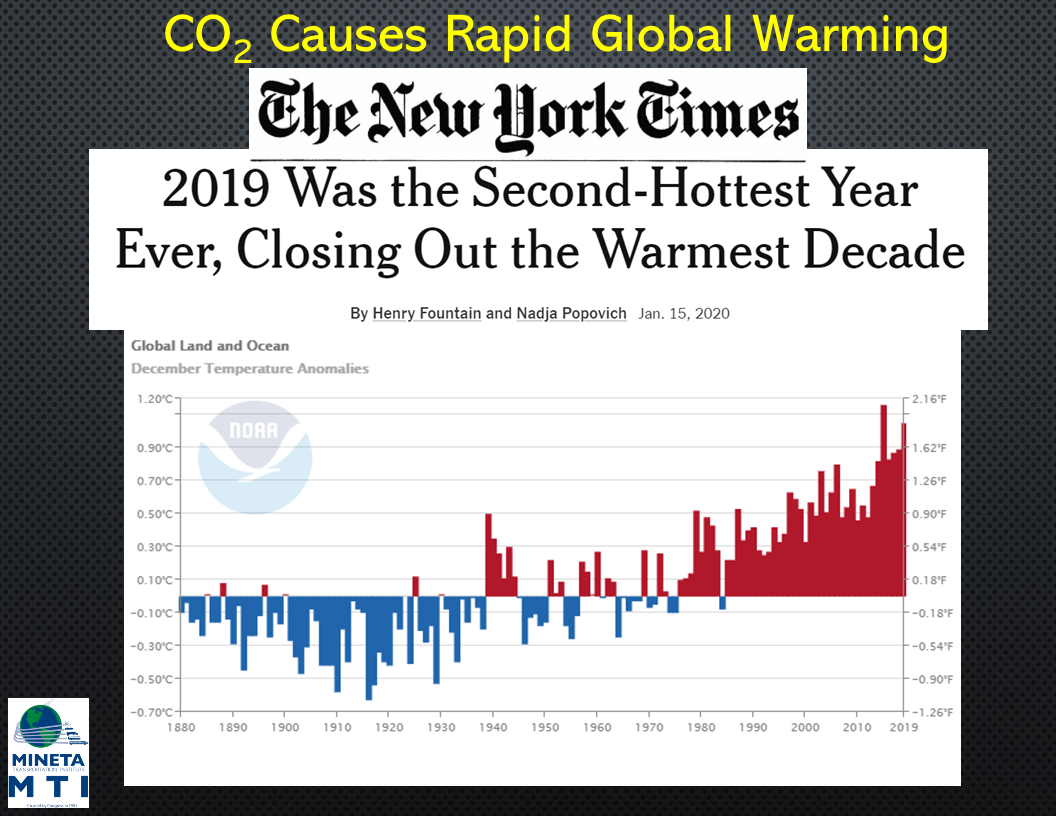
He mentioned that 99.9 percent of the world’s scientists have found evidence of human-caused climate change happening now and reaching a state of emergency. This occurs, he said, in the greenhouse effect: when energy from the sun reaches the earth; some escapes back into space but much is kept near the earth due to a currently thickening blanket of carbon dioxide. That makes that heat just bounce back to earth, where the resulting warming is enough to bring about climate change. He cited pre-1958 evidence of carbon dioxide in layers of ice, and mentioned that currently we are about twice the level of carbon dioxide in the atmosphere as we have been in recent history, and four times as high as it has been over the past 800,000 years. Last year, 2019, was a second hottest-year ever, in terms of the warmest decade on earth.
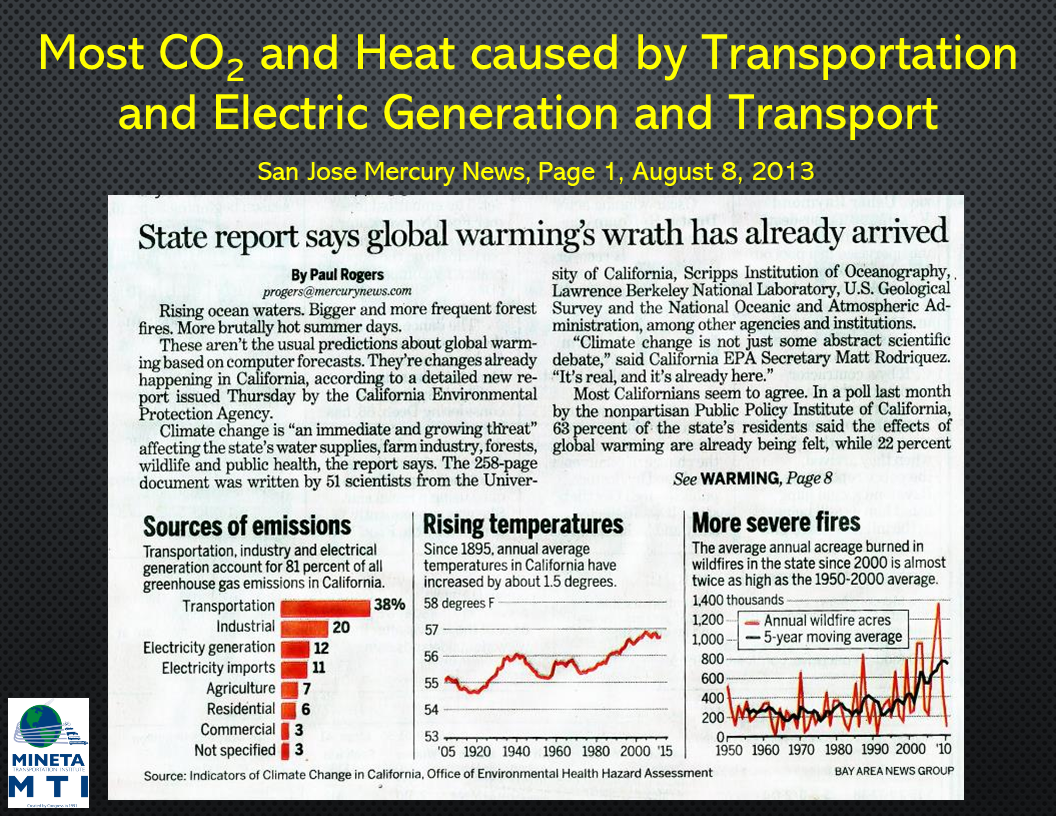
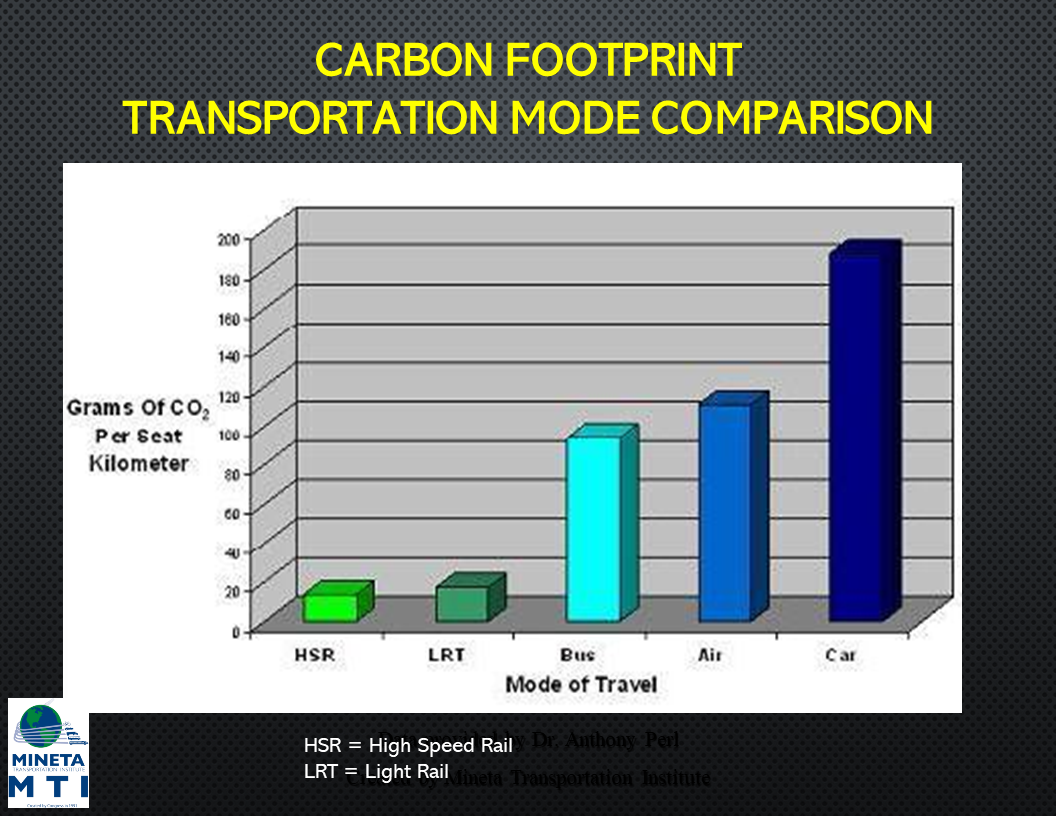
What is the source of the carbon dioxide? Thirty-eight percent comes from transportation, Rod said; 20 percent from industry, 12 percent from electricity generation, and 23 percent from alternate ways of creating energy. Transportation is major, he said, and cars are the worst culprits by far; followed by rail transportation i.e. BART. Electric cars, sadly, don’t have enough capacity to cover transportation on our highways.
But if we do not (humanity does not) solve this problem – global warming – we will not survive this century. Electric cars are a solution.
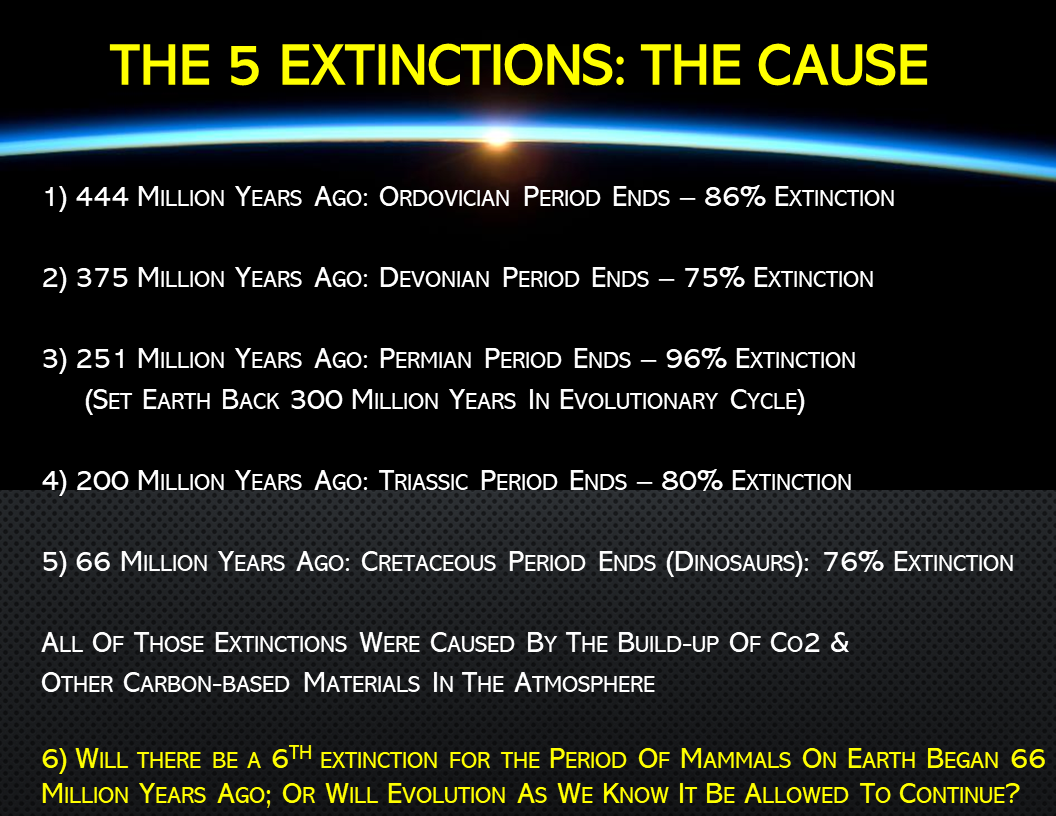
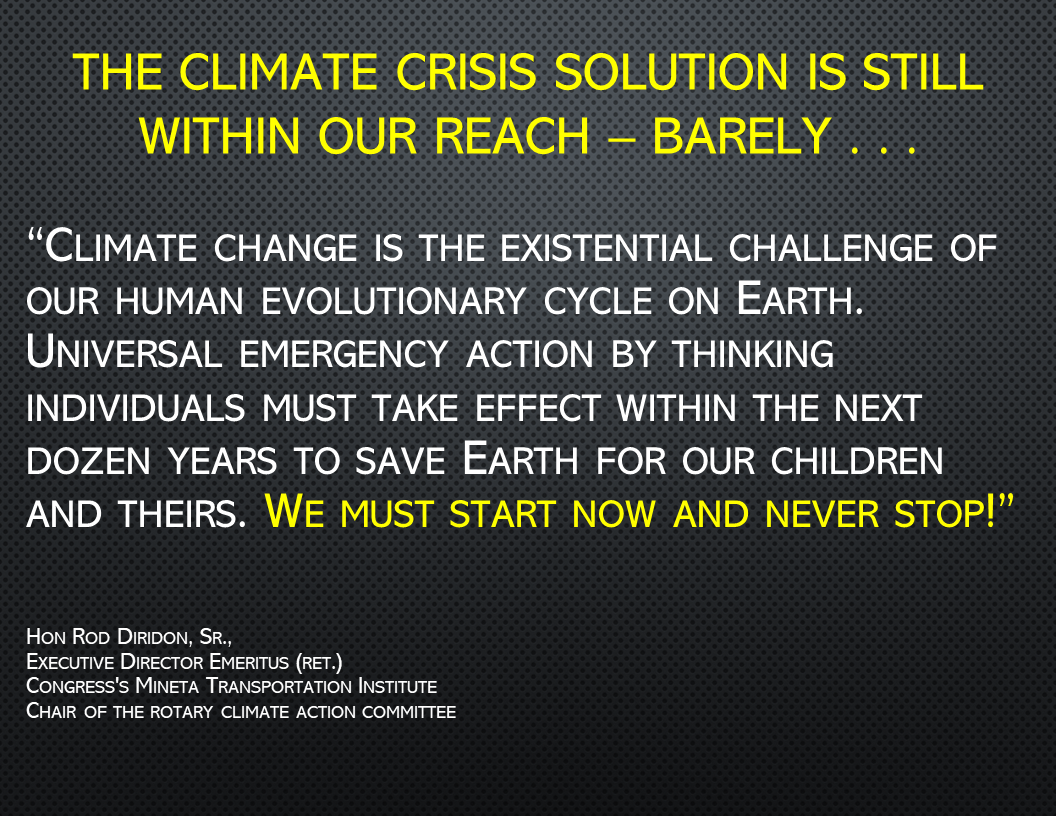
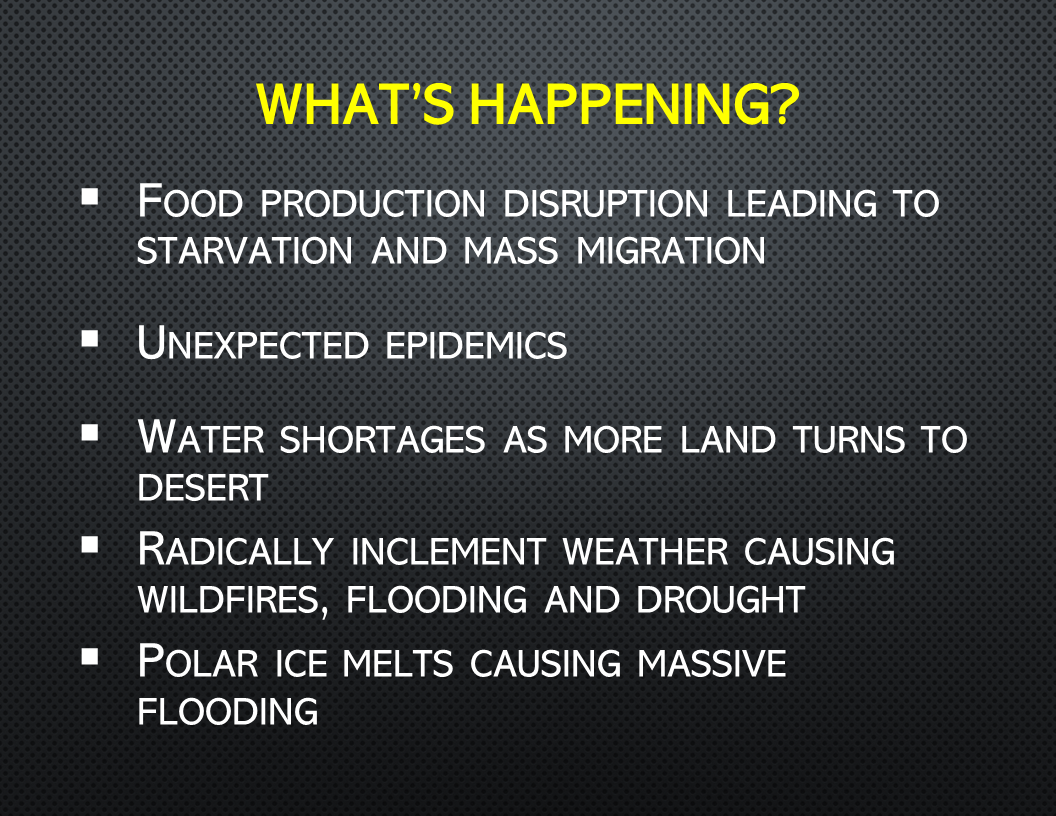
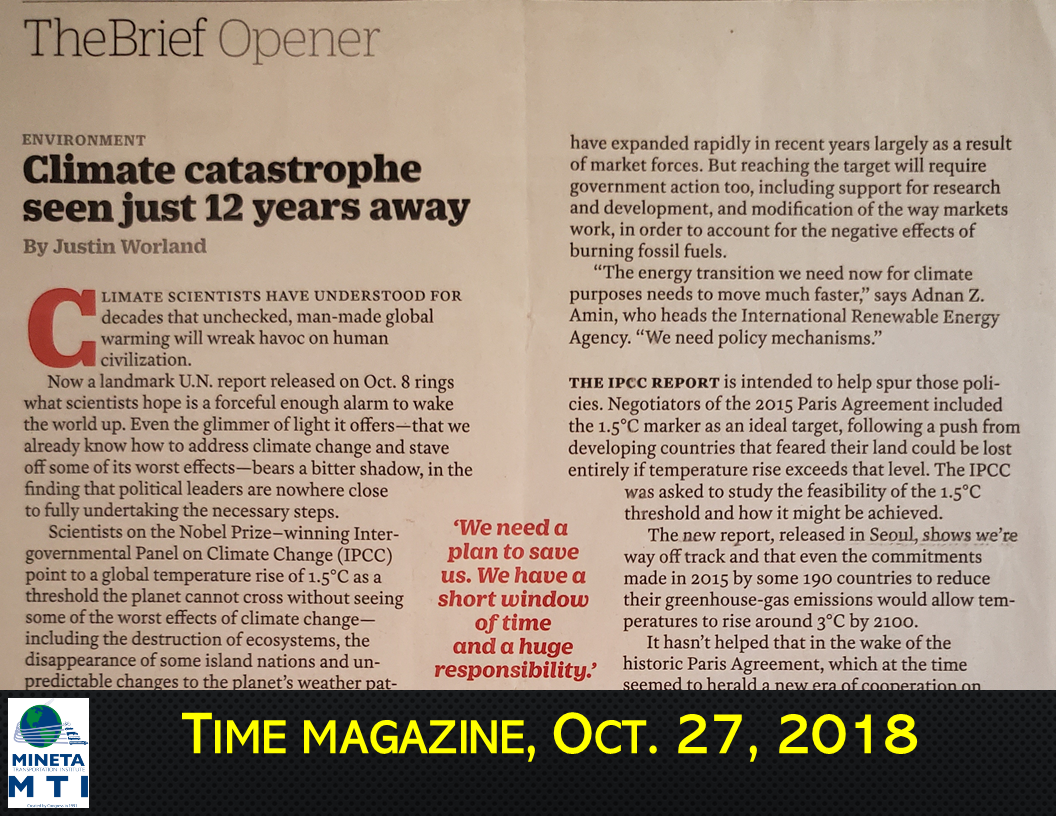
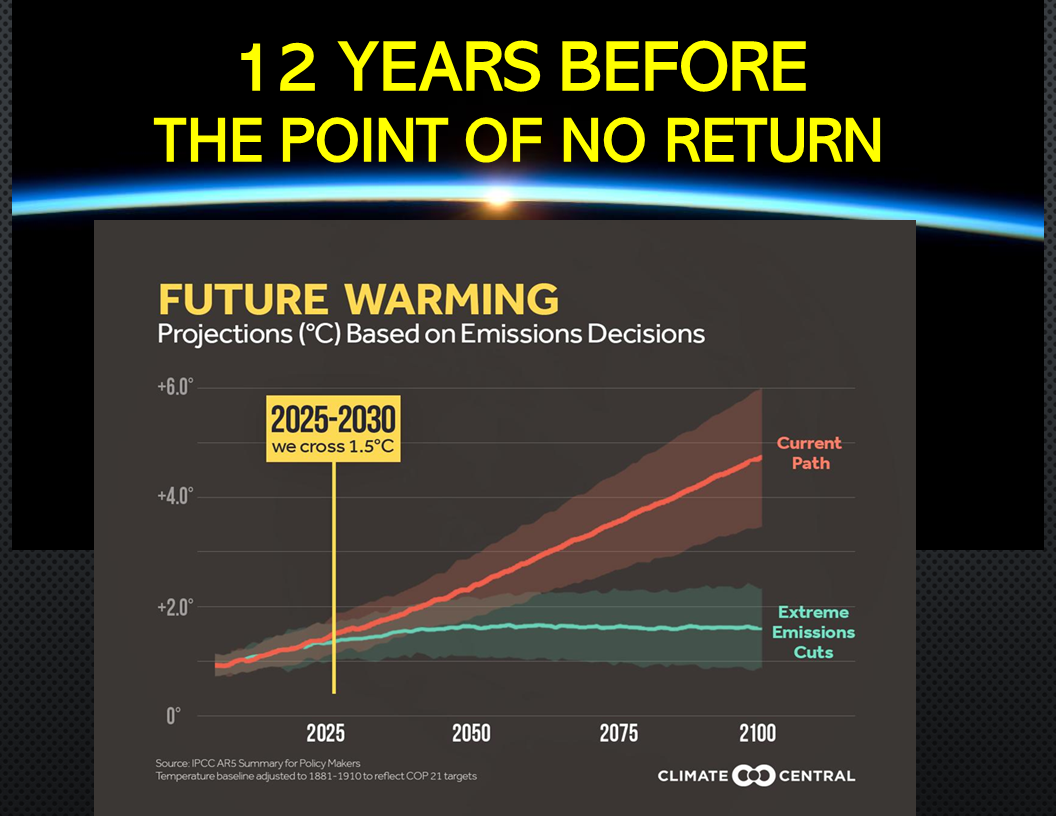
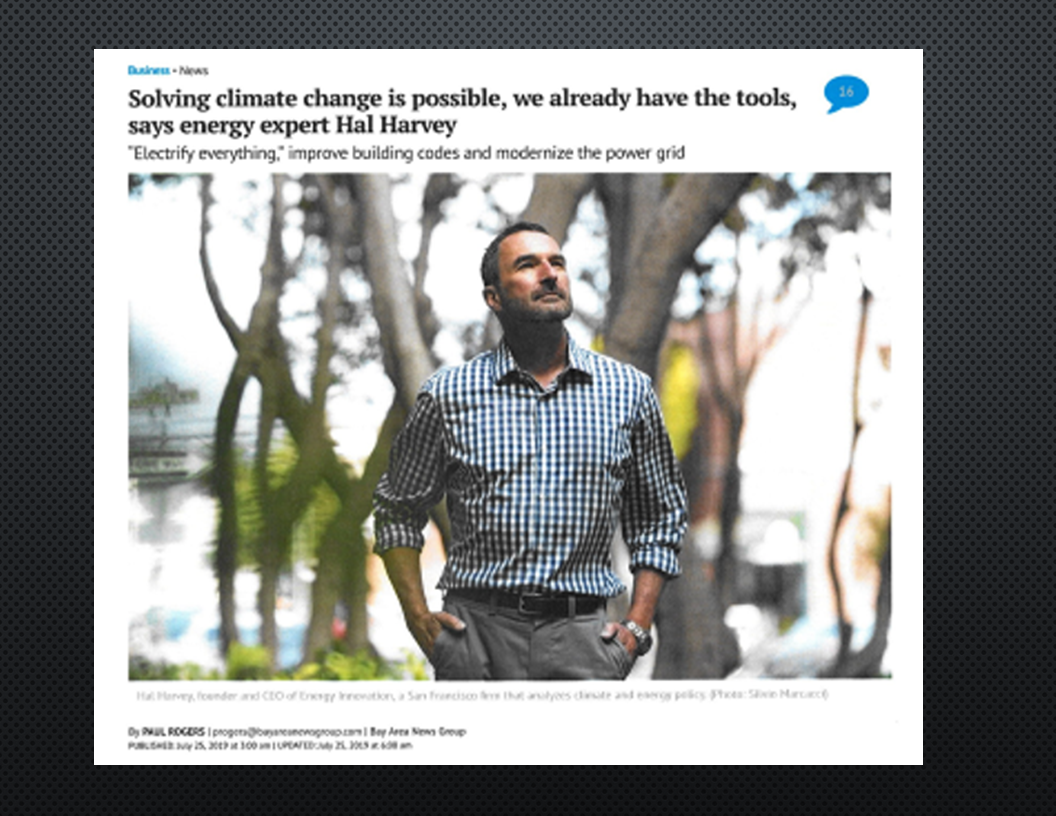
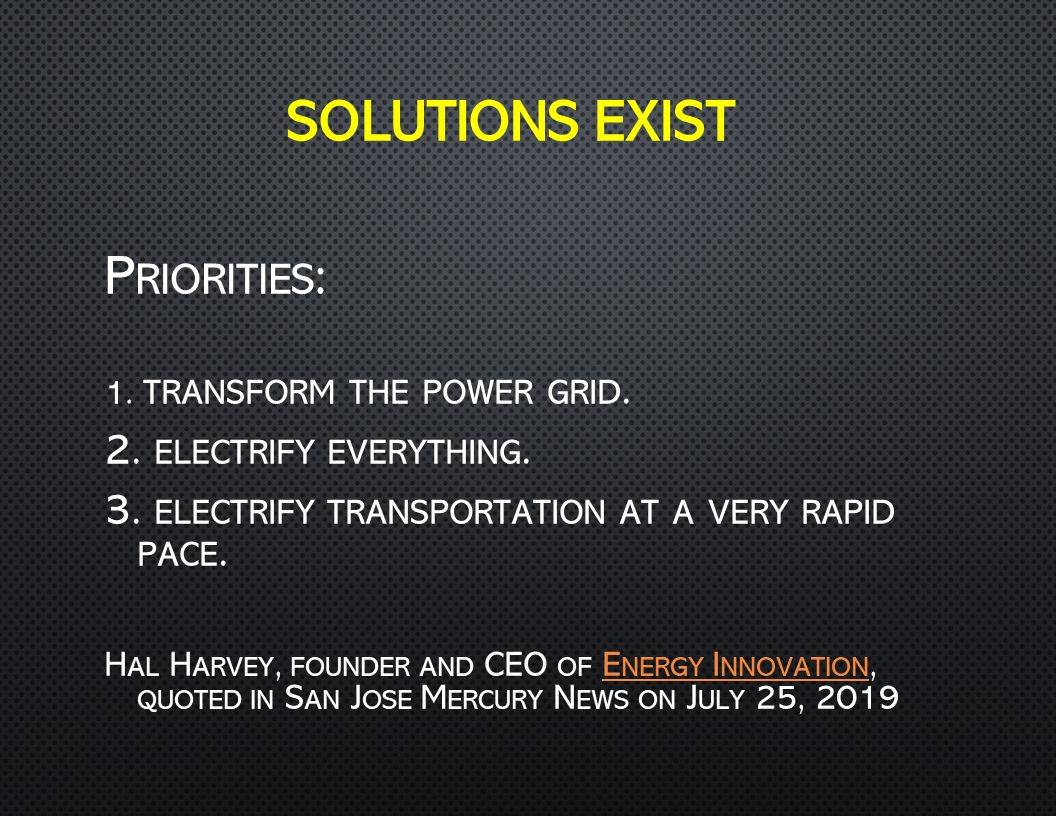
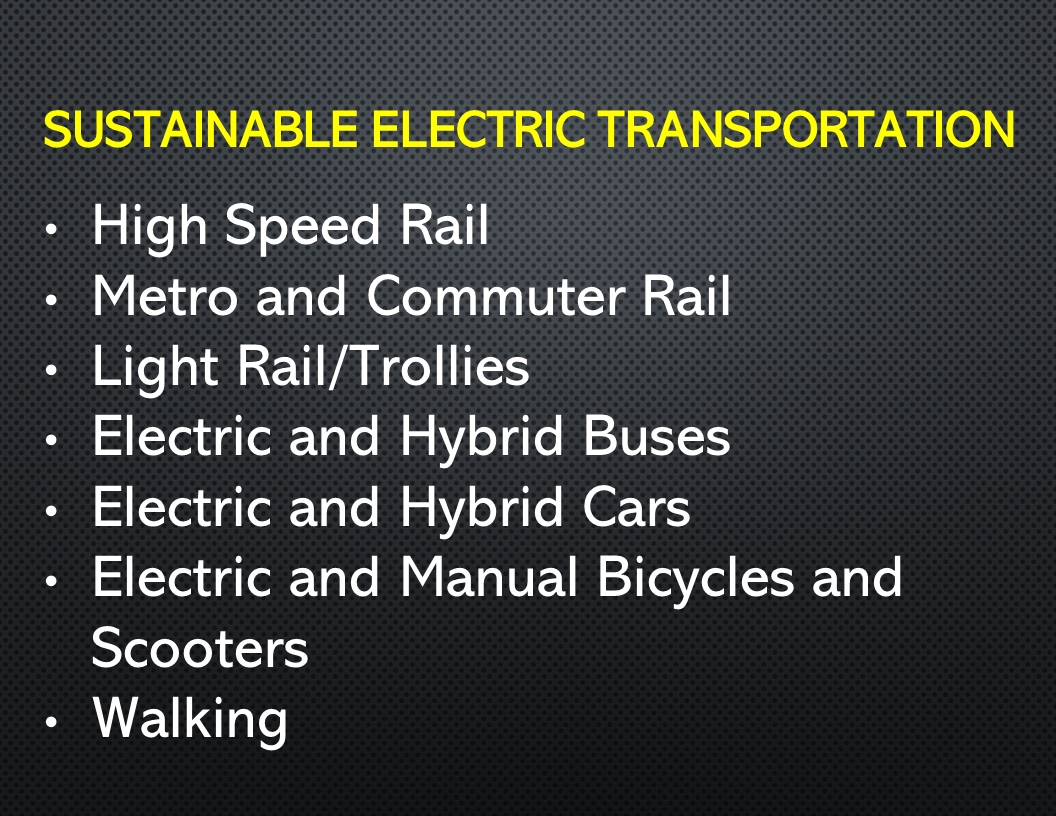
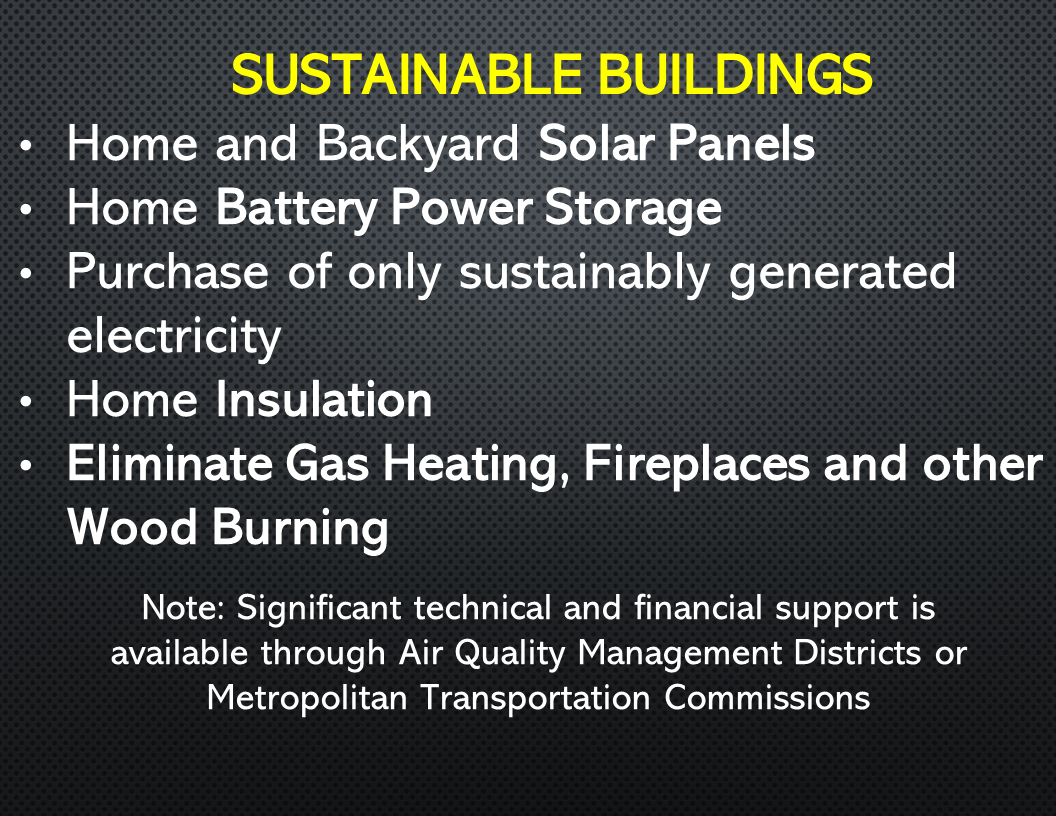
He also looked at situations that we face. If food production is disrupted that can lead to hunger and mass migration. And he mentioned water shortages as more land turns to desert, and natural disasters: bad enough inclement weather is tied to fires or flooding, and he mentioned the melting of polar ice caps, which can result in a rise of sea levels. He mentioned a 2018 article in Time magazine, which indicated that we have 12 years left before climate change becomes irreversible, citing U.N. Secretary-General Antonio Guterres. He also cited Stanford University medical sources, with comments to the effect that we have begun a sixth mass extinction. He reiterated that there are 12 years to the point of no return – unless we make major changes by 2030, we are in line for oblivion. But he also mentioned energy expert Hal Harvey (founder and CEO of Energy Innovation) who says that solving climate change is possible. Discussion moved to alternate means of transportation and the benefits of electric, wind and solar energy over more traditional methods such as gas heat or wood-burning stoves. He also mentioned sustainable electric transportation and sustainable buildings.
What can we do, to encourage alternatives? Be a climate change ambassador. Spread awareness of the situation: encourage talking about climate change among friends of neighbors, speak to community groups, pray we have a future for our children. He can send means of visibly spreading information, such as on items of clothing; other possibilities are buying or leasing electric cars, or installing solar panels at our homes, with home storage of batteries.
He gave insight into a more personal connection with this topic. He said that he wanted to use the time he has left to make sure his own grandchildren have a good life. Think what could happen by the turn of the century, he said. What will we leave to our kids? We have a chance now.
Did I scare you? he asked. Well, if so, we can take action.
He invited questions.
Dianne Bobko asked about how nuclear energy fits into this picture. Rod indicated that he would accept nuclear energy if the alternative is Armageddon. Nuclear plants are safer than they used to be, he said, citing Three Mile Island. He also noted that the United States is a “big polluter” in terms of contributing to the causes of climate change, in the eyes of the world.
Larkin Evans, referring to graphs Rod had shown indicating that transportation is a No. 1 contributor of carbon dioxide, wondered how that would work if we go more and more electric. Rod noted that shifting toward such energy sources as wind or solar could eliminate some of the issues around fossil fuels we have now.
Kevin wondered about how we could remove carbon dioxide from the atmosphere? Rod said there was no answer to that yet. There has been some work around putting pollution deep under the ground, but that process is expensive and not foolproof, as pollution could leak out again. He spoke of the role of trees in protecting the environment, by helping clean the air.
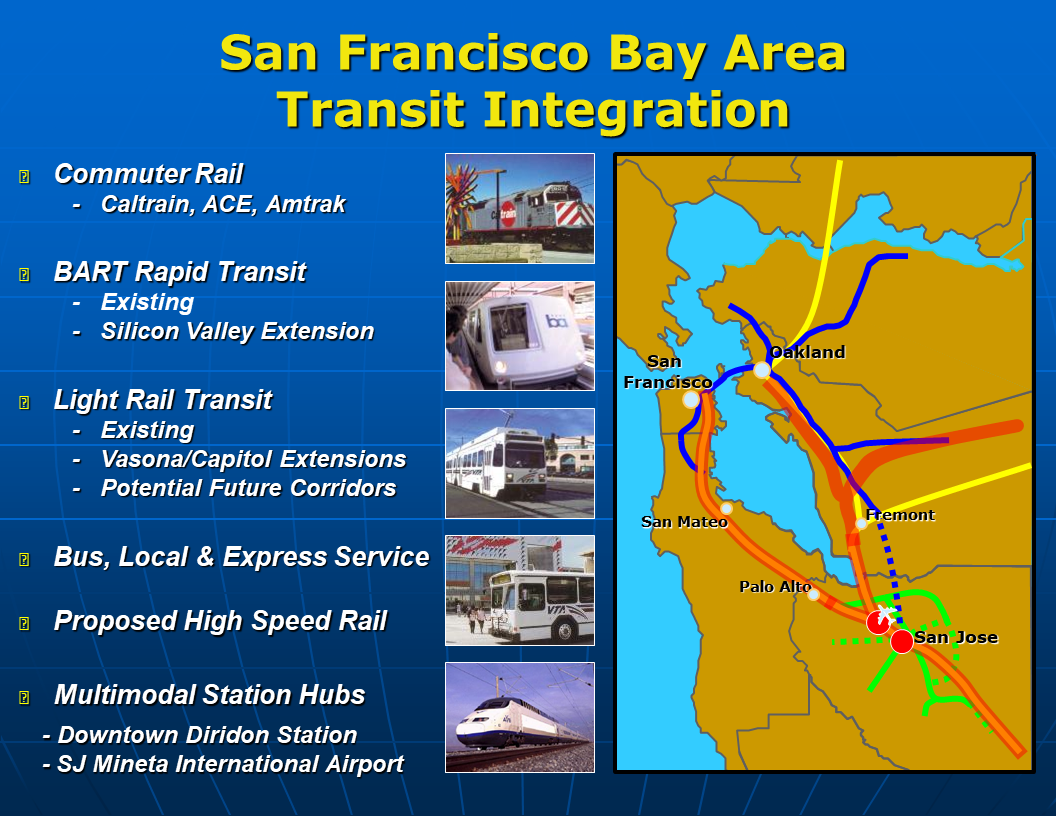
John Evans asked about future plans for transit on the Coastside, in light of the fast growth of Silicon Valley and its link to pollution with the implied effect on climate change? Rod spoke of increased recreational use of transit lines, citing between Merced and Bakersfield, and other lines including between Monterey and Davenport/Santa Cruz. Rod mentioned that coastal communities are known to be anti-growth, a help in reducing issues caused by transit.
Rose Serdy raised a point about local agriculture and ranching, and worries about what effect those might have on climate change. Rod said that yes, ranching and agriculture contribute to about 7 percent of the climate problem in the United States, but reiterated that we can’t solve that problem if we don’t address transportation and electric generation; we “won’t get there.”
He mentioned that for Rotary, a new issue is climate change. Then he also posed a haunting question: If his grandchildren were to ask someday, did our generation do all that could be done to address the issues and contributing causes of climate change? He said he would say yes. But challenged each of us to think what we would say to them.
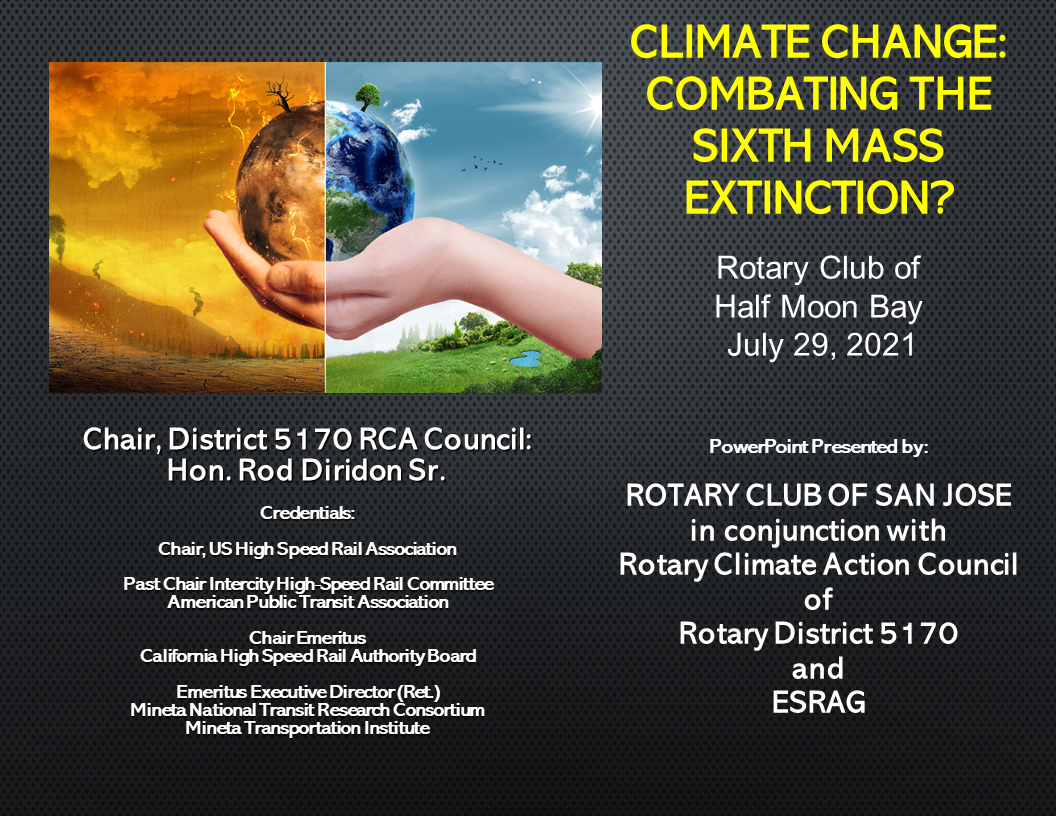
Rod Diridon, Sr. Emeritus Executive Dir.(ret.) Mineta Transportation Inst. (4/11/20)
From 1993 to 2014, Rod Diridon, Sr., was executive director of the Mineta Transportation Institute (MTI), a transportation policy research center created in 1991 by Congress. He is known as the father of modern transit service in Silicon Valley and has chaired more than 100 international, national, state, and local programs, most related to transit and the environment. He frequently provides legislative testimony on sustainability.
Mr. Diridon was appointed in 2001 and 2005 by Governors Davis and Schwarzenegger, respectively, to the California High Speed Rail Authority Board of which he is chair emeritus. He’s past chair of the American Public Transportation Association (APTA) and a founder of the APTA High Speed Intercity Rail Committee and National High Speed Rail Corridors´ Coalition. He served as president of the national Council of University Transportation Centers (CUTC) and was elected chair of the US High Speed Rail Association’s (US HSRA) Board. He served for six years as North American vice chair of the International Transit Association (UITP) in Brussels. In 1976, he chaired the state’s first successful local half-cent sales tax for transit and subsequently co-chaired a state-wide and four successful regional transportation financing and bond elections.
Fortuitously, in 1996 he founded and chaired the Transportation Research Board´s study panel, “Combating Global Warming through Sustainable Transportation Policy.” He advised the Federal Transit Administration and in 1995 chaired the National Research Council´s Transportation Research Board´s Transit Oversight and Project Selection Committee. He provided keynotes, especially on sustainability and climate change, in more than 50 US cities and for a dozen international conferences and has published numerous related articles. In his younger years he was an avid bicyclist and has driven electric cars since 1996. His home photovoltaic array is a net contributor to the grid. He’s past chair of the region’s League of Conservation Voters and a life and Muir Society Member of the Sierra Club. He received lifetime achievement awards from APTA, CUTC, National Association of Counties, San Jose State’s College of Business, US HS Ground Transportation Association, US High Speed Rail Association, regional LCV, and others.
His political career began in 1971 as the youngest person ever elected to the Saratoga City Council. He retired in 1995 because of term limits after completing five terms, six times chairing, both the Santa Clara County Board of Supervisors and Transit Board. He’s the only person to chair the San Francisco Bay Area´s (119 cities, 27 transit agencies, and 9 counties) three regional governments: The Metropolitan Transportation Commission, the Air Quality Management District, and the Association of Bay Area Governments. He chaired nine successful rail system development project boards. In 1995 the region’s main train station was renamed the “San Jose Diridon Station” upon his retirement. He’s now focused on combating climate change by convening the Rotary Climate Action Council.
After receiving a BS in accounting and MSBA in statistics in 1963 from San Jose State University, he served two combat tours as a naval officer in Vietnam. In 1968 he founded the Decision Research Institute which was sold in 1977 after his election. Mr. Diridon has two successful children, Rod Jr. and Mary Margaret, and four grandchildren. He is married to Dr. Gloria Duffy, former US Deputy Assistant Secretary of Defense and now president and CEO of the Commonwealth Club of California. In July of 2014 he shifted to emeritus status at MTI
Slide Presentation


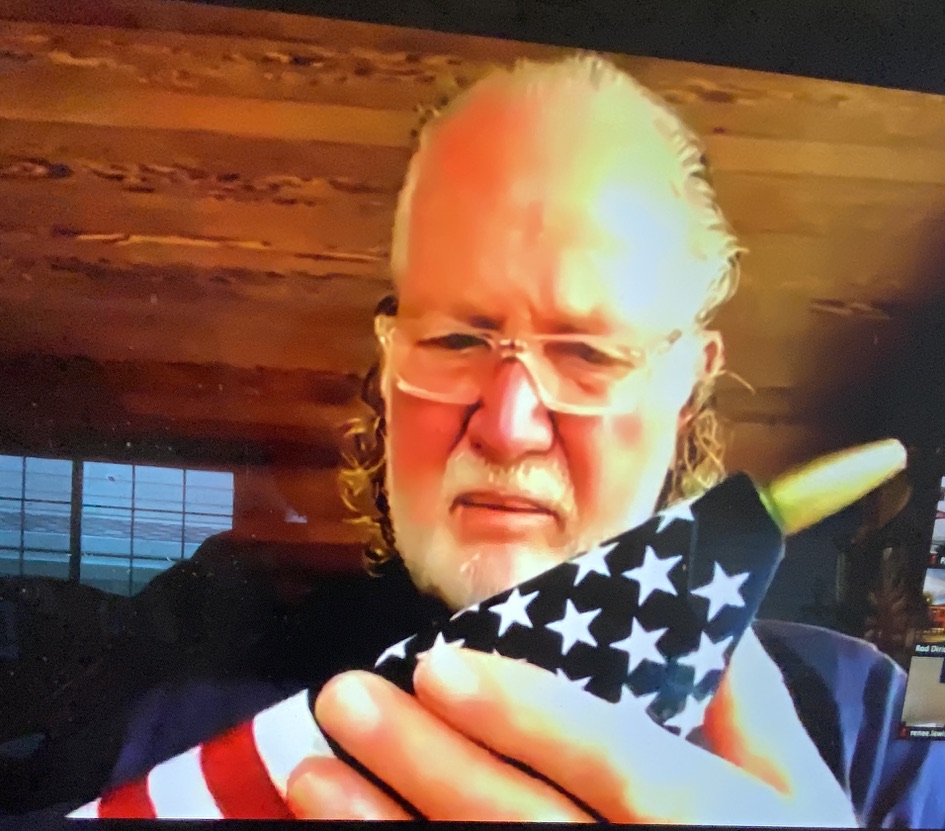


 No green marble for Kevin!