Why Gluten-Free has become popular
Posted by Bill Johnston
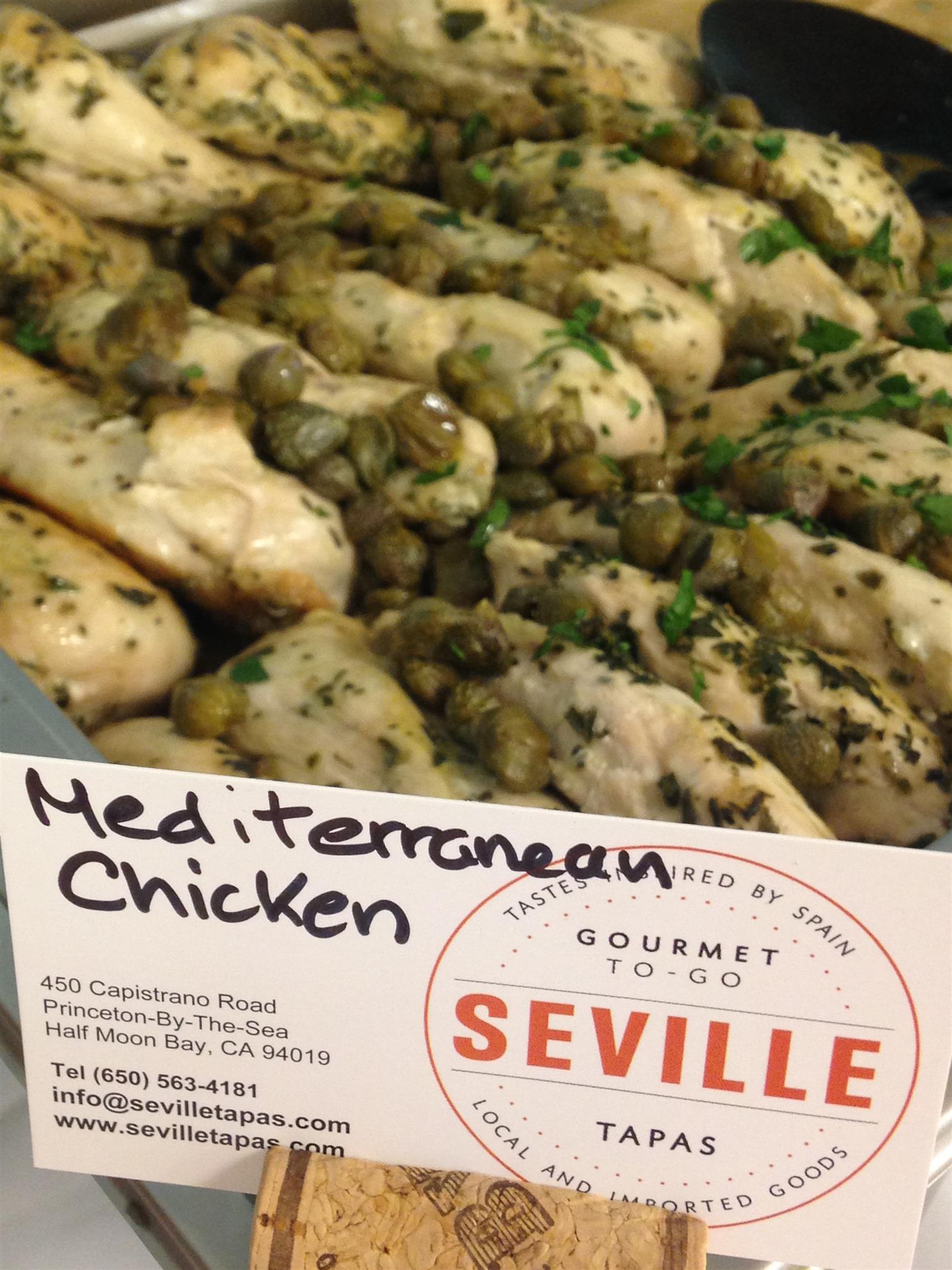
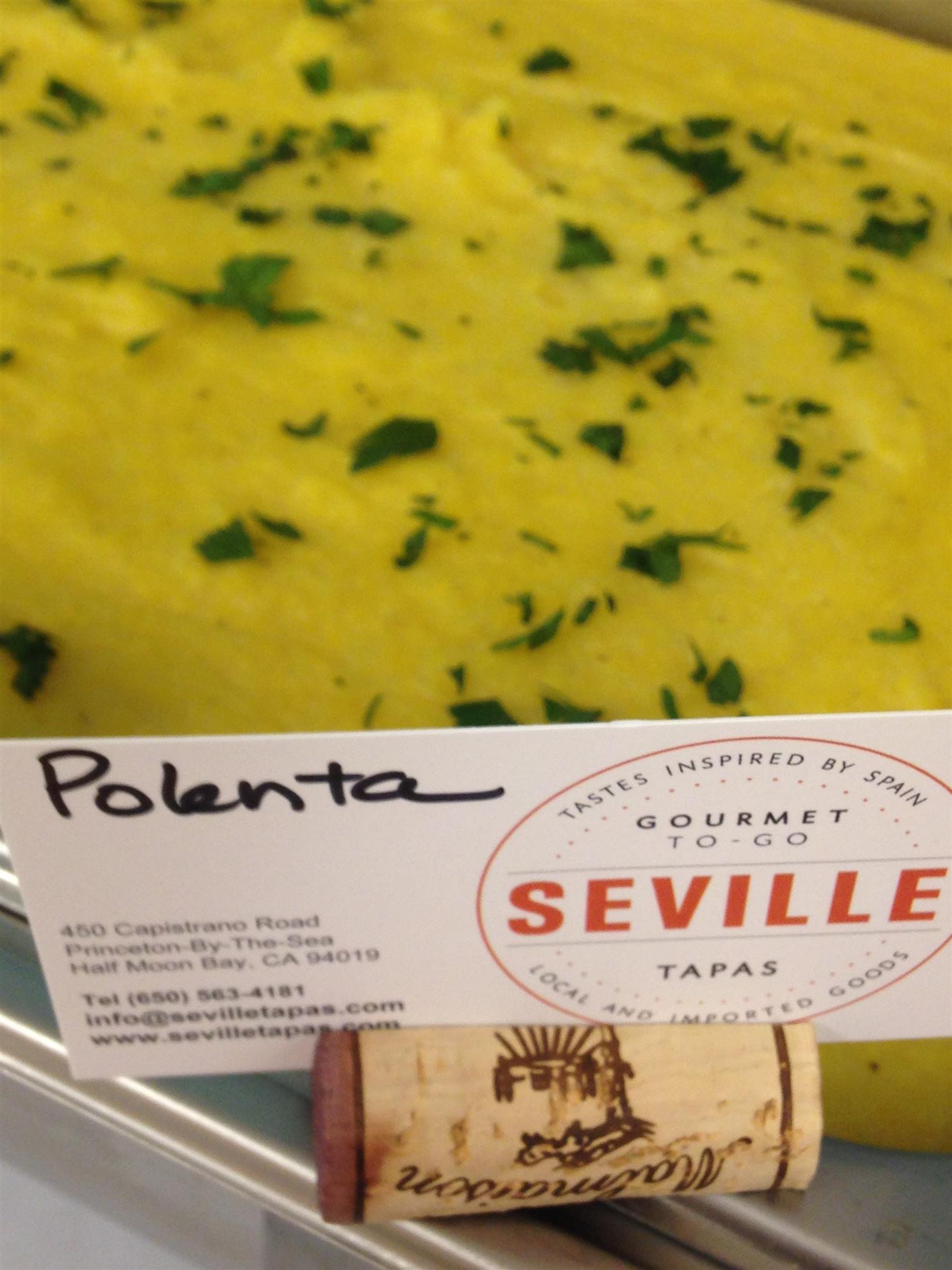
Our speaker was Amy Fothergil a chef and mother and her subject was "why gluten-free has become popular". First big surprise was that our lunch was gluten-free and actually more than palatable. Credit for the palatable goes to Catherine Yaque of Seville Tapas who catered our lunch today.
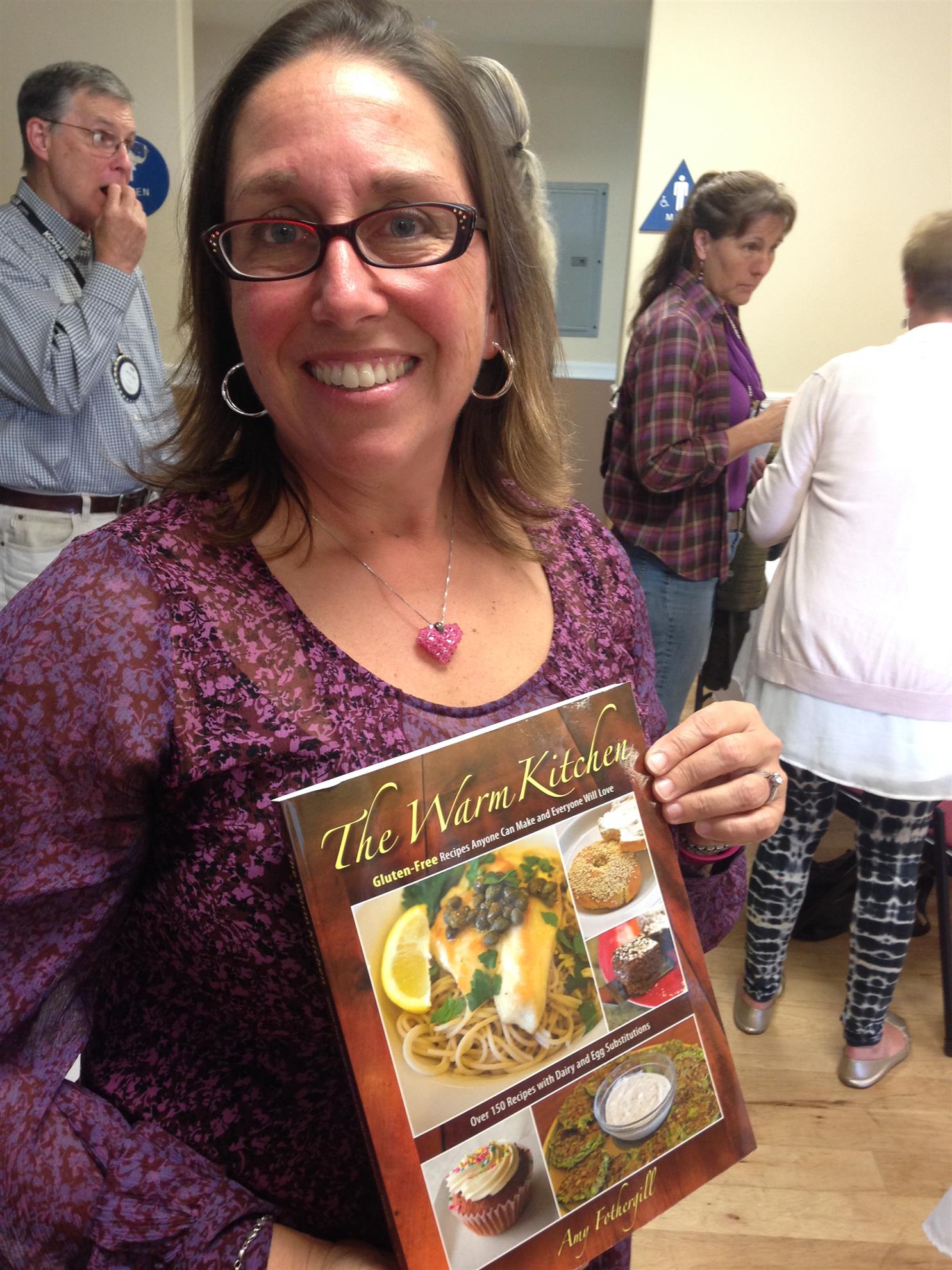 Amy was inspired in her gluten-free quest by her now seven-year-old daughter Katie. At 13 months Katie began getting eczema and by the time she was two it was a serious problem. She consulted the usual cast of experts who explored allergies and provided no relief. Finally they saw a naturopath who recommended excluding gluten, dairy, eggs and more. That provided relief and led to the conclusion that her daughter had a gluten sensitivity. Amy herself decide to try it because she was exploring recipes and she found that she felt so much better and she remains for the most part gluten and dairy free to this day.
The gluten-free industry is a $6 billion proposition. The popularity of gluten-free diet has exploded over the last several years.
Gluten contains proteins combined to make what Amy described as the bad protein. Gluten is found in wheat and wheat derivatives as well as in barley and rye. It can be found in oats due to cross contamination in the fields or in processing. Oats contain a protein which is similar to that in wheat and some also react to that protein. Gluten is a difficult protein breakdown. Products with gluten include breads, pastas, etc. and soy sauce and its derivatives. Additionally beer and certain candies and even rice and corn cereals can contain gluten due to the presence of malt.
Some of the problems associated with sensitivity include G.I. or bathroom issues, headaches and depression, skin issues, joint pain, anemia and celiac.
 Screening for gluten sensitivity is problematic. The testing involves a search for anti-bodies which are not present unless there is a recent exposure to gluten. The need for gluten-free diets, with the exception of in the context of celiac disease, is controversial. There's a common sentiment that we "shouldn't be gluten-free unless we are suffering from Celiac disease" and Amy strongly disagrees with that. She is of the opinion that the propaganda against gluten-free diets is a product of the entrenched agricultural industry and its investment in Amber fields of grain. From the audience we heard from David Maah's guest who is a registered nurse and who is of the opinion that some of the problems that Amy was discussing can be attributed to highly refined grains that are prevalent in our diet.
She did discuss celiac disease. She says there are three triggers that must be present. The first is the presence of the necessary genes. Second is exposure to gluten and third is some sort of emotional or physical trigger.
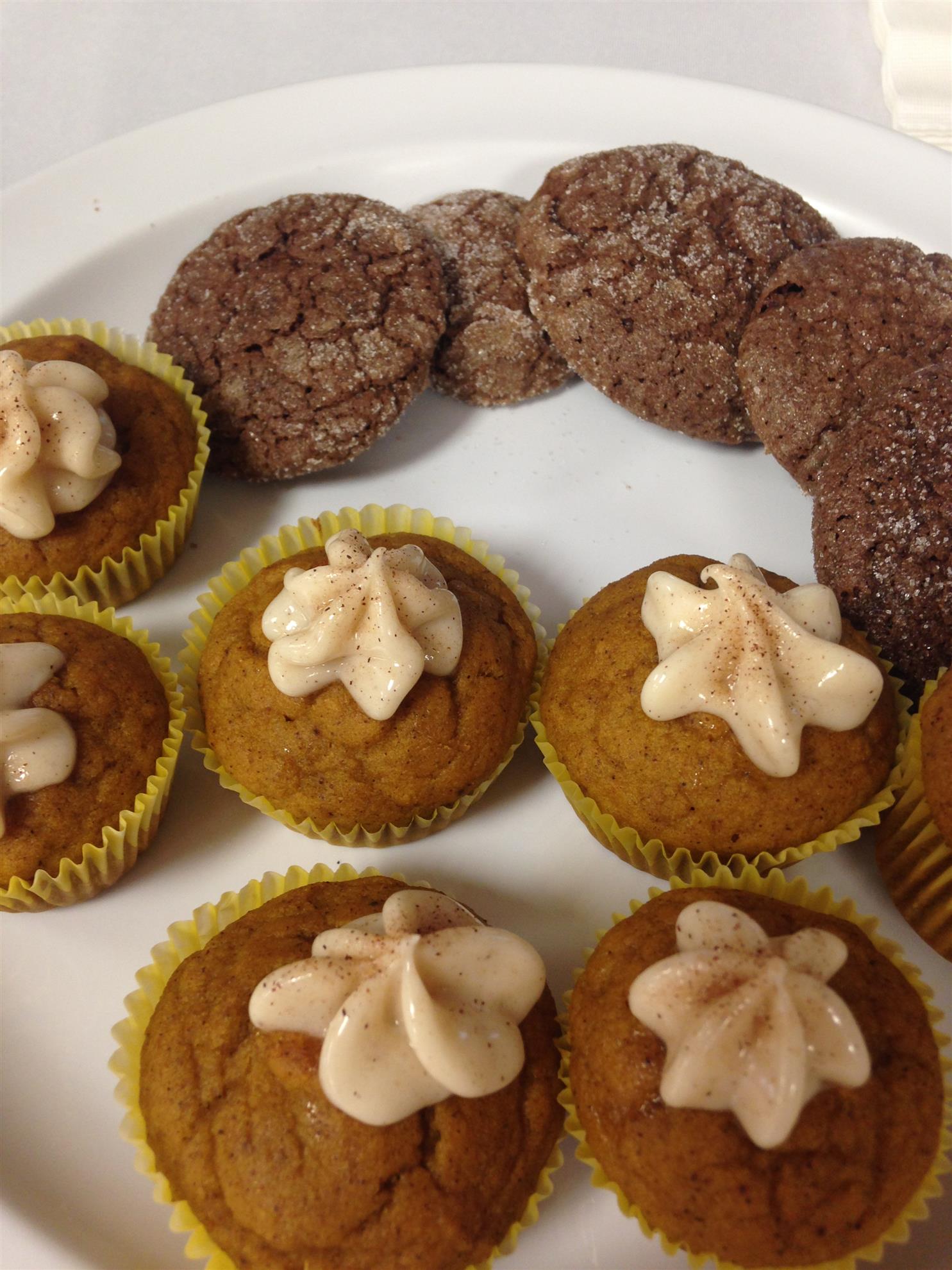
Amy concluded by saying that the gluten-free diet is popular because it treats the cause not the symptoms and because it makes people feel better. She recommended that everyone get tested for Celiac disease, that everyone try a gluten-free diet for 30 to 60 days and see whether it makes them feel better. She says that there are 10 tips for getting started on gluten-free diet at her blog and that on her website http://amythefamilychef.com/ you can find additional resources. She wrapped it up with pictures of her wholesome looking food and promoted her cookbook.
.JPG)
Submitted by your intrepid fourth Thursday of the month reporter, Bill Johnston