Posted by Editor: FDBobko
________________________________________________________________________________________________
 
The FOGHORN 
ROTARY CLUB OF HALF MOON BAY
February 25, 2021
 
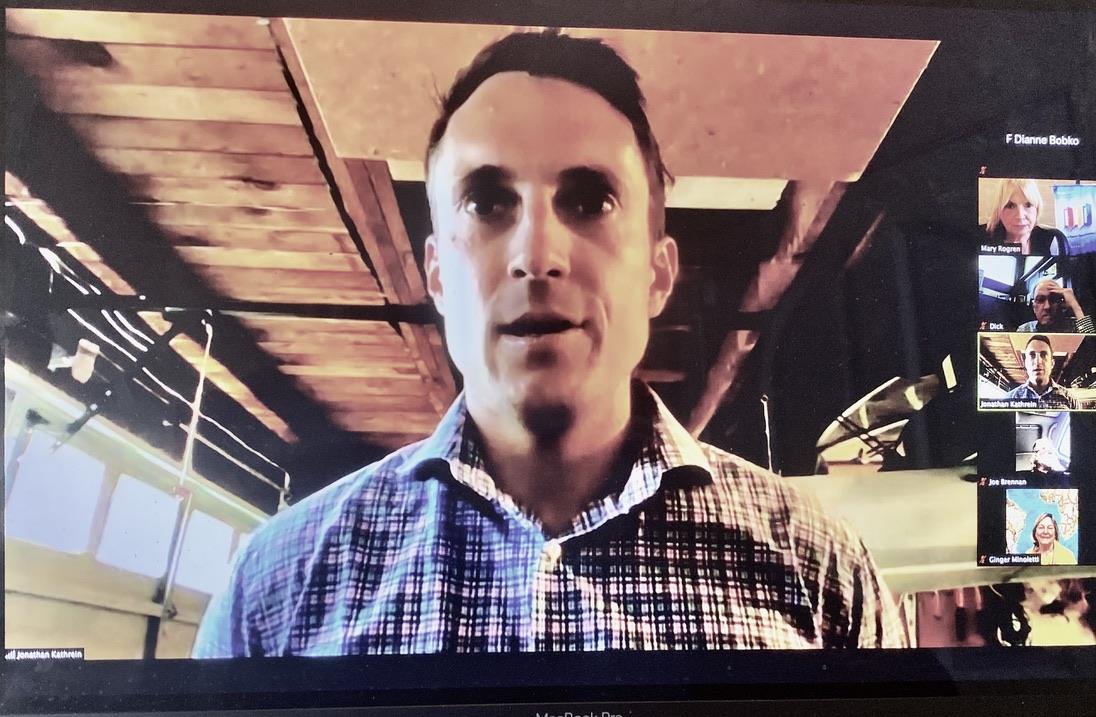
Jonathan Kathrein 
Surviving a Shark Attack
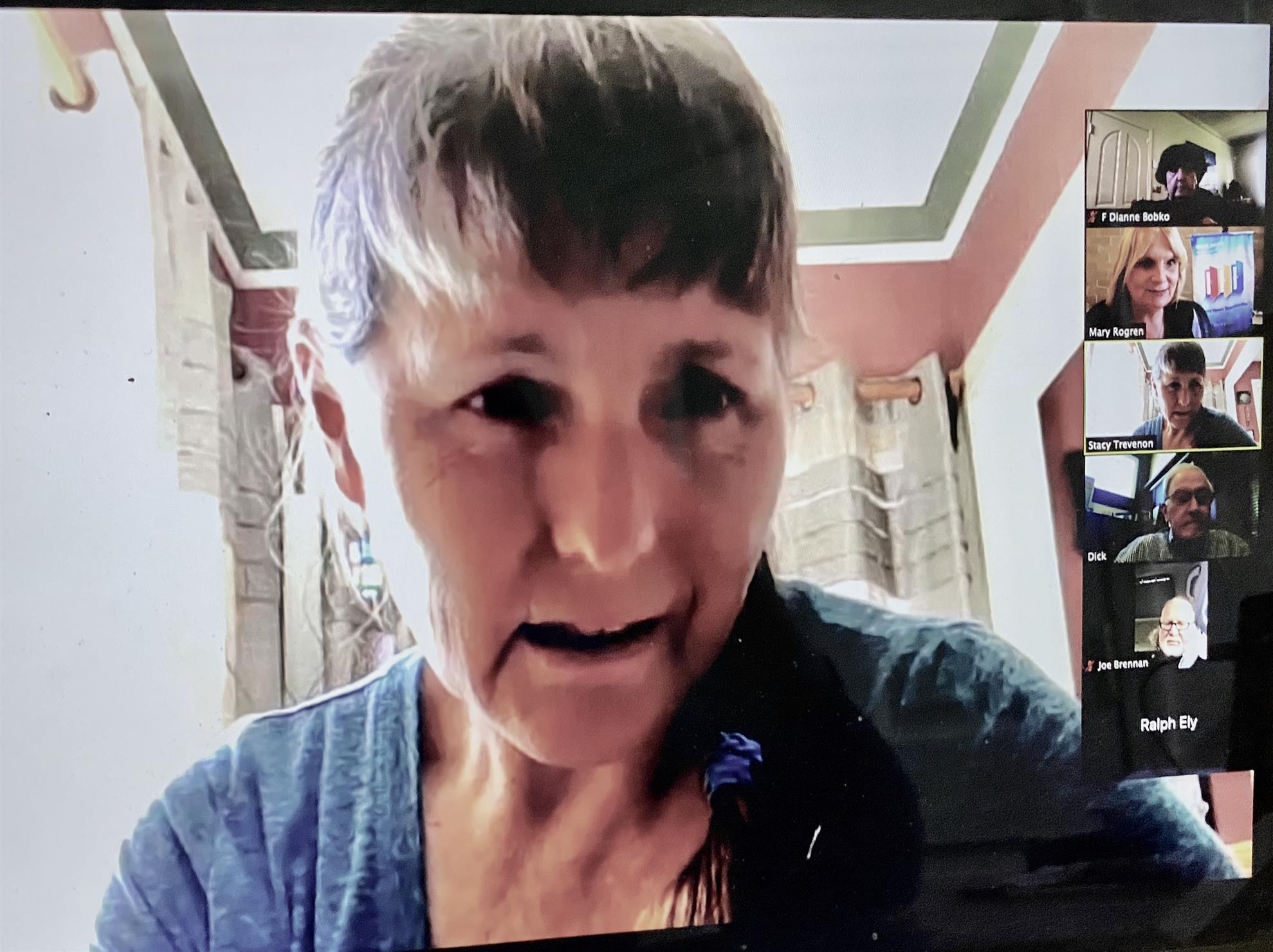
Article by Stacy Trevenon
Photos by Dianne Bobko
 
The day’s speaker was then introduced: Jonathan Kathrein of Mill Valley, whose talk focused on his experience of having survived an attack by a great white shark while bodyboarding at age 16 in the Pacific Ocean along the California coast. That incident transformed his life, he said; after the he started nonprofits, wrote three books, attended college in Berkeley and then law school at USF and currently practices real estate law. His virtual talk, which he complemented with photographs, held his audience spellbound. 
 
Kathrein said that throughout his life he had always loved being in the water – ponds, the ocean, lakes – and always had a desire to surf. He had been born in Illinois and had come to California at age 6, when his family settled just north of San Rafael in Marin County. On this day, Aug. 26, 1998, the last day of summer vacation, he headed for Stinson Beach, where he found himself the only one, along with one other young man, to go into the water to go bodyboarding. The other swimmer, Sean, (I am not sure of the spelling) did not stay long in the water; perhaps, Kathrein said, he got cold, or maybe he saw something in the water that disturbed him. 
He said that as he was watching Sean and paddling in the water, his right hand hit against something solid, large and rough, though he could not see anything. It crossed his mind that it might be sand, though it was not logical that a solid bank of sand should be in the water where he was. He felt pain in his right hip as the shark seized him. Using a small doll to illustrate the story as he told it, he showed where on his leg he was bitten by the shark and how the impact lifted him and flung him over. The shark started to drag him underwater, but he saw the shark’s gills in front of him and within reach, so he grabbed them as you might grab handlebars. The shark, flinching away from his grip, released him and he made for the beach, though he could not kick with his right leg as he swam. Then he felt the sand of the beach under his hands; he could not stand, but collapsed on his bodyboard.
Other beachgoers, lifeguards and Sean rushed to his aid, pulling and carrying him up the beach, tying on a tourniquet and contacting help. About 20 minutes later a helicopter arrived, onto which he was loaded and taken to the John Muir Medical Center. He recalled being semiconscious at the time; and how, when he contacted his mother, he assured her that he was okay. At the medical center, he underwent seven hours of surgery; major muscles in his leg had been severed by the shark bite and more than 600 stitches and heavy antibiotics were required – if the wounds became infected it would mean amputation. But as grim as the experience was, he was able, in his talk, to calmly list several takeaways from it. Those included an education about sharks and shark-related incidents, and experience in and understanding of overcoming obstacles.
His talk was filled with perspectives gained from the experience, as well as facts, anecdotes and statistics about shark attacks in the area. In the waters off Marin County, he said, there have been 10 recorded shark attacks since 1996. Over roughly the past decade, there have been about 30 such attacks, with three fatalities; meaning that while 10 percent of the victims lost their lives something like 90 percent survived, Kathrein said.  Shark attacks, he said, are less common than popularly thought.
He showed a chart that detailed shark attacks off California since 1952. He told of some of the information about sharks that has come from these unfortunate incidents, including understanding about how they travel; they are now to be found off Hawaii. As a visual aid, he showed a map of the “Red Triangle,” which mapped out shark attacks in the waters off Marin (north) to Monterey Bay (south) and out to sea (west) – including his own, which he called “one of the worst.”
He analyzed and illustrated the manner of the attack: Many attacks involve surfers, he said, as great whites tend to attack from under surfboards or bodyboards, hitting the board which tends  to dislodge the surfer or swimmer. 
An anecdote which he shared and which his audience particularly enjoyed was of an event, in the late 2000s, when as a speaker he shared a stage with fellow speaker Peter Benchley, author of the novel “Jaws” and co-writer of its film adaptation (with Carl Gottlieb.)
But his experiences were key in the career Kathrein forged: he was a co-founder of nonprofit organization Future Leaders for Peace, which teaches young people about life skills, leadership and attainment of goals. He uses the story of his recovery as a motivational device, and an analogy for dealing with life and the world around them. 
He has penned three books which include: with Margaret Kathrein, “Surviving the Shark: How a Brutal Great White Attack Turned a Surfer Into a Dedicated Defender of Sharks” (2012). Among the themes that come through in the book are his passion about the need to protect the coastline, beaches and their animal life, including sharks. An advocate for sharks, he believes they are a vital part of the ecosystem, not the malicious demons often portrayed in movies.
After college, Kathrein became a political consultant in Northern California, with a focus on clean energy, coastal issues and community environmental projects. He attended law school at the University of San Francisco, and currently works in real estate law. He says: “When I look at my strengths in practicing law, a big one is being active in the community … Real estate law in particular revolves around the community … I want to help people build something positive.”
Now a father of two, Kathrein epitomizes his experience, summing it up through a conversation with his 2-year-old daughter. She had asked, “Daddy, why’d the shark bite you?” with a look of confusion, and he had answered, “It was an accident. We all make mistakes.”
His books also include “Far From Shore,” which was built around notes his mother had made on the attack. He has been profiled on television’s “Dateline” about the incident, though he did not show the actual injury on television. But in the Rotary virtual meeting, he did present black-and-white  photographs of the injury site, showing the ugly, jagged scars from knee to hip. The day after the attack, he said, the media descended on him with interview requests from news channels.
He said his book “Surviving the Shark” offers his own version of the incident. He had realized, he said,  that people wanted and needed to learn about sharks, and to share their common stories.
With a theme of “don’t fear sharks,” he spoke of his talks and his interaction with the environment. He spoke of how that thinking comes into his views and talks to young people about bullying, how humans are polluting the oceans and being unkind to one another. He said he had been thinking of writing a children’s book about the attack, when his schedule allowed. He said it’s amazing, how little is known about sharks.
He invited questions from the Rotarian audience.
President Mary spoke a little more about Kathrein’s life since the attack and his involvement with organizations like Future Leaders for Peace. She commented on what must be Kathrein’s post-attack fasciation with the world and how it worked, views from political to civic to real estate. Opportunities that can come with such work include gauging the likelihood of attacks, and this offers young people a chance to slow down “unplug.” She also mentioned public speaking, which is a very common fear for many, and how Kathrein’s talks help the greater community. Another topic that came up was work in the field of real estate law, and the California Environmental Quality Act, and interaction with the ocean, community groups and youth leadership opportunities. Citing groups like the Coastal Conservancy, Kathrein said we are building resources such as the ocean, as we interact with communities, people, sharks, even property rights.
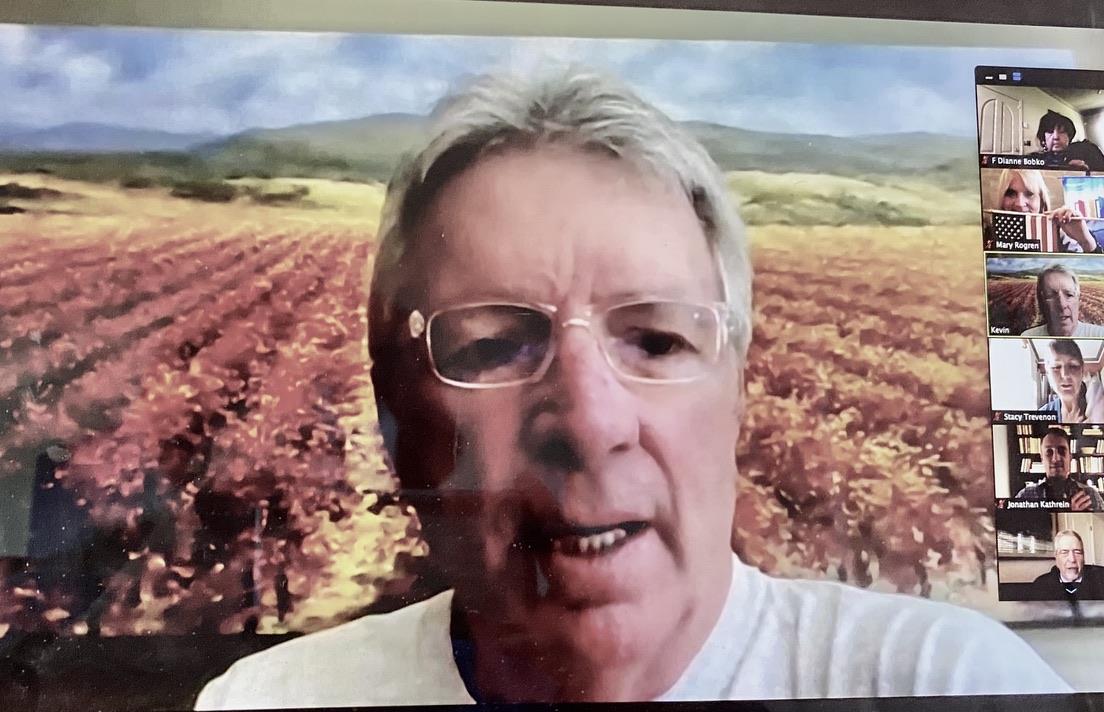
Kevin seized the opportunity to toss in some humor contrasting attorneys and sharks. Warren Barmore asked Kathrein if he’d spoken to other groups such as shark attack survivors? Kathrein said he’d been invited to do so over the past twenty-plus years, and would like to do so. 
EJ Dieterle asked if Kathrein felt it had helped him to grab the shark’s gills, to get the creature to let him go? Kathrein replied that sharks don’t want to eat people, and thought maybe he hurt it when he grabbed it, inducing it to let him go. He said that attacks were more frequent in years gone by, and repeated the high survival rate of more current shark attack victims. 
Joe Brennan mentioned that Kathrein was lucky to have gotten away, as biting and then letting its prey bleed to death was a typical shark modus operandi. This incident was a near miss as the bite was close to the carotid artery, and Kathrein was lucky to have been near the beach. 

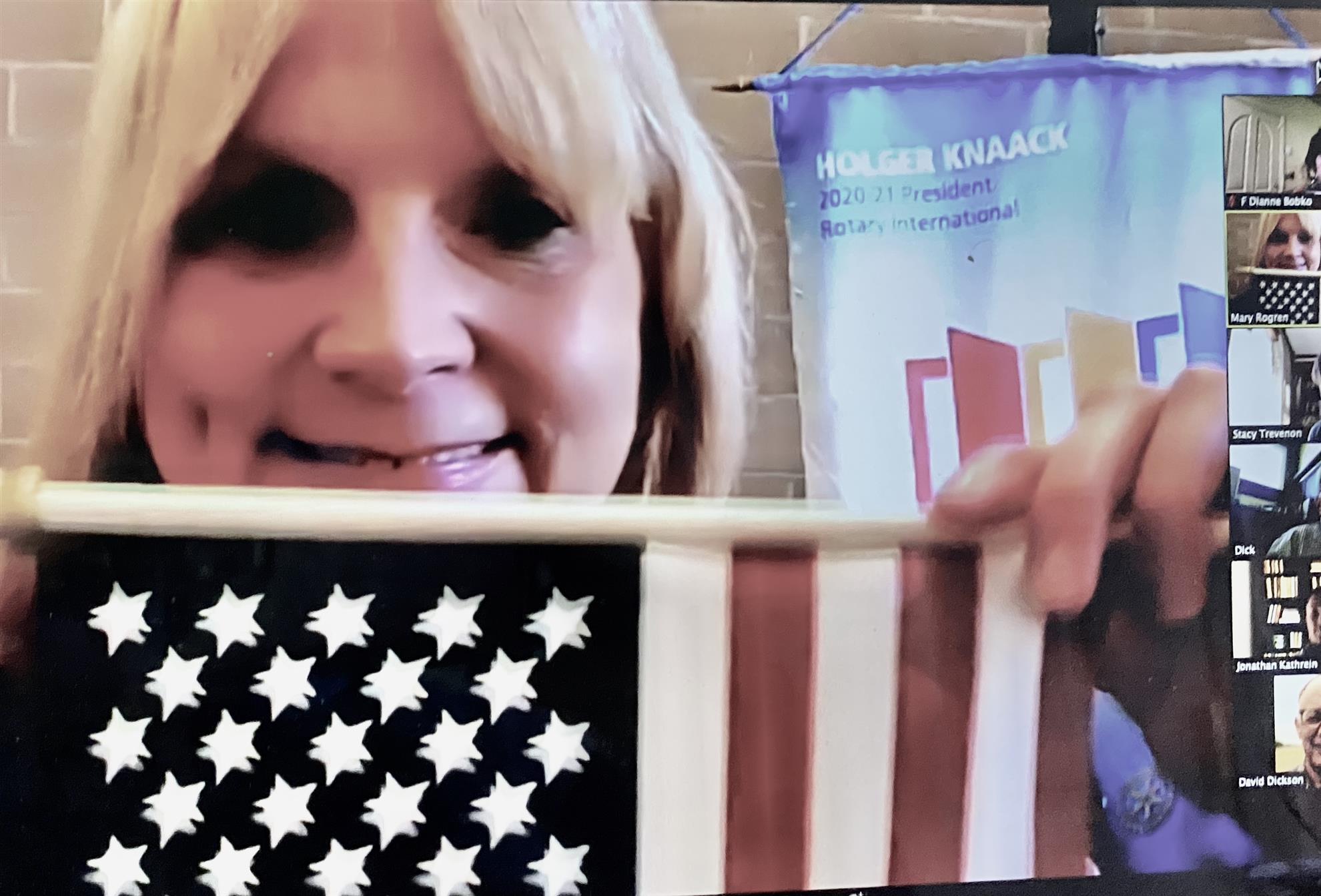
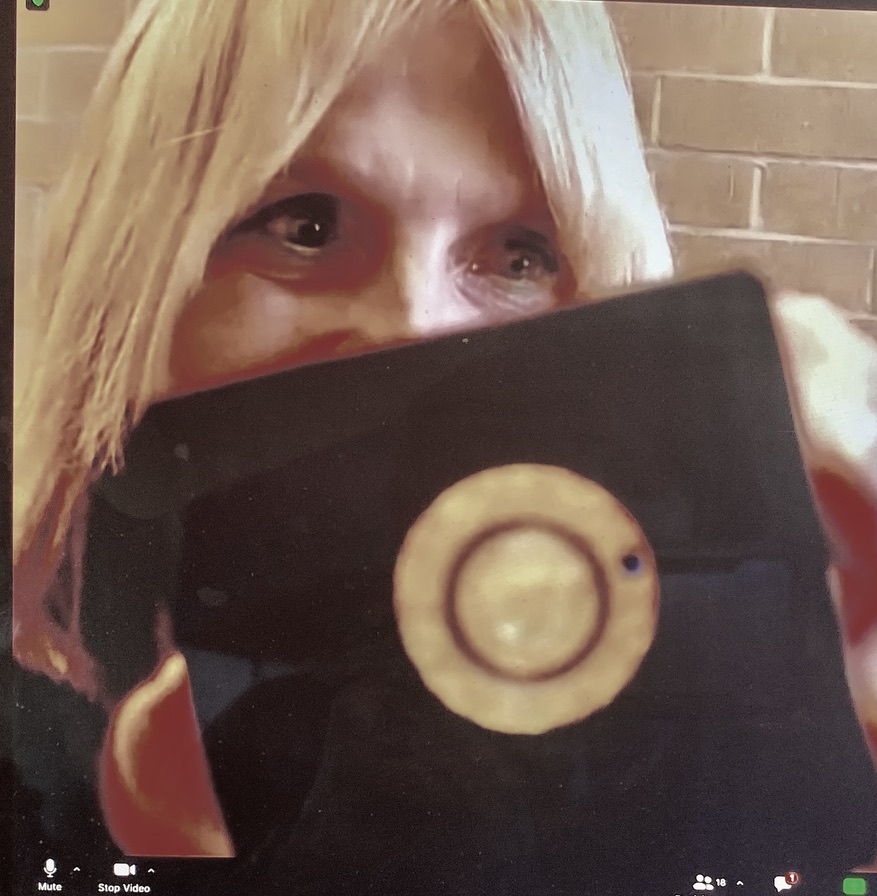
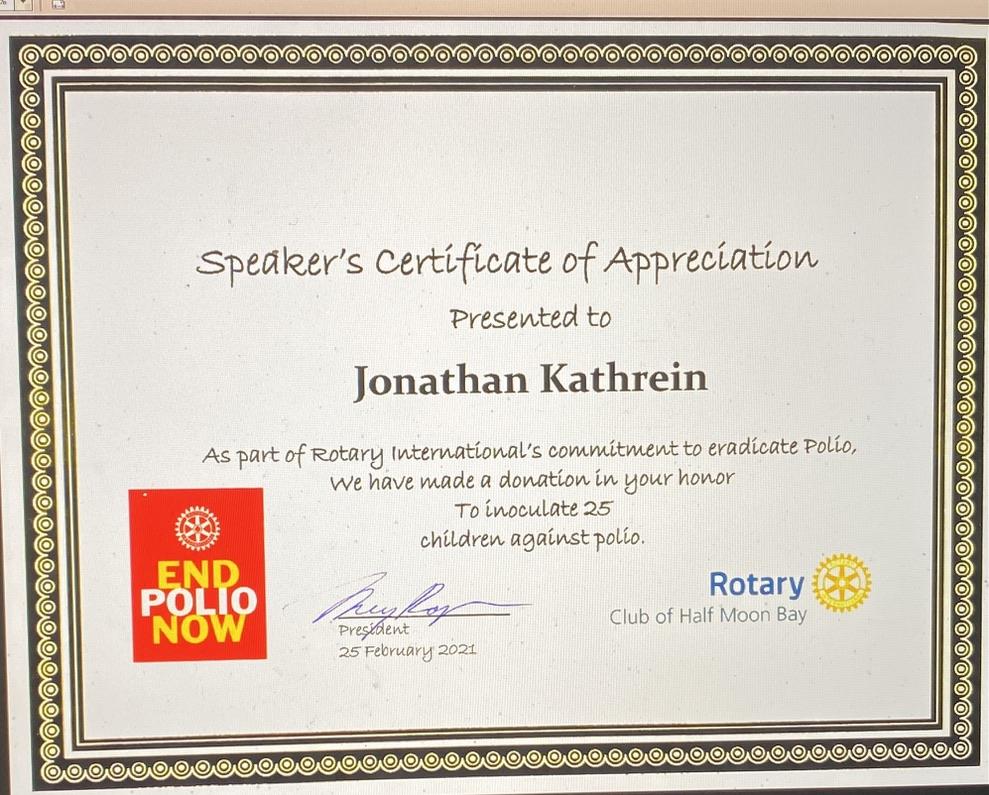
President Mary held up he Certificate of Appreciation for Kathrein for having been the day’s speaker, with her thanks.
 
Club Meeting - February 25, 2021 


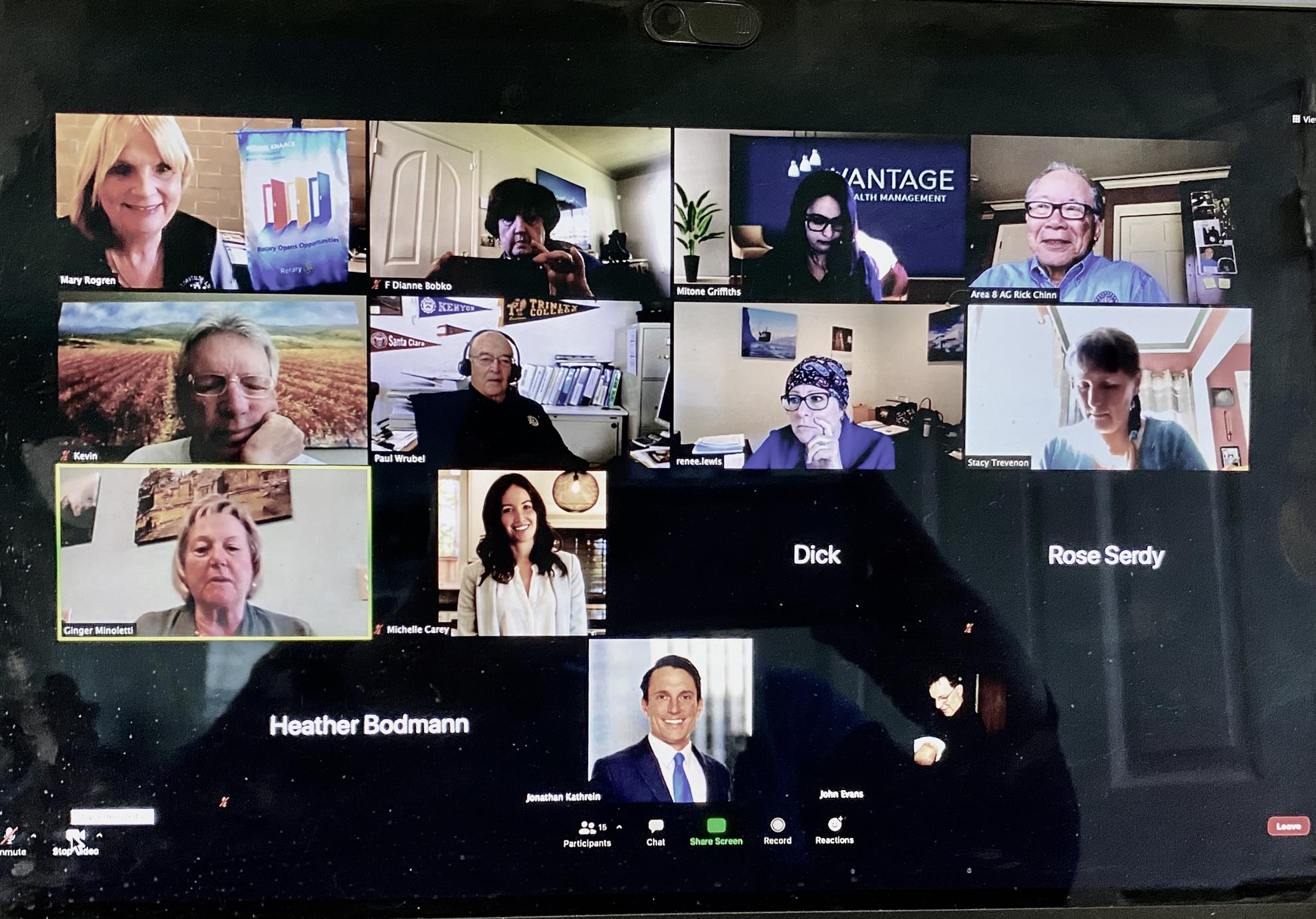
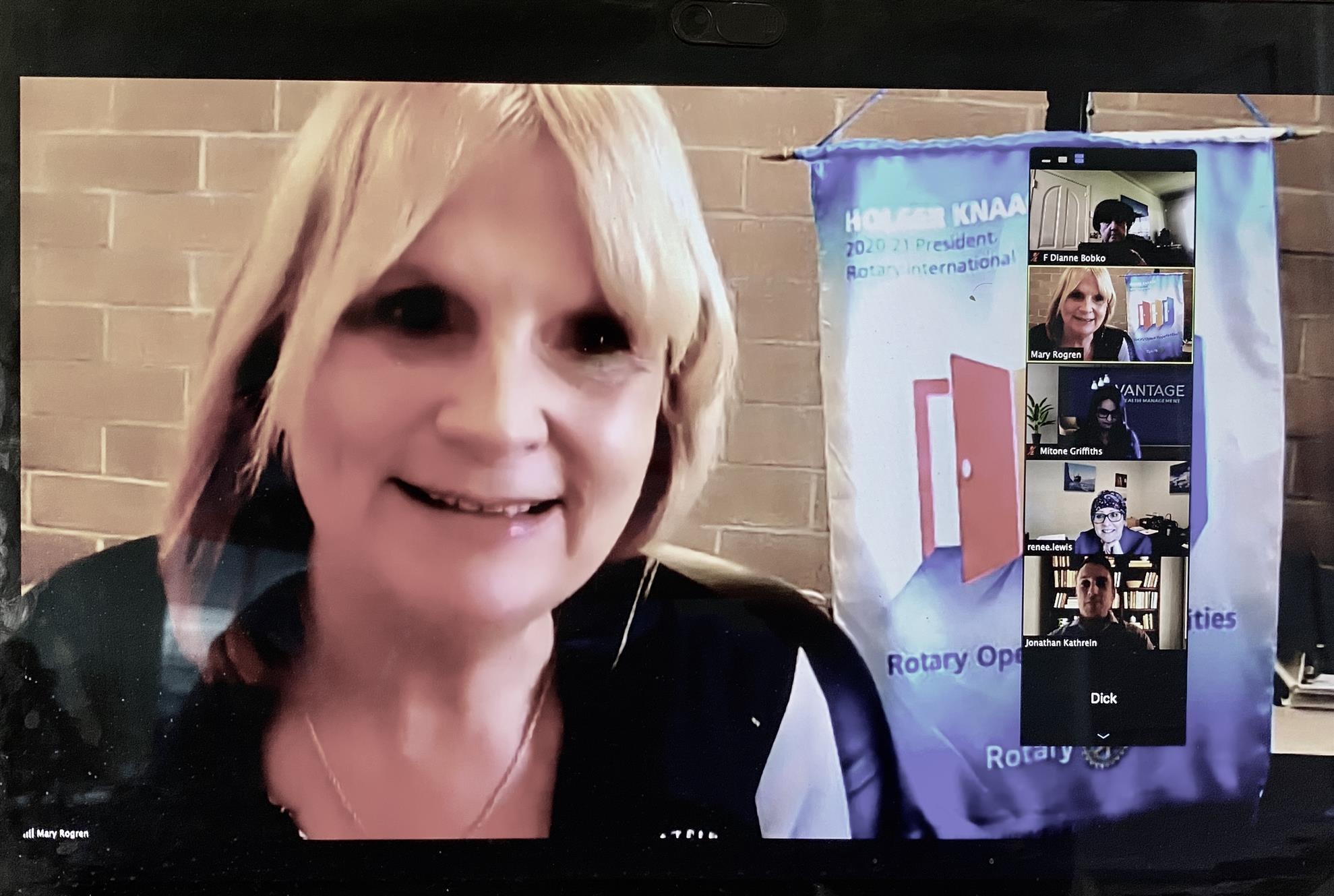
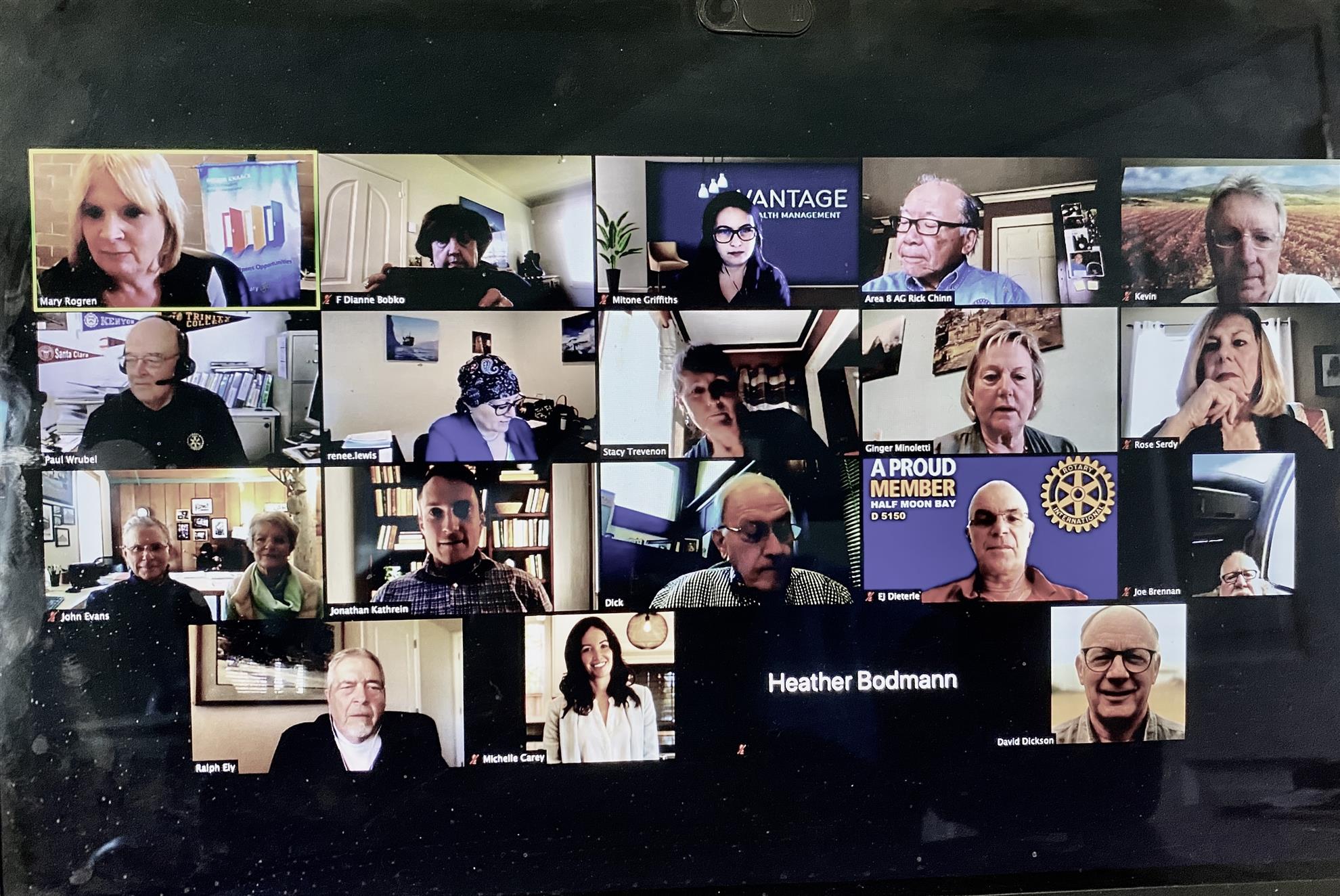
Rotary Club of Half Moon Bay President Mary Rogren called the virtual meeting to order at a few minutes past noon on Thursday, and the first few minutes were taken up by Rotarians greeting one another and trading comments and stories they had heard about Covid or vaccination information and experiences. 


Pledge of Allegiance - Kevin O’Brien led the Pledge of Allegiance

Inspiration Thought - Dick Charnock offered, as an invocation, the following quotation from Leigh Michell Hodges: “Walter B. Pitkin has written a book on ‘Life Begins at Forty.’ I rise to offer a substitute, Mr. Pitkin: ‘Life Begins Each Morning.’ Whether one is twenty, forty or sixty; whether one has succeeded, failed or just muddled along; whether yesterday was full of sun or storm, or one of those dull days with no weather at all, Life Begins Each Morning! … Each night of life is a wall between today and the past. Each morning is the open door to a new world – new vistas, new aims, new tryings.”

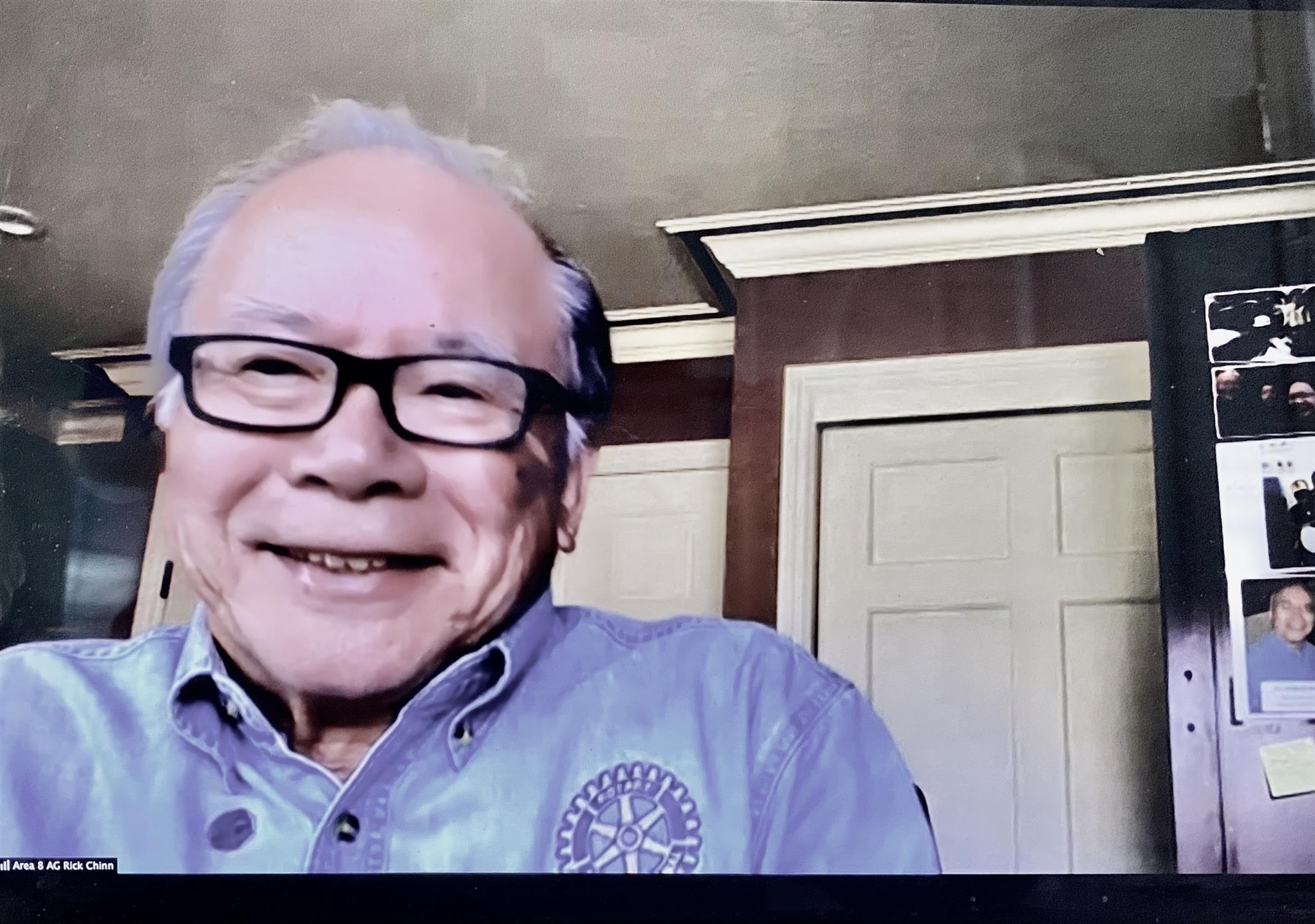
Guests - Special guest Assistant Governor Rick Chinn was introduced.
      

Happy/Crappy News yescrying

When happy and crappy news was called for, Ginger passed along the news that Robin Jeffs is recovering well now; while his situation was serious he is improving with the help of Freda and their daughter. Visitors would not be the best idea now, but cards and Zoom greetings would be appreciated, especially since Robin’s birthday is Feb. 28.

Mitone Griffiths happily reported that she can now go to see daughter Mia’s swim meet in early March. She said she’d missed those meets. She also mentioned upcoming  beach cleanups, with which she said she needs help running. She asked club members to let her know if they’re available to help.  The next cleanup is scheduled for 10 a.m. on Sunday, March 14; Mitone will post information on Facebook. Shje also mentioned that she has several large plastic buckets which can come in handy for beach or trail cleanups.

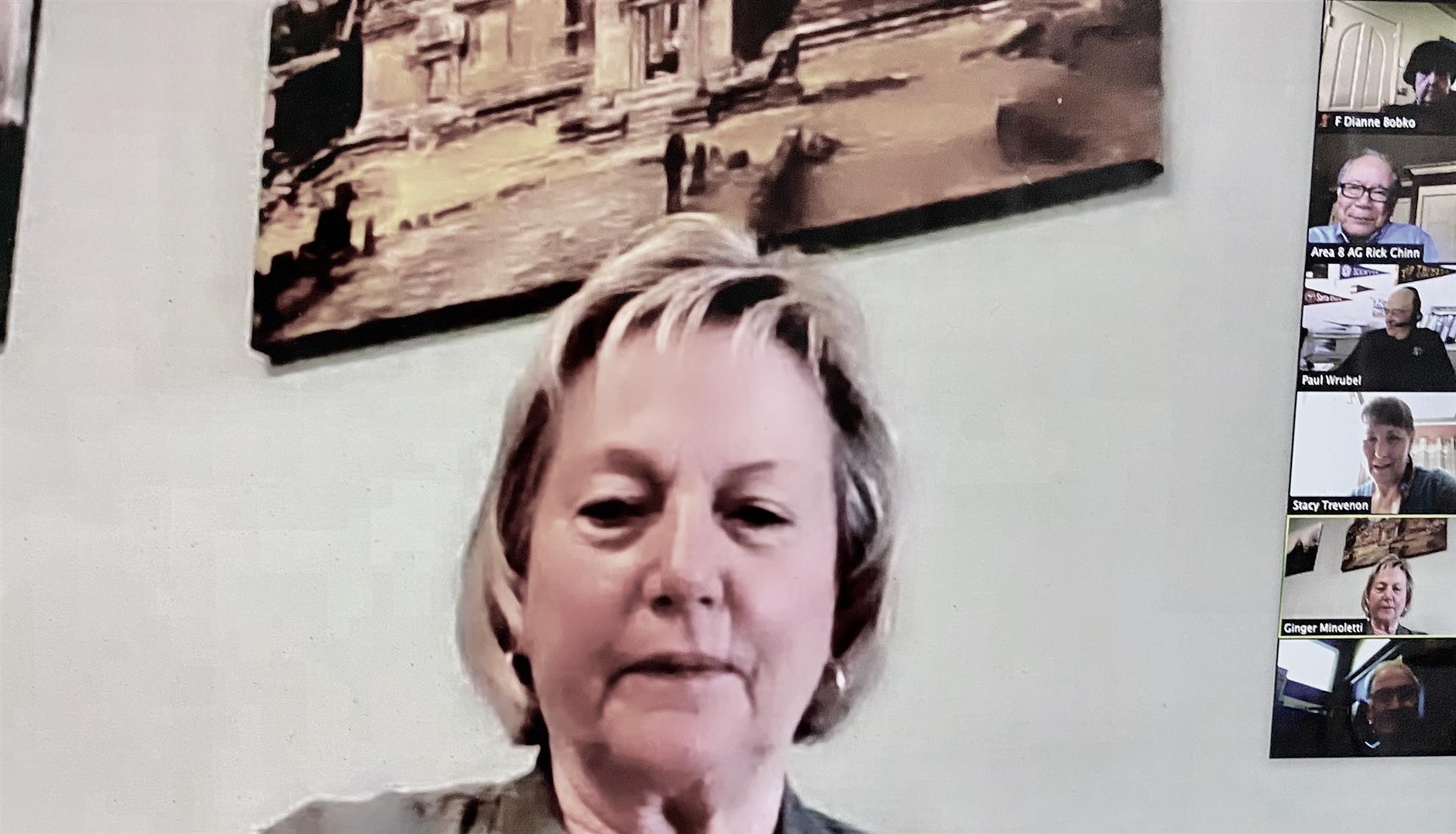
Ginger mentioned the upcoming virtual wine tasting fundraiser. She now has 19 participants signed up, and she encouraged more club members to sign up or invite friends to do so. That is set from 6 to 7 p.m. next Thursday.
  

Mary reiterated the importance of fundraising and how all club members need to step up for it. She mentioned some upcoming fundraising opportunities; April is a good month for reaching out to local organizations for match on funds, and May 5 is Coastside Gives. In terms of getting the word out about our events, Jim Henderson of KHMB radio is a resource, and President Mary will send out links to club members.

Ginger said that the recent prize winners could pick up their prizes at her office at 350 Medio, Thursday through Monday.

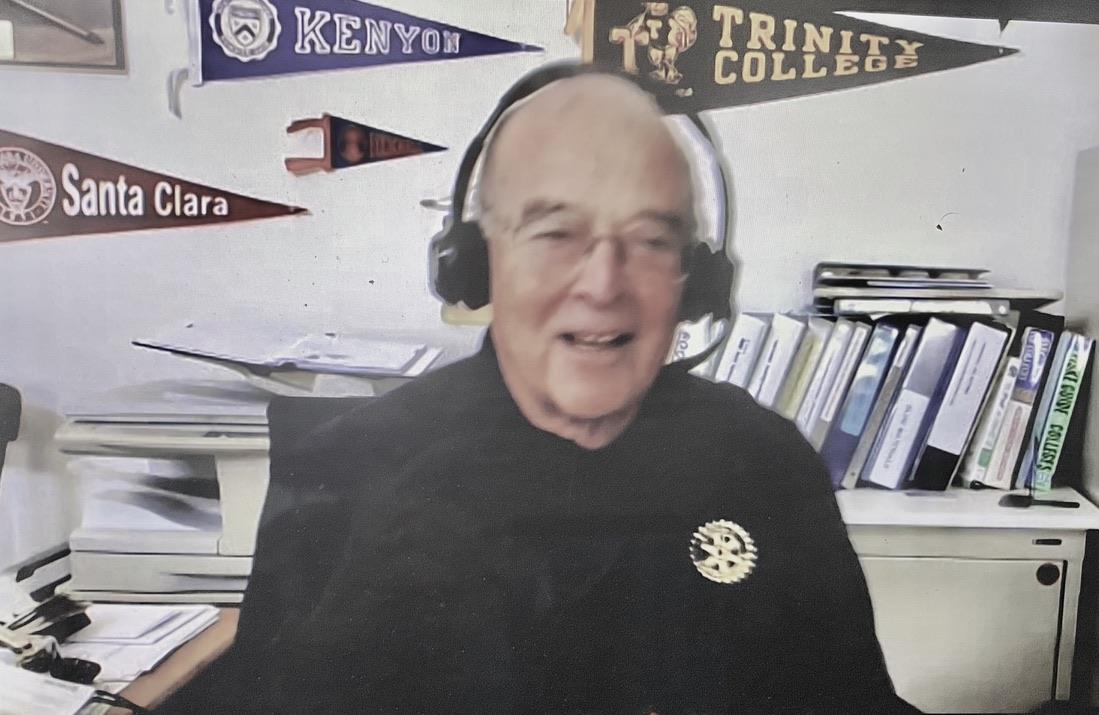
Paul Harris Recognition - Paul Wrubel received his first sapphire Paul Harris pin.
Announcements
 

Ginger Minoletti said she had delivered sandwiches for Abundant Grace that morning, and suggested for those who will deliver sandwiches in the future, adding little treats like a bag of Cuties or little bags of chips to the order was a nice touch.

Asked about community service, Rose Serdy thanked Ginger, Joe and Renee Lewis who had signed up as team members for the next  Relay for Life. She encouraged support for this endeavor and said she will send out information. She also mentioned the Special Delivery for families, and how for those contributing, personal items such as toothbrushes were welcomed. Joe said he would reach out to Sonrisas to gauge the need for such personal items.

John Evans offered updates on Interact: the group recently held a meeting via Zoom which drew some 14 students. They have also been talking recently about scholarships, and about having stoles to wear at graduation, which run about $40 per student. Criteria for the stoles will be set up with the school. Looking ahead, suggestions of service projects to fund and of youth who would be interested and available, will be welcomed in the club.
A late email came in just at press time – Rosi Fontana had hip replacement surgery this week. It was a success and she is now recuperating back home. Please send her best wishes!

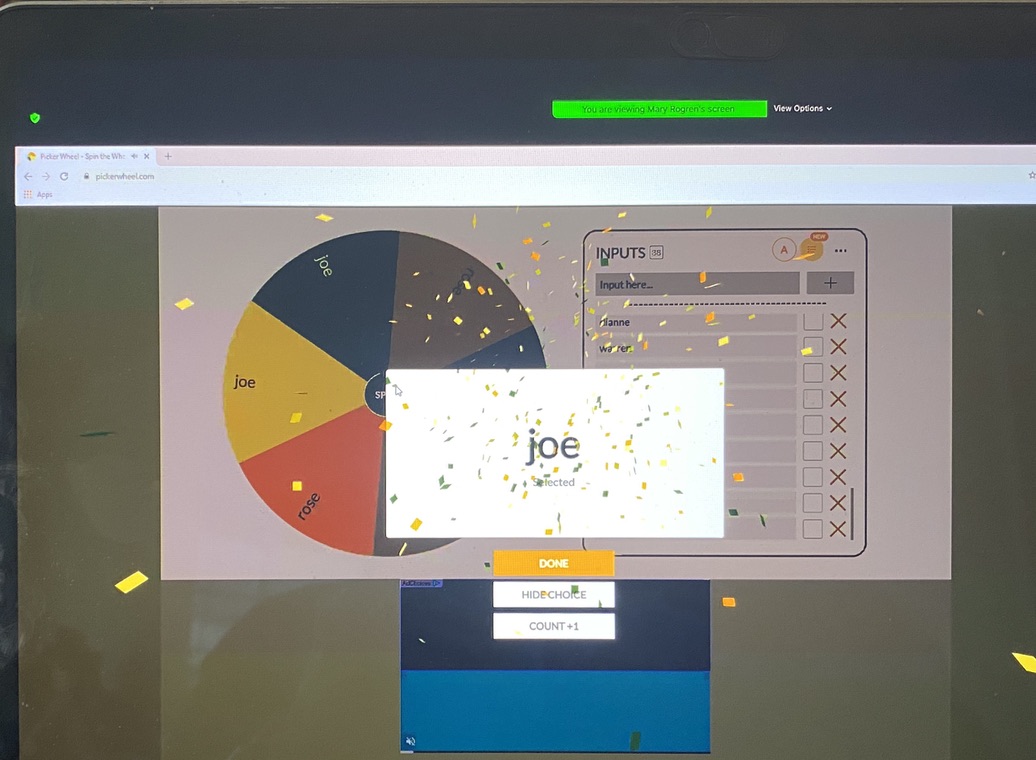
Marble Draw Rose won the marble draw and picked a green one.  sad surprise

 
PHOTO GALLERY